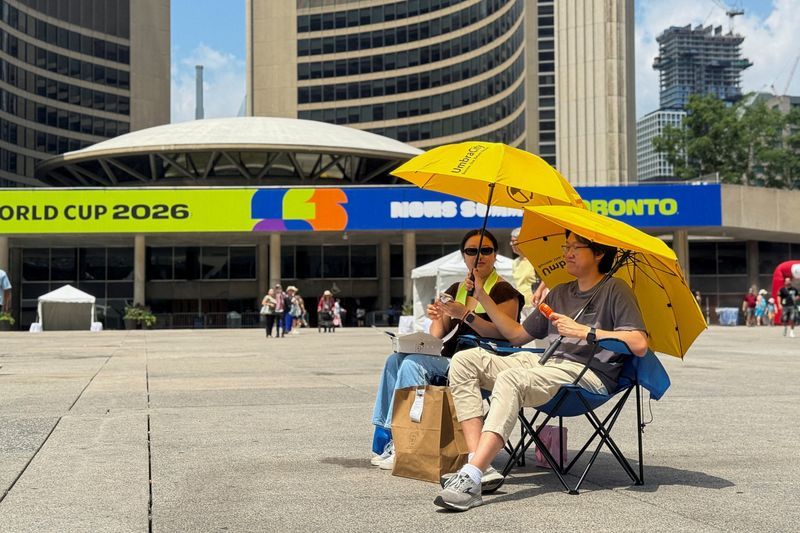
Public health authorities in Toronto are urging football fans attending Thursday's World Cup round of 32 clash between Portugal and Croatia to take precautions against severe heat and humidity that could pose serious health risks. The warning comes as Environment Canada forecasts temperatures climbing above 35 degrees Celsius, with the added factor of high humidity that could make conditions feel substantially hotter.
Michelle Murti, Toronto's medical officer of health, has emphasised the importance of maintaining hydration throughout the day rather than waiting until thirst signals the need for fluids. She also cautioned supporters to moderate their alcohol consumption, noting that alcoholic beverages can accelerate dehydration and amplify the body's vulnerability to heat-related illness. The combination of extreme outdoor temperatures, crowded public viewing spaces, and alcohol consumption creates conditions that demand careful management by both individuals and event organisers.
The actual temperature is expected to exceed 35 degrees Celsius, but the humidity index could push the perceived temperature to approximately 40 degrees Celsius—a level that carries genuine health concerns for extended outdoor exposure. This distinction between actual and perceived temperature is crucial, as the human body's cooling mechanisms become less effective in humid conditions, making it harder for perspiration to evaporate and cool the skin. For football fans planning to spend several hours watching the match in outdoor fan zones, this reality presents a significant challenge.
Toronto has established misting stations and organised public fan zones throughout the city to accommodate the influx of World Cup enthusiasts, but Thursday's match represents the final opportunity for locals and visitors to experience the tournament live in the Canadian metropolis. Toronto Stadium, which is hosting this final World Cup fixture, holds the distinction of being the tournament's smallest venue, meaning the concentration of supporters in and around the facility will be particularly intense. Already, visitors to Nathan Phillips Square, Toronto's iconic public space, have been taking advantage of temporary cooling infrastructure, recognising the genuine discomfort posed by current conditions.
Beyond the immediate health advisory, Toronto officials are simultaneously monitoring weather forecasts for the possibility of severe thunderstorms, which could disrupt outdoor viewing arrangements and potentially lead to the cancellation of some public fan gatherings. The uncertainty surrounding both heat and precipitation adds complexity to event planning, as organisers must prepare contingency arrangements that prioritise public safety while maintaining the celebratory atmosphere that has defined Canada's World Cup experience. The cancellation of fan zones, though possible, would disappoint many supporters who have looked forward to watching the tournament in communal settings.
Canada has experienced volatile weather patterns across its geographic expanse in the lead-up to Wednesday's Canada Day holiday, with communities from the western provinces through to Atlantic Canada contending with either flooding or extreme heat conditions. This broader pattern of environmental instability underscores the context in which Toronto is managing the World Cup viewing experience. The convergence of summer weather extremes and major sporting events creates operational and safety challenges that require coordinated responses from multiple municipal and health agencies.
Visitors and residents present in Toronto's public spaces have already begun adapting to the heat, with many expressing concern about the conditions they will face during the extended match. Megan Rennie, a Toronto resident observed at Nathan Phillips Square, acknowledged the physical toll the heat is taking on spectators and expressed uncertainty about her ability to remain outdoors for the entire match duration. Her concern reflects a broader hesitation among potential attendees, who must weigh their enthusiasm for witnessing the World Cup against the genuine health risks presented by the environmental conditions.
For international visitors experiencing Toronto's summer climate, the adjustment presents particular challenges. Laura Albarez, visiting from Colombia where warm weather is routine, nonetheless found the combination of Toronto's heat and humidity sufficiently uncomfortable to reconsider her participation in outdoor viewing. Her comments highlight that even individuals accustomed to tropical or subtropical climates can find the specific conditions—particularly the humidity factor—unexpectedly taxing. The availability of drinking water and climate-controlled spaces such as hotels becomes essential infrastructure for those seeking respite.
The convergence of sports spectacle and environmental hazard illustrates how major events increasingly must account for climate variability and extreme weather patterns. Toronto's response—combining public health messaging, infrastructure improvements such as misting stations, and contingency planning for weather disruptions—represents a pragmatic approach to managing large public gatherings in challenging conditions. Nonetheless, individual judgment and personal responsibility remain critical, as fans must make moment-by-moment decisions about their exposure and activity levels based on how they are physically responding to the environmental stress.

