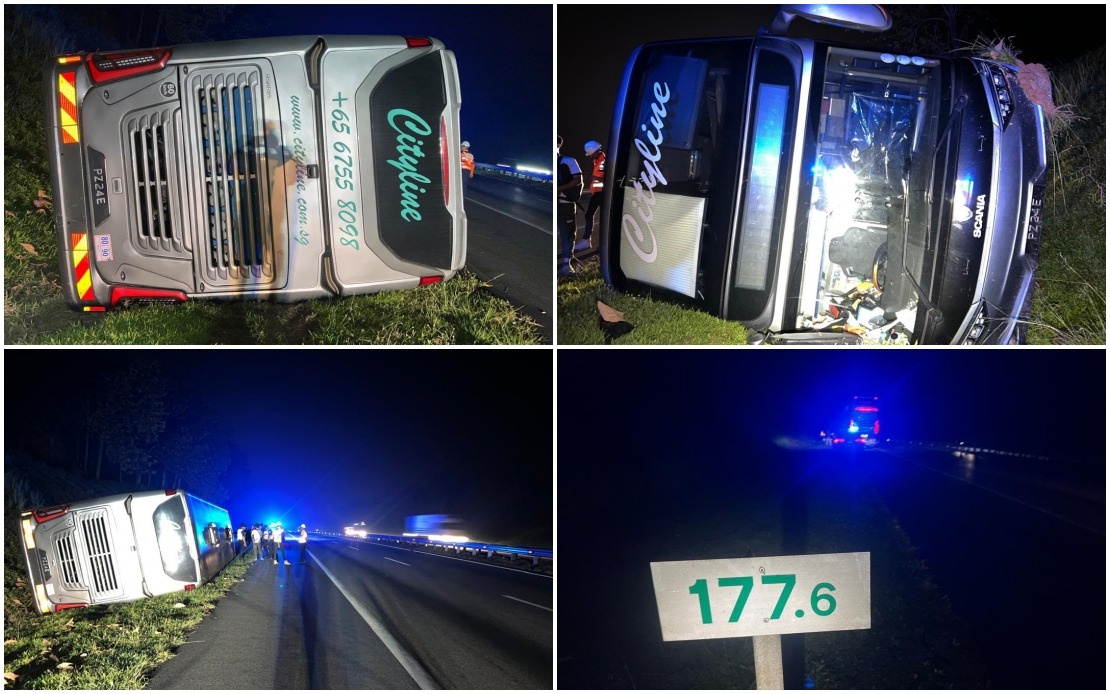
A tour bus operating on one of Malaysia's busiest expressway routes overturned on the northbound carriageway of the North-South Expressway in Jasin this morning, leaving three passengers hospitalised with injuries to their heads and limbs. The accident unfolded at Kilometre 177.6 just after 5 am, involving a vehicle that had been in transit from Singapore bound for Kuala Lumpur with a total of 12 people on board, including the driver and an accompanying tour guide.
Among those injured were a 59-year-old Malaysian tour guide, a 62-year-old Singaporean passenger, and a 42-year-old British national, according to information released by Jasin district police chief Supt Lee Robert. All three sustained injuries requiring immediate medical attention, and were transported to Jasin Hospital where they received treatment for their respective conditions. The identities of the remaining passengers and the driver were not immediately disclosed.
According to the police chief's account, the immediate cause of the accident stemmed from a sequence of events unfolding along the expressway. As the tour bus travelled northward, a heavy goods vehicle ahead of it significantly reduced speed without apparent warning. In response, the bus driver made a sudden manoeuvre to prevent a rear-end collision with the lorry, but the evasive action proved problematic. The bus subsequently veered towards the left side of the road, lost directional control, and overturned.
The incident highlights ongoing traffic safety concerns on the North-South Expressway, which traverses more than 880 kilometres and remains one of the nation's most critical arterial routes. Heavy traffic volumes, particularly during peak travel periods and along sections serving tourist corridors connecting Singapore and major Malaysian cities, create complex driving scenarios where sudden stops and rapid lane changes can precipitate accidents. Tour buses, despite their size, remain vulnerable to such incidents given their high centres of gravity and the unpredictable behaviour of other road users.
The involvement of international tourists underscores the expressway's role as a vital link for regional tourism and commerce. Singaporean and British visitors represent significant components of Malaysia's tourism traffic, with many utilising coach services for intercity travel rather than rental vehicles. The incident raises questions about the safety protocols governing tour bus operations and the training standards for drivers managing large passenger vehicles on high-speed expressway sections.
Jasin, located in the Malacca state along the South Selangor section of the expressway, has historically experienced periodic traffic incidents due to the concentration of commercial vehicles and the high traffic density typical of this major transport corridor. The early morning timing of the accident—at 5 am—suggests the bus may have been attempting to reach Kuala Lumpur during off-peak hours, a common practice for long-distance coach operators seeking to complete journeys before daylight traffic intensifies.
Police investigations into the incident have already commenced, with initial findings indicating that driver error, environmental factors, or both may have contributed to the accident. The conduct of the lorry driver—particularly the decision to brake sharply—could potentially feature in the preliminary investigation. Such sequences of events are precisely what road safety experts identify as critical intervention points, where better spacing between vehicles, improved visibility, and enhanced communication systems between drivers might prevent escalation from near-miss incidents to actual collisions.
The expressway's safety record remains a subject of public discussion in Malaysia, with regular appeals for drivers to maintain appropriate speeds and distances. The incident involving the tour bus serves as a reminder that accidents can occur despite the road's design standards and safety features, particularly when sudden driving behaviours create chaotic conditions. For tour operators, such incidents trigger reviews of fleet maintenance, driver training protocols, and insurance coverage implications.
Emergency response to the accident appears to have been timely, with authorities reaching the scene and transporting the injured to appropriate medical facilities expeditiously. The relatively contained nature of the injuries—no fatalities reported—may reflect the protective measures inherent in modern coach design, including airbags and structural reinforcements. However, the three injuries still required hospitalisation, indicating the severity of the impact.
For Malaysian readers and regional travellers, the incident serves as a sobering reminder of the inherent risks associated with high-speed expressway travel, regardless of vehicle size or professional driver status. The presence of three foreign nationals among the injured also demonstrates how accidents on major transport corridors can have international dimensions, potentially affecting diplomatic relations and tourism confidence if investigations reveal systemic safety failures. Tour operators in Malaysia and throughout Southeast Asia will likely review their safety protocols following this incident, potentially implementing stricter driver rest requirements and enhanced vehicle inspection standards.

