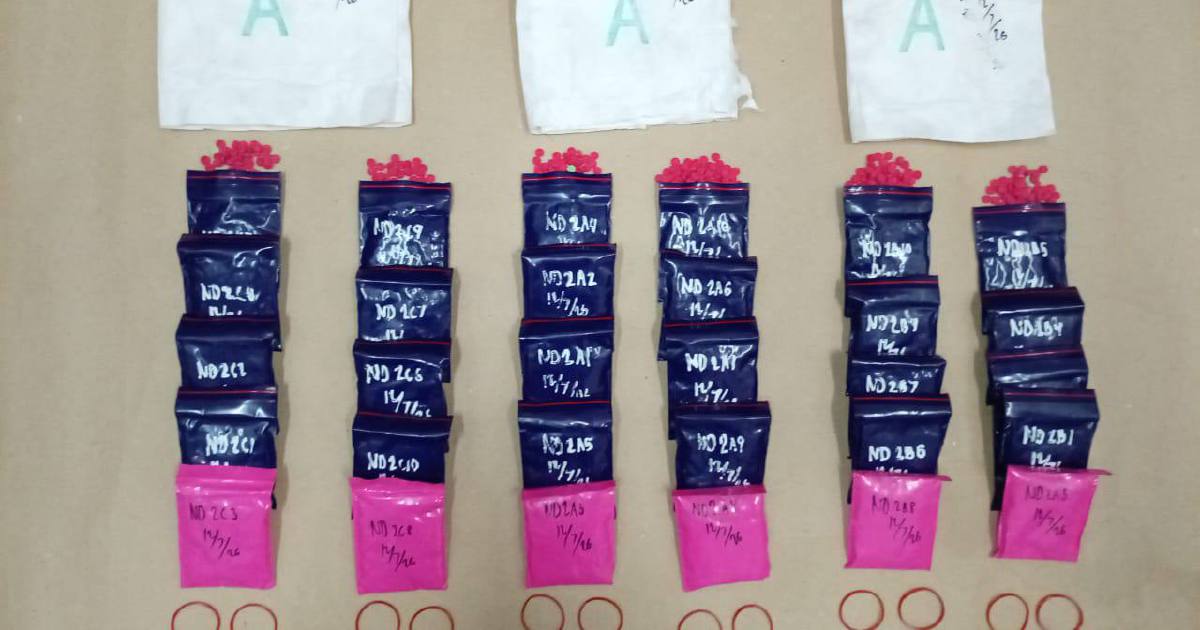
Police in Kelantan made a significant drug seizure yesterday when they arrested a 35-year-old tow truck agent found in possession of 6,000 yaba pills valued at RM60,000. The discovery came during an operation near Wakaf Bharu, where authorities intercepted a vehicle along Jalan Kubang Batang and uncovered the substantial stash of methamphetamine tablets, commonly known as yaba or "crazy medicine."
The arrest marks another intervention by law enforcement agencies targeting the illicit drug trade in Kelantan, a state that has long battled significant narcotics trafficking issues. The seizure underscores how synthetic drug operations continue to distribute harmful substances through various channels, exploiting individuals in the transport and logistics sector to move contraband across regional networks. The tow truck industry, which involves frequent vehicle movement and border crossings, has become an attractive avenue for organised crime syndicates seeking to transport illegal goods undetected.
Yaba, which typically contains methamphetamine and caffeine in pill form, has emerged as a particular menace across Southeast Asia. The drug commands substantial street value and creates a lucrative incentive for smugglers willing to take considerable legal risks. With an estimated street value of RM60,000 for this single shipment, the economic motivation driving such trafficking operations becomes evident. A single yaba tablet can fetch between RM10 and RM15 on the black market, making even modest quantities profitable for distributors and attracting increasingly desperate individuals into the supply chain.
The use of tow trucks and vehicle recovery services as fronts for drug trafficking reflects criminal groups' sophistication in exploiting legitimate business structures for illicit purposes. By embedding themselves within the transport and roadside assistance sectors, traffickers gain regular mobility across roads and highways while maintaining a veneer of legitimacy. This operational strategy complicates detection efforts and allows them to move contraband with reduced suspicion, relying on official-looking documentation and the routine nature of their work to evade roadblocks and checkpoints.
Kelantan has experienced persistent challenges with drug manufacturing and distribution, positioned as it is along trafficking routes that connect southern Thailand with peninsula Malaysia. The state's vulnerability stems partly from its proximity to international borders and its role as a transshipment point for drugs destined for broader Malaysian and regional markets. Previous police operations have uncovered sophisticated clandestine laboratories producing synthetic drugs, and seizures of yaba tablets have occurred with troubling regularity, indicating consistent demand from users and organised distribution networks across the country.
For tow truck operators and the broader transport industry, the arrest raises concerns about how criminal elements exploit the sector's operational requirements and business model. Many legitimate operators face reputational challenges when members of their profession become entangled in drug-related activities. Industry associations and law enforcement have encouraged heightened vigilance among business owners and drivers who might unwittingly find themselves targeted for recruitment or coercion by trafficking organisations seeking to move merchandise through their networks.
The RM60,000 valuation illustrates the substantial profits available at intermediate stages of the supply chain. While end users pay premium prices per tablet, wholesale quantities such as these generate significant revenue that attracts criminal entrepreneurs and individuals struggling financially. The suspect's involvement in the tow truck industry suggests he may have been approached as a transport facilitator or perhaps held sufficient access to vehicles and movement patterns that made him valuable to a larger operation.
Police operations targeting synthetic drug trafficking have intensified nationwide as authorities recognise the expanding threat posed by yaba and related substances. These pills, originating primarily from clandestine laboratories in the Golden Triangle region of Southeast Asia, have flooded Malaysian markets over the past decade. Young people in particular have become consumers of yaba, attracted by its stimulant properties and perceived affordability compared to other recreational drugs. This expanding user base perpetuates demand and justifies the substantial investments that trafficking organisations make in distribution infrastructure and logistics.
The investigation surrounding this arrest will likely extend beyond the individual suspect to determine whether he was part of a larger network and to identify the source of the yaba pills and their intended destination. Law enforcement agencies across Malaysia and the region routinely coordinate on drug trafficking cases, sharing intelligence about major traffickers, laboratory locations, and distribution patterns. Intelligence gathered from this case could contribute to broader efforts to dismantle trafficking networks and identify other operators using similar methods and routes.
As Malaysian authorities continue combating synthetic drug trafficking, cases like this demonstrate both the persistence of supply-side challenges and the effectiveness of targeted enforcement operations. The arrest sends a message to would-be traffickers that law enforcement remains vigilant despite the challenges inherent in policing large road networks and multiple entry points. However, sustained success requires continued cooperation between police and customs authorities, intelligence sharing among Southeast Asian nations, and efforts to address the demand side by supporting rehabilitation programmes and public awareness campaigns that discourage drug use, particularly among younger demographics vulnerable to addiction.

