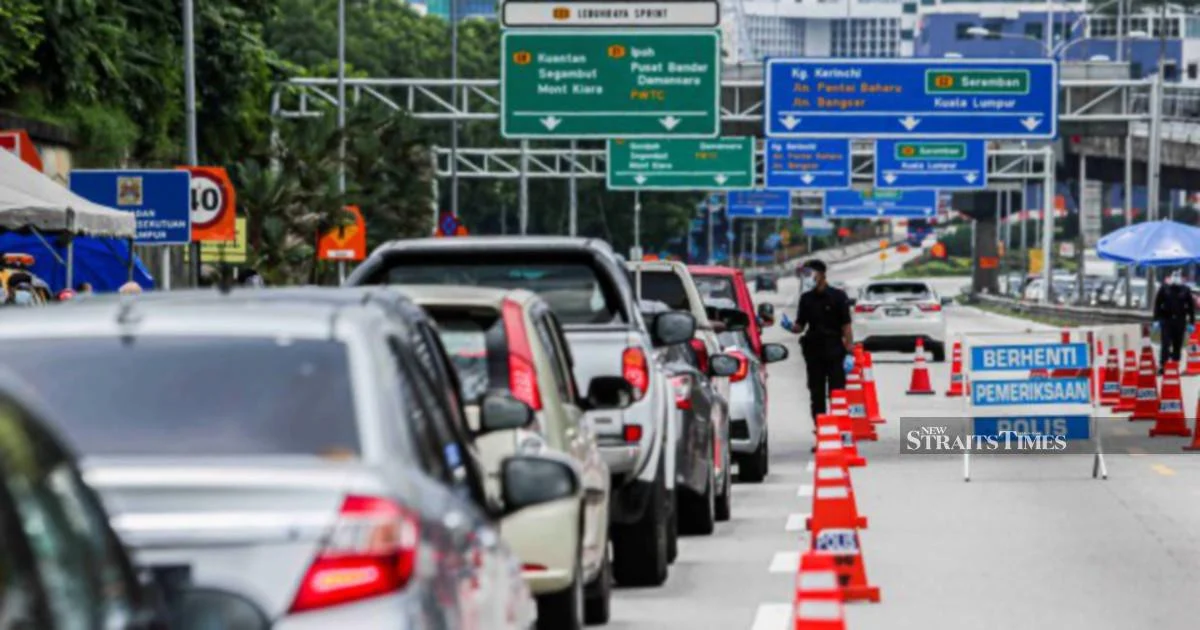
Parliament is expected to pass amendments to the Road Transport Act 1987 that would substantially increase financial penalties for traffic violations, with the maximum compound fine rising to RM500 for more than 700 categories of road offences. The revision represents a significant tightening of enforcement mechanisms across Malaysian highways and urban roads, signalling the authorities' intent to raise the cost of non-compliance and potentially deter dangerous driving habits.
The proposed increase marks one of the most comprehensive reforms to traffic penalties in recent years. By raising the ceiling for such a vast range of violations, lawmakers appear determined to modernise a penalty structure that has become increasingly misaligned with inflation and evolving road safety challenges. The expansion of covered offences suggests the amendments go beyond minor tweaks, potentially reshaping how traffic enforcement operates from Perlis to Sabah.
For Malaysian motorists, the implications are substantial and immediate. Current penalty levels for many traffic infractions have remained static for years, eroding the deterrent effect as vehicle ownership surges and congestion worsens across major urban centres. The RM500 threshold would apply broadly across speeding violations, parking breaches, improper lane changes, and a spectrum of other transgressions that generate the bulk of traffic compounds issued nationwide.
The Road Transport Act 1987 governs the legal framework for motor vehicle regulation in Malaysia, and amendments to penalty provisions require full parliamentary scrutiny. The increase to RM500 would need to accommodate inflation while remaining proportionate to offence severity—a balance regulators must maintain to ensure public acceptance and compliance. For context, RM500 represents a meaningful sum for many Malaysian households, though the government may argue that higher penalties justify greater adherence to traffic rules.
Higher fines carry broader economic consequences for both individuals and public revenues. Commercial drivers, ride-sharing operators, and logistics companies would face increased operational costs if their vehicles accumulate violations, potentially driving price increases for consumers dependent on transport services. State and federal road authorities, meanwhile, would benefit from expanded fine collections, revenue streams that could theoretically fund road maintenance and safety initiatives.
The reform also reflects ongoing efforts to address Malaysia's road safety performance, where fatality and injury statistics have remained stubbornly high despite previous interventions. By increasing financial consequences, policymakers signal that traffic discipline warrants serious enforcement attention. However, effectiveness ultimately depends on consistent, fair application across all road users—a critical consideration given recurring complaints about selective enforcement and corruption within traffic police operations.
Regional comparisons offer useful perspective. Singapore's traffic penalties substantially exceed Malaysia's current rates, and some neighbouring countries employ escalating fine systems based on repeat offences. The move toward RM500 brings Malaysian penalties closer to regional standards, though not to the level of wealthy city-states. This alignment could matter for cross-border understanding, particularly among drivers who regularly travel between Malaysia and Singapore or Thailand.
The amendment process itself will warrant close parliamentary attention. Opposition members and transport advocacy groups may scrutinise whether the increase strikes appropriate balance between enforcement and fairness, particularly for lower-income earners or those with genuine accidental infractions. Public discourse around the proposals could reveal tensions between safety advocates seeking stricter penalties and civil libertarians concerned about economic burden.
Implementation challenges loom once amendments pass. Traffic police, local council enforcers, and the Road Transport Department will require coordinated guidance on applying new penalty structures. Training and systemwide updates to enforcement protocols must precede or accompany rollout to ensure consistency and prevent legal challenges based on administrative confusion.
The timing of these amendments coincides with broader government initiatives addressing road safety, vehicle emission standards, and public transport investment. Viewed holistically, higher traffic penalties form part of a wider strategy to reshape Malaysian driving culture and urban mobility patterns. Yet success depends not simply on penalty magnitude but on sustained, equitable enforcement and public education.
For Malaysian drivers, the message is clear: the cost of traffic violations is rising substantially if parliament approves the amendments. Whether this increase achieves its intended deterrent effect or simply redistributes wealth through fines remains a question that only enforcement patterns and accident statistics will ultimately answer in the coming years.