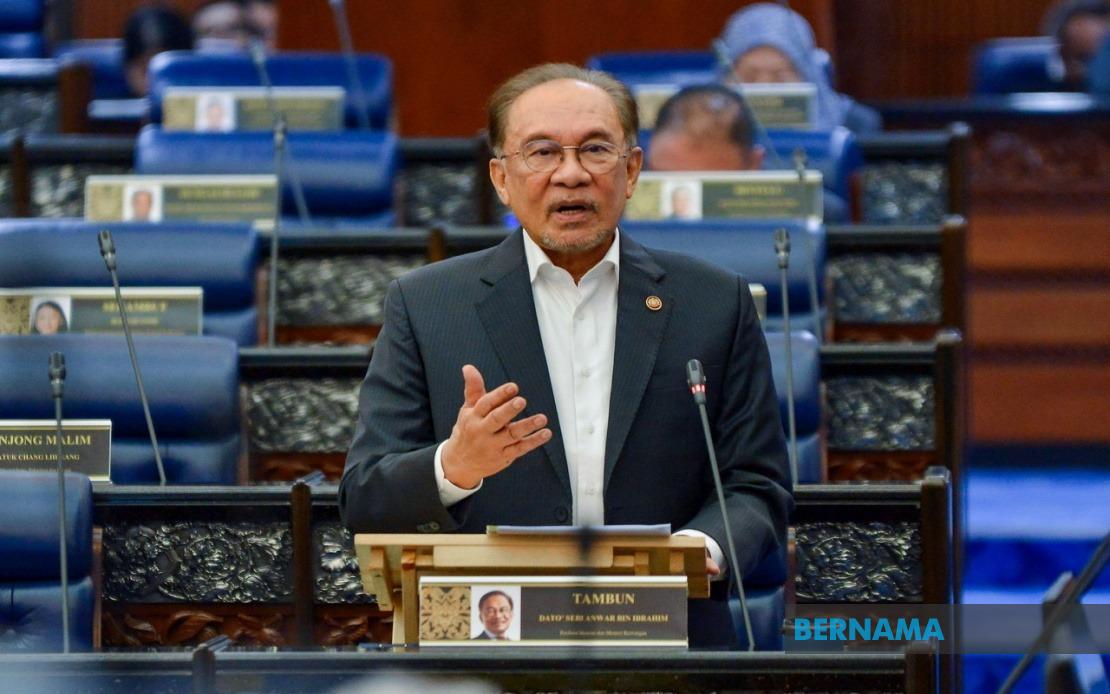
Prime Minister Datuk Seri Anwar Ibrahim has directed the Transport Ministry to explore the strategic use of ports positioned along the Malaysia-Thailand frontier, alongside facilities in Penang, as part of a broader effort to strengthen infrastructure and logistics connectivity in the borderland area. The instruction emerges from substantive discussions held between Anwar and Thai counterpart Anutin Charnvirakul during the latter's recent official visit to Malaysia, where transport considerations took centre stage in bilateral deliberations.
During parliamentary question time, Anwar outlined the scope of transport-focused talks that had taken place, noting that multiple transportation modes formed the basis of conversations with the Thai premier. Beyond port infrastructure, the discussions encompassed railway connectivity and the potential for expanded rail transport between the two nations, reflecting a comprehensive approach to regional mobility that extends beyond maritime corridors. These exchanges underscore growing recognition in both capitals of the economic importance of streamlined transport networks in facilitating cross-border trade and investment.
The prime minister highlighted the role of emerging port facilities in catalysing economic activity along the frontier zone. Specifically, Sanglang and the Perlis Inland Port (PIP) featured in discussions as potential engines for regional development, with officials exploring how these gateways might be leveraged to maximise spillover benefits within the broader Malaysia-Thailand border corridor. The emphasis on inland port facilities reflects strategic thinking about reducing dependency on distant coastal hubs and bringing logistics infrastructure closer to actual cross-border commercial flows.
Anwar's comments came in response to a parliamentary query from Datuk Adnan Abu Hassan (BN-Kuala Pilah) concerning government measures to ensure coordinated infrastructure and logistics advancement throughout the Malaysia-Thailand border region. The question itself indicates sustained parliamentary interest in border area development, suggesting that cross-border infrastructure remains a priority concern for lawmakers representing constituencies with geographical or commercial ties to frontier zones.
The reference to a newly inaugurated transport route hints at ongoing infrastructure projects already underway in the region. This suggests the port discussions represent not isolated initiatives but rather component elements of a more expansive development strategy encompassing multiple transportation modalities. The integrated approach—combining ports, railways, and existing routes—reflects contemporary thinking about logistics networks as interconnected systems rather than standalone facilities.
For Malaysian commerce and industry, particularly enterprises engaged in regional trade, the prospect of enhanced border port infrastructure carries substantial implications. Improved port utilisation at strategic locations could reduce freight handling costs, shorten transit times, and provide alternative pathways for goods movement between Malaysia and Thailand. Small and medium-sized enterprises currently navigating complex cross-border logistics might benefit significantly from rationalised port operations and reduced bottlenecks at frontier checkpoints.
The inclusion of tourism considerations alongside transport and logistics reveals the Malaysian government's intent to view border corridor development holistically. Enhanced transport infrastructure naturally facilitates tourist mobility, and improved connectivity between Malaysian and Thai attractions could generate additional economic activity through increased cross-border tourism flows. This multifaceted perspective suggests policymakers recognise that border zones function as integrated economic ecosystems where commerce, logistics, and leisure intersect.
From a Southeast Asian perspective, Malaysia-Thailand border infrastructure improvements contribute to broader regional integration efforts championed through ASEAN frameworks. As member states progressively deepen economic cooperation through agreements like the ASEAN Trade in Goods Agreement and connectivity initiatives, improved bilateral transport infrastructure between major partners becomes increasingly vital. Malaysian initiatives thus align with wider regional momentum toward seamless movement of goods and people across the region.
The Transport Ministry's prospective examination of port usage patterns will likely involve detailed assessments of current capacity utilisation, infrastructure gaps, regulatory harmonisation requirements, and investment needs. Such technical investigations typically precede policy announcements, suggesting that substantive port-related decisions may materialise following the ministry's deliberations. The scope of this analysis will substantially influence the trajectory of cross-border logistics development over coming years.
Railway connectivity, explicitly mentioned by both Malaysian and Thai leaders, represents another critical frontier for bilateral cooperation. Rail transport offers advantages in moving bulk commodities across borders with greater efficiency than road networks, particularly for containerised freight. Malaysian policymakers appear cognisant of these efficiencies and keen to explore how expanded rail capacity and improved border rail crossings might serve regional commerce more effectively.
The timing of these discussions reflects evolving geopolitical and economic realities shaping Southeast Asia. Post-pandemic recovery efforts have prompted nations to reconsider supply chain vulnerabilities and infrastructure resilience. Cross-border logistics inefficiencies became apparent during pandemic disruptions, spurring renewed interest in infrastructure investment and regional coordination. Malaysia and Thailand, as major regional trading partners, appear positioned to benefit substantially from transport modernisation efforts.
Looking forward, the Transport Ministry's port examination should address not merely physical infrastructure but also regulatory frameworks, customs procedures, and digital integration systems that collectively determine cross-border logistics efficiency. Modern port operations depend increasingly on seamless information flows and harmonised procedures across jurisdictions. Any comprehensive assessment of border port usage must therefore encompass institutional and procedural dimensions alongside physical facilities.
The government's directive to examine border port usage signifies sustained political commitment to transforming frontier zones from peripheral economic regions into dynamic centres of regional commerce. Such transformation requires coordinated investment across multiple infrastructure modalities, supportive regulatory environments, and sustained bilateral cooperation. The nascent discussions between Malaysian and Thai officials represent an important initial step toward realising that broader vision.

