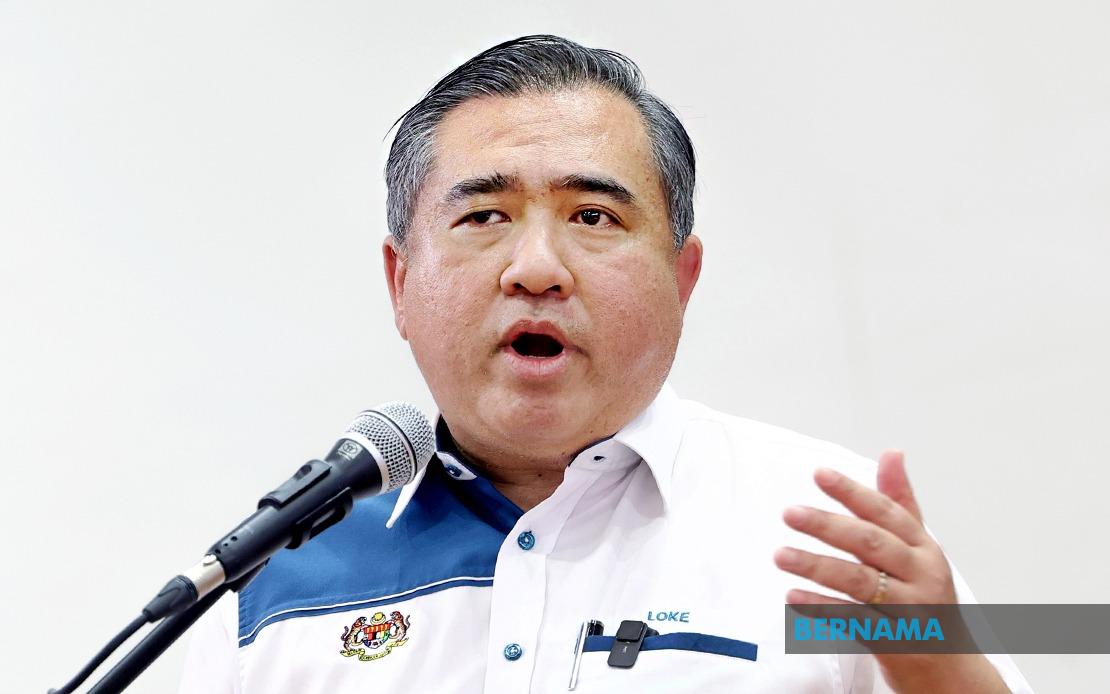
Transport Minister Anthony Loke has ordered the Road Transport Department (JPJ) to enforce helmet-wearing regulations strictly during the Johor state election campaign, instructing officers to issue summonses to any rider found breaching the law regardless of political party affiliation. The directive comes after videos circulating online showed campaign workers, including those from the Democratic Action Party (DAP), riding motorcycles without proper safety headgear while participating in election activities across the state.
Loke's stance reflects a long-standing position on road safety that he has maintained across multiple electoral cycles. He pointed to his earlier intervention during the Slim by-election campaign nearly six years ago, when he raised similar concerns about Barisan Nasional leaders breaching helmet regulations. The transport minister has consistently argued that while motorcycling itself is an acceptable campaign activity, the obligation to wear helmets remains non-negotiable and universal. This principled approach underscores his view that public safety must transcend political considerations.
The Transport Ministry's position gains particular significance given that Loke himself holds the position of DAP secretary-general, meaning the enforcement action will apply to members of his own party and coalition. This explicit acknowledgment that party colleagues will face consequences signals an intent to prevent accusations of selective enforcement or political favoritism. By publicly committing to hold his own campaign workers accountable, the minister aims to demonstrate institutional consistency in applying traffic laws.
Road safety regulations in Malaysia do not differentiate based on political affiliation or campaign status. The Road Transport Department operates under the Road Transport Act, which applies equally to all road users regardless of their involvement in elections or other activities. Helmet-wearing has been a mandatory requirement in Malaysia for several decades, with well-established penalties for non-compliance. These regulations exist to reduce serious injuries and fatalities among motorcycle riders, who represent a significant proportion of Malaysia's fatal road accidents.
The viral videos documenting helmetless riding during the Johor campaign have created public expectations that authorities will respond to the breach. Election campaigns often draw increased attention to public behavior, as supporters and campaign participants become more visible in electoral activities. When such visibility includes safety violations, it can undermine road safety messaging and set problematic examples for the broader public, particularly younger voters and motorcycle enthusiasts.
Enforcement during electoral periods presents specific challenges for traffic authorities. Campaign activities often involve movement across multiple jurisdictions, varied timing, and large groups of supporters gathered spontaneously. Officers must balance the need to maintain law and order with the political sensitivity inherent in election periods. Loke's directive appears designed to remove ambiguity from this enforcement calculus by establishing a clear, apolitical standard that prioritizes safety regardless of campaign context.
The transport minister's emphasis on impartiality reflects broader governance principles regarding the state's neutrality during elections. While allowing all parties to campaign freely, the government retains responsibility to enforce existing laws fairly. This creates a delicate equilibrium: permitting electoral activity without carving out exemptions from safety requirements. Loke's approach suggests that this balance can be maintained through consistent application of existing rules rather than through special arrangements for campaign workers.
For Malaysian road safety advocates, the enforcement action represents an opportunity to reinforce helmet-wearing norms during a high-profile period. Elections attract media coverage and public attention, making them suitable moments to highlight safety compliance. When public figures and campaign participants follow safety rules, it normalizes compliance and demonstrates that regulations apply uniformly to all segments of society. Conversely, violations during visible campaign activities can erode public confidence in enforcement consistency.
The Johor state election context adds significance to this issue, as the state has historically experienced higher motorcycle accident rates compared to several other Malaysian states. Enhanced enforcement during the campaign period could contribute to broader road safety improvement efforts. Election-related enforcement actions on traffic violations have become more common in recent years as authorities recognize that campaign periods present windows for public awareness campaigns alongside rule compliance.
Loke's explicit statement that he will not compromise on this principle even when it affects his own campaign colleagues establishes a clear institutional position. This declaration serves as guidance not only to JPJ officers but also to all parties and candidates participating in the Johor election. By making public commitments to equitable enforcement, the minister creates accountability mechanisms that constrain his own authority and align government action with stated principles.
The directive also carries implications for how Malaysian political parties approach campaign activities going forward. If enforcement is consistent and summonses are genuinely issued across party lines, it establishes a precedent that campaign convenience cannot override safety regulations. This may encourage parties to develop campaign protocols that include helmet compliance, transforming what might be perceived as a compliance burden into a normalized aspect of electoral participation.
Road safety in the context of political campaigns reflects broader questions about how governments balance competing priorities. Public safety regulations exist to protect all citizens, and their enforcement cannot be suspended for any activity, including elections. By maintaining this position firmly, Loke signals that Malaysia's transport ministry prioritizes citizen welfare over political expediency, though the actual consistency of enforcement across all political parties during the campaign period will ultimately determine public confidence in this stated commitment.

