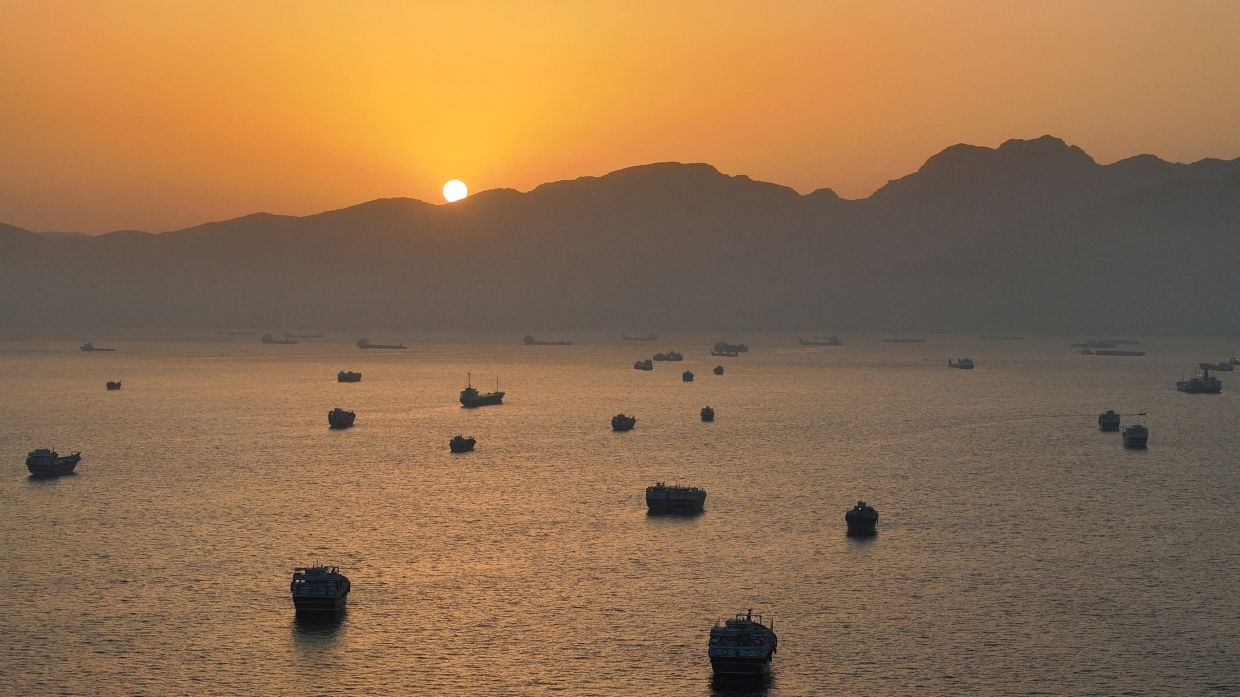
Three crude oil tankers carrying approximately 5 million barrels have begun transiting out of the Strait of Hormuz, signalling a gradual unwinding of the supply disruptions that have plagued global energy markets since the outbreak of Middle East conflict. The movement of these vessels follows an interim accord between Iran and the United States, which has eased tensions constraining the critical chokepoint through which roughly one-third of the world's seaborne crude passes. Two of the departing ships are destined for Asian terminals, underscoring the particular importance of Hormuz corridor stability for the region's refining industry and energy security.
The South Korean-flagged Very Large Crude Carrier VL Breeze is leading the exodus, having passed through the strait en route to Daesan in South Korea. This supertanker, chartered by South Korean refiner Hyundai Oilbank, holds approximately 2 million barrels of Qatari condensate and crude from Abu Dhabi. The vessel's passage represents a direct benefit to South Korea's downstream sector, which relies heavily on stable supply routes through the Gulf and benefits from price moderation when crude becomes more readily available. The transit also reflects confidence among major refiners that the corridor remains navigable despite residual geopolitical tensions in the region.
Two additional carriers are simultaneously making their exit, expanding the flow of crude back into international commerce after weeks of supply bottlenecking. The Plata Carrier, which flies a Liberian flag and operates under charter to Indian Oil Corporation, is departing with 2 million barrels of Saudi crude. Concurrently, the Suezmax-class Prudent Warrior is navigating the strait with 1 million barrels of Iraqi Basrah crude destined for Sohar in Oman. Together, these three vessels represent a measurable reopening of supply channels that have been severely constrained since regional hostilities intensified, with analysts at Kpler and Vortexa estimating that nearly 90 million barrels of crude had been trapped within the Persian Gulf waiting for conditions to stabilise sufficiently for safe transit.
The restoration of these flows carries particular significance for Asia's energy-dependent economies, where refined petroleum products feed manufacturing bases and power generation systems. South Korea and India, represented respectively by Hyundai Oilbank's and IOC's chartered vessels, are among the world's largest crude importers and refiners. Any prolonged disruption to their supply chains reverberates through Southeast Asian markets, affecting everything from chemical feedstock availability to transportation fuel costs. The fact that two of three departing vessels are heading to these nations demonstrates that Asian refiners are sufficiently confident in corridor stability to resume active procurement from the Middle East.
South Korea's maritime ministry reported that four vessels operated by South Korean shipping companies have already cleared the strait, with one destination being South Korea itself and others bound for third countries. This official acknowledgement confirms that the departure process is not limited to a single incident but represents a broader shift in shipping patterns. However, the situation remains substantially constrained: of 26 vessels stranded since the conflict began, eighteen remain within the Gulf awaiting clearance. This indicates that while momentum has shifted toward normalisation, significant supply remains locked in limbo, with many ship operators and cargo owners exercising caution before committing assets to transit.
The role of Oman in facilitating these transits deserves particular attention, as the sultanate has emerged as a crucial regional stabiliser. Oman has committed to maintaining the Strait of Hormuz as open to shipping while foreswearing toll collection, simultaneously establishing two temporary maritime corridors designated north and south of the conventional shipping lane. These temporary routes provide alternative pathways that reduce collision risks and allow vessels to navigate around any chokepoints or obstacles. The International Maritime Organization has endorsed these arrangements, lending them international legitimacy and encouraging wider participation among shipping operators who might otherwise be hesitant to commit vessels to the volatile corridor.
Liquefied natural gas markets are simultaneously showing signs of recovery, with two empty LNG tankers—the Shandong Redwood and Milaha Qatar—recently spotted west of the strait positioning to load cargoes from Qatar. This represents the ninth known empty LNG vessel transiting through Hormuz to load at Qatar since the war began, the highest such figure recorded since hostilities commenced. Qatar's strategic importance as a major global LNG exporter makes this traffic particularly significant for energy markets beyond the immediate Middle East region, affecting liquefied gas supplies to Europe, Northeast Asia, and other regions dependent on seaborne LNG imports.
Qatar's leadership has signalled confidence in the trajectory of supply normalisation. The nation's Prime Minister Sheikh Mohammed bin Abdulrahman al-Thani told the Financial Times that the Gulf state would resume normal LNG production capacity within a matter of weeks. This timeframe, while still several weeks distant, suggests a deliberate programme to restore full output rather than an immediate flood of supply. The phased resumption approach likely reflects both technical considerations—the need to ensure production facilities operate safely after disruption—and market management, avoiding a sudden supply surge that might destabilise global LNG pricing.
For Malaysia and the broader Southeast Asian region, these developments carry immediate practical implications. The Association of Southeast Asian Nations collectively imports significant quantities of crude oil and refined petroleum, with many member states' energy security strategies depending on stable flows from the Middle East. Price stability in global crude markets, which should follow from resumption of normal Hormuz transit volumes, translates into more predictable energy costs for regional petrochemical industries, power generation, and transportation sectors. Furthermore, regional maritime shipping industries benefit directly when critical global chokepoints return to normal operations, reducing insurance costs and transit delays that affect cargo vessels using these passages.
The interim Iran-US agreement that has enabled this supply release represents a significant diplomatic development with tangible market consequences. Rather than requiring a comprehensive permanent settlement of broader geopolitical disputes, the arrangement has created sufficient confidence among shipping operators and cargo owners to commit assets to the Hormuz corridor once again. This suggests that even partial diplomatic solutions can generate material improvements in energy supply stability and pricing—outcomes that benefit not only oil-producing and oil-consuming nations but also intermediate economies throughout Asia that depend on reliable, affordable energy for economic growth and development.
Looking ahead, the sustainability of this reopening depends substantially on maintaining the interim accord and preventing escalations that would again threaten transit security. Shipping industry observers will be monitoring whether the 18 remaining stranded vessels follow the departing tankers through Hormuz in coming weeks, which would signal genuine normalisation. Similarly, the pace at which Qatar restores LNG production will indicate the broader trajectory of Gulf supply recovery. For markets throughout Southeast Asia, these technical shipping matters ultimately translate into questions of economic competitiveness and growth stability in the coming months.