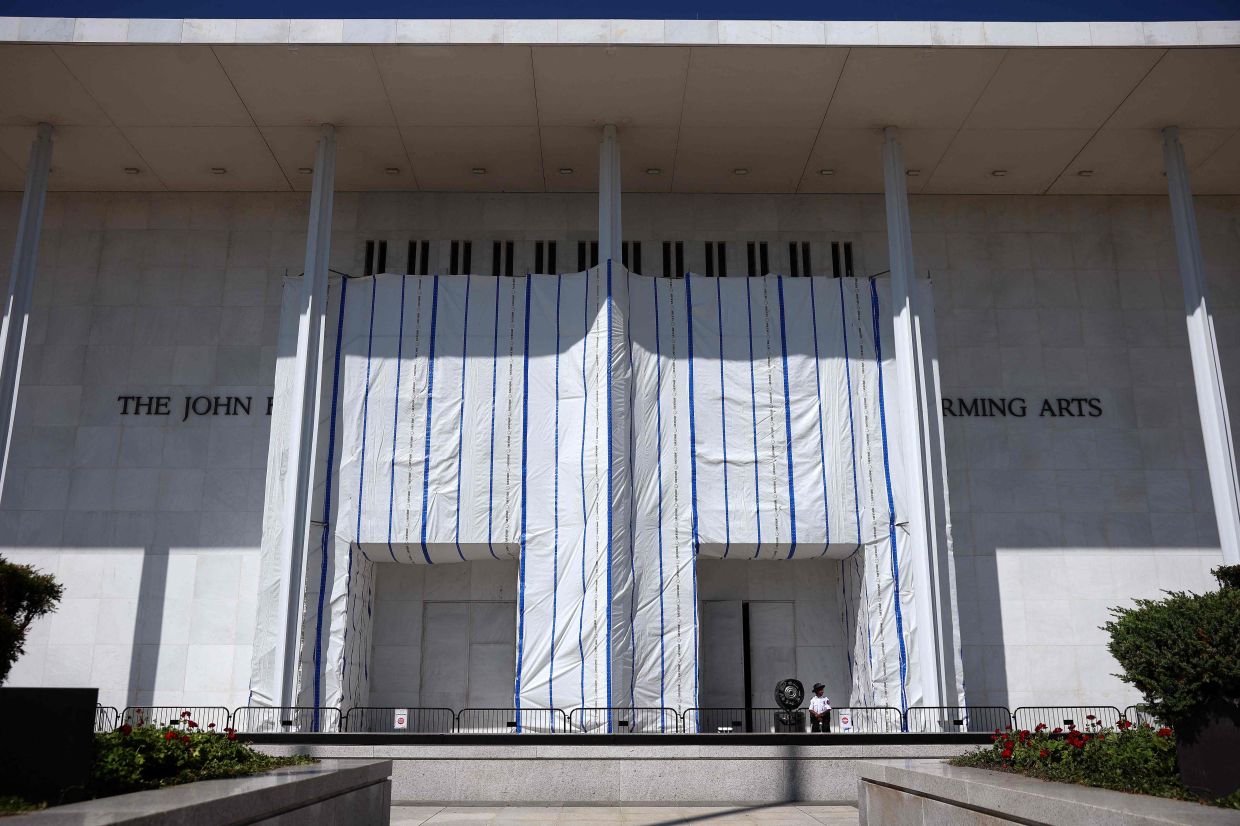
The Trump administration has taken an extraordinary gambit in its battle to reshape one of America's most celebrated cultural institutions, signalling that the iconic Kennedy Center in Washington could face demolition if judicial obstacles prevent the president's restoration agenda and naming ambitions from proceeding. The dramatic threat emerged in court filings submitted by the Justice Department on Tuesday, part of a broader legal campaign to overcome Democratic opposition to both a comprehensive two-year renovation project and Trump's desire to have his name prominently displayed on the performing arts venue.
The specific warning about potential demolition reflects the administration's escalating rhetoric rather than an announced policy, though it signals just how far officials are willing to go in pressing their case. In court documents opposing efforts by Democrats to halt the restoration work and prevent Trump's name being added to the building's facade, Justice Department attorney Brantley Mayers argued that without the president's intervention and fundraising efforts, the facility would inevitably deteriorate into an unsafe and unusable state. The filing painted a stark picture of institutional decline, describing the Kennedy Center as "structurally unsound, fundamentally unsafe, and embarrassing to the nation's capital" should renovation efforts stall.
The legal strategy appears designed to frame the Trump administration's vision as a rescue mission rather than an opportunistic rebranding exercise. Officials have claimed credit for securing US$258 million—roughly RM1 billion—in Congressional funding for restoration work and for attracting a new pool of donors to the institution. By extension, they argue that formal recognition of the president is not merely symbolic but essential to maintaining donor commitments and ensuring the centre's long-term financial viability. This framing attempts to transform the naming dispute from a question of propriety into one of institutional survival.
Mayers went further in suggesting an alternative use for the site should demolition become necessary. He proposed that the location could be redeveloped as a large outdoor amphitheater with views overlooking the Potomac River, a design he acknowledged would "fail to adequately honor" the memory of President John F. Kennedy, for whom the centre was originally established as a living memorial. The suggestion to replace an enclosed cultural complex with an open-air venue represents a fundamental reimagining of the site's purpose, though Mayers framed it as more economical to construct and maintain than maintaining the existing structure.
The dispute reflects deeper tensions about institutional identity and presidential prerogative in American civic life. The Kennedy Center was established by Congress specifically as a memorial to the slain president, carrying legal and symbolic weight that extends beyond ordinary real estate considerations. Congresswoman Joyce Beatty, an ex officio board member who initiated the legal challenge, has argued forcefully that only Congress—not a presidential appointee-dominated board—possesses the authority to rename an institution created by legislative mandate. Her position rests on constitutional principles about Congressional power over federal institutions and the special status accorded to memorials.
The Trump-controlled Kennedy Center board has already moved to cement the president's association with the venue, voting recently to inscribe "Restored and Renovated by President Donald J. Trump" beneath the institution's name and to designate the surrounding plaza as the "President Donald J. Trump Plaza." This action provoked immediate legal resistance from Beatty and others who view the manoeuvre as an overreach of board authority. A federal judge had previously intervened in the naming dispute, ruling that the board lacked unilateral power to rename the centre and ordering removal of earlier Trump signage that had been installed.
The fundamental disagreement hinges on whether board authority encompasses the power to rename, or whether such decisions require Congressional approval given the venue's unique status as a federally chartered memorial. The Trump administration is currently appealing the federal judge's earlier decision, meaning the legal contest remains active and unresolved. A hearing scheduled for Thursday will provide the next opportunity for arguments on both the closure question and the latest effort to formally associate Trump's name with the building.
Previous statements from Kennedy Center leadership had characterised the planned renovation in far more modest and conventional terms than the administration's current legal filings suggest. Officials had described the work as primarily involving extensive repairs to electrical systems, stage mechanisms, and weatherproofing measures to address persistent leaks. Crucially, they stated that the restoration would neither materially alter the building's exterior appearance nor require dismantling it to its structural frame—a sharp contrast to the demolition scenario now being articulated in court.
This discrepancy between the measured technical descriptions from centre officials and the more alarming rhetoric emanating from the Justice Department raises questions about the administration's litigation strategy. The demolition threat appears designed to strengthen the administration's negotiating position by raising the stakes of continued judicial obstruction, essentially arguing that Democratic opposition could result in the loss of the institution entirely rather than merely preventing Trump's name placement.
For Malaysian observers monitoring American institutional conflicts, the dispute illustrates how contemporary political polarisation extends even to cultural institutions traditionally considered above partisan contestation. The Kennedy Center controversy demonstrates how competitive claims about institutional legitimacy, funding authority, and memorial purpose can become weaponised in broader political struggles. The threat of demolition as leverage in a naming dispute represents an unusual escalation in American civic conflicts, one that treats a historic cultural landmark as a bargaining chip rather than a protected national asset.
The Thursday hearing will likely prove decisive in determining whether courts will permit the administration's naming initiative or uphold the principle that such decisions require broader Congressional consensus. The outcome carries implications beyond the Kennedy Center itself, potentially establishing precedent for executive authority over federal memorials and institutions.

