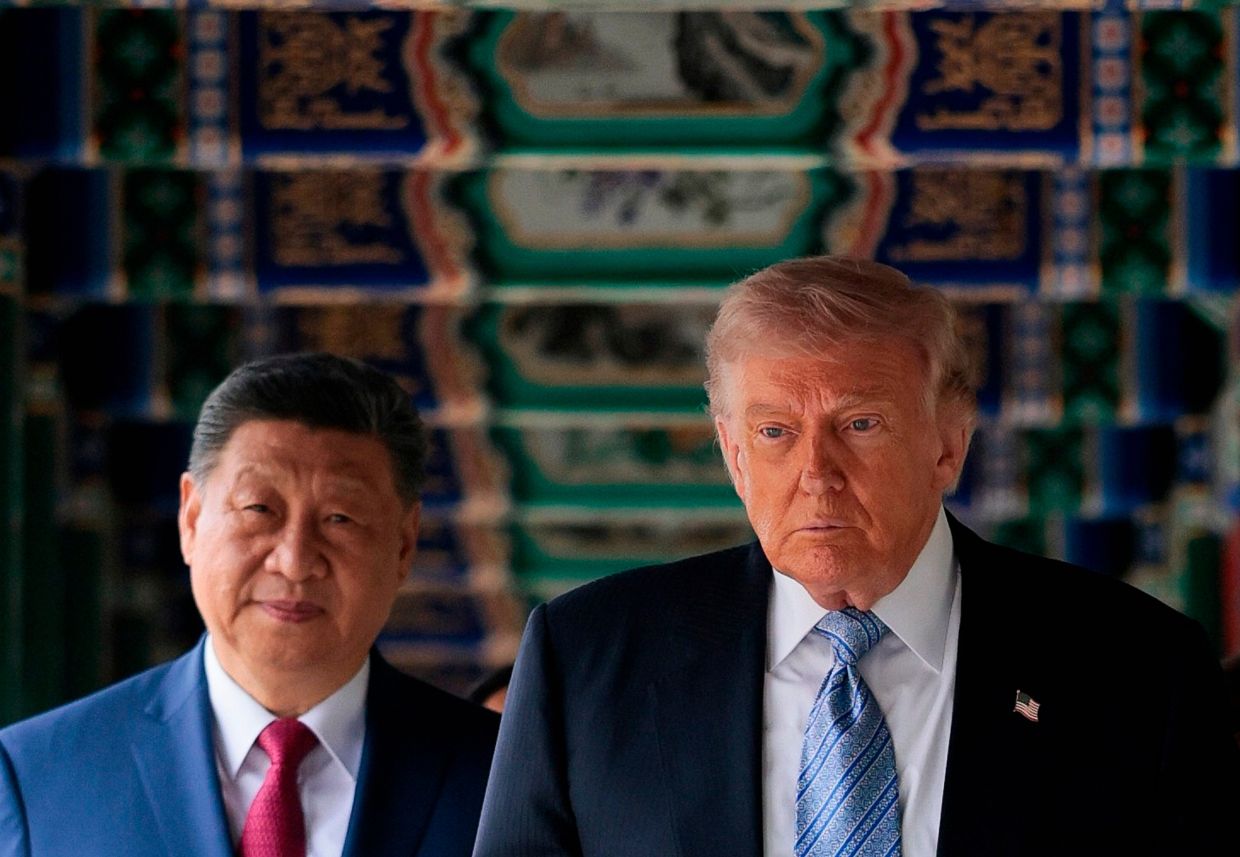
The approaching state visit by Chinese President Xi Jinping to the United States on September 24 has exposed the fundamental tension running through the Trump administration's China strategy. While Trump maintains robust public criticism of Beijing on matters ranging from election interference to alleged weapons transfers, his actions and tone suggest a preference for preserving diplomatic channels and personal rapport with the Chinese leader. This contradiction reflects both the complexity of US-China relations and the distinctive style of Trump's bilateral engagement, where personal relationships often override institutional positions.
At the centre of recent tensions is a Reuters report claiming that China has transferred weaponry to Iran through Pakistan, with the deal valued between US$60 million and US$70 million. The shipment allegedly involves weapons transported from western China through Pakistani territory. This allegation directly contradicts assurances Trump says he received from Xi during their May meeting in Beijing, where the Chinese leader purportedly committed unequivocally to withholding all military support from Iran. When questioned about the Reuters report, Trump expressed a measured response, stating that he would find such actions "surprising" while noting that Xi "told me very strongly he wouldn't partake."
Beijing's foreign ministry moved swiftly to deny the weapons transfer allegations, characterising the claims as "untrue and not factual at all." The ministry reiterated China's commitment to de-escalation and resolution of Middle Eastern conflicts. This represents a consistent pattern, as China previously dismissed reports of weapons supplies to Iran ahead of Trump's May visit as "completely groundless." The denial carries particular weight given the stakes of the upcoming September visit, suggesting both governments are invested in preventing arms-related disputes from derailing the planned diplomatic engagement.
Trump's public comments on Xi's impending visit reveal a calculated balance between maintaining leverage and preserving relationship. He expressed disappointment about the weapons allegations while simultaneously offering Xi a face-saving narrative, implying that understanding between the two leaders supersedes institutional mechanisms or public statements. By saying he would be "quite disappointed" if China proceeded with Iranian arms transfers, Trump combined a warning with an appeal to personal trust, suggesting that Xi's reputation and their relationship provide sufficient incentive for compliance without formal enforcement mechanisms.
Simultaneously, Trump launched a multifaceted assault on Dr Anthony Fauci, the long-standing US health official, recycling claims that the Covid-19 virus originated in a Wuhan laboratory. Trump accused Fauci of consistently attempting to "protect China" by disagreeing with the laboratory-origin theory from the outset. These attacks, amplified through Trump's social media platform, represent an effort to sustain the narrative that China bears responsibility for the global pandemic, a message that resonates with Trump's political base even as it complicates diplomatic relationships.
The laboratory-origin hypothesis remains contentious within the scientific community, where broader consensus leans toward natural spillover from animal populations. Trump's promotion of this theory, combined with accusations against Fauci, injects a domestic political dimension into US-China relations. For Malaysian and Southeast Asian observers, this dynamic underscores how bilateral tensions between Washington and Beijing increasingly incorporate domestic political narratives that may not reflect institutional consensus or policy direction.
Perhaps the most striking manifestation of Trump's contradictory approach emerged in the weeks preceding Xi's visit announcement. Trump delivered a prime-time address accusing China of executing "the largest compromise of election data in history," alleging that Beijing illicitly obtained approximately 220 million American voter files. He declassified documents he claimed supported this election interference allegation and characterised the situation as an "unprecedented election security nightmare." The rhetoric was severe and confrontational, suggesting a fundamental breakdown in trust.
Yet despite the gravity of these accusations, the Trump administration has imposed no new sanctions, trade penalties, or diplomatic consequences specifically targeting China for the alleged election interference. This conspicuous absence of follow-through action stands in sharp contrast to the inflammatory language of the prime-time address. Simultaneously, planning for Xi's September visit has proceeded without apparent disruption, indicating that preparatory diplomatic work continues unabated. This disconnect between words and actions reflects Trump's negotiating style, wherein public pressure serves as opening positioning before quiet diplomacy determines actual outcomes.
The broader pattern characterising Trump's China policy reveals a fundamental strategy of compartmentalisation, where different complaint categories remain segregated rather than cumulative. Trump claims to accept Xi's assurances on Iran, voices disappointment about election interference without pursuing consequences, and attacks the origins of the pandemic through proxies like Fauci, yet maintains the diplomatic schedule. This approach differs markedly from previous administrations' pursuit of comprehensive policy frameworks addressing multiple grievances simultaneously.
For regional actors, particularly Malaysia and other Southeast Asian nations, these mixed signals create substantial uncertainty regarding American commitment to China-specific issues. The absence of coordinated pressure, the continuation of high-level diplomatic engagement despite serious allegations, and the reliance on personal assurances rather than institutional guarantees suggest that Trump's transactional approach prioritises immediate relationship management over systemic enforcement. This calculus may influence how China conducts itself regionally, understanding that public criticism from Trump does not necessarily translate into material costs.
The September 24 visit will test whether Trump's personal diplomacy can sustain this delicate balancing act or whether mounting tensions surrounding election interference, weapons transfers, and pandemic origins force a recalibration of approach. The outcome will likely establish the template for US-China engagement throughout Trump's tenure and beyond, with implications for regional stability and multilateral cooperation in Southeast Asia. Whether Trump's strategy of distinguishing between rhetoric and consequences proves sustainable remains the central question as this high-stakes diplomatic encounter approaches.

