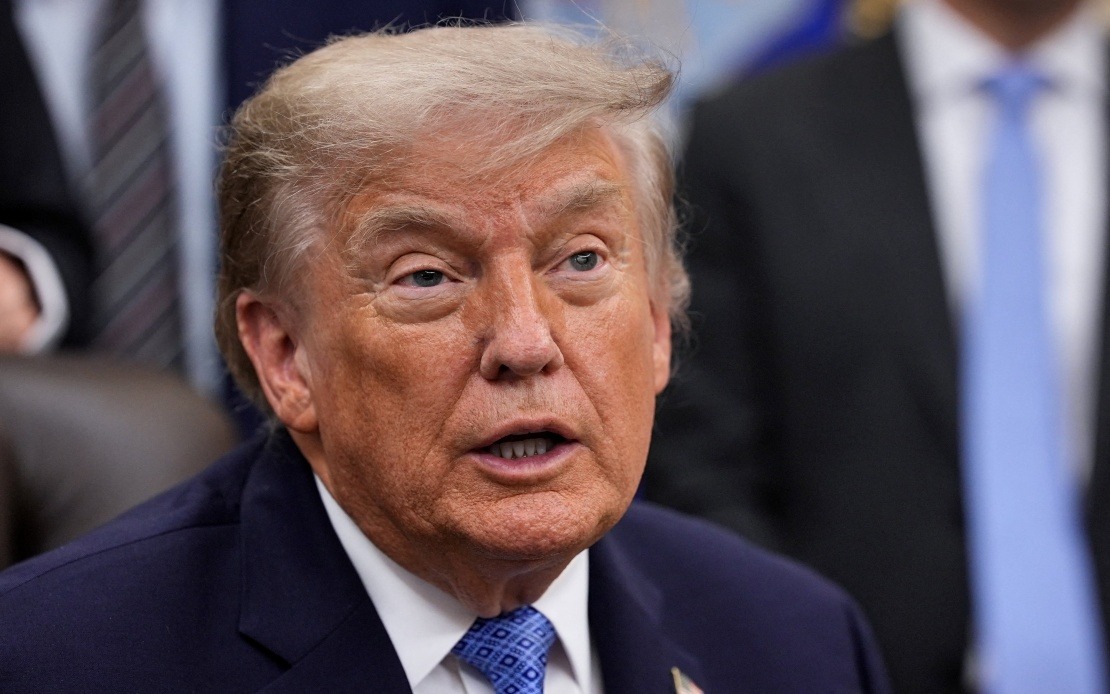
US President Donald Trump escalated tensions with Canada on Friday by attributing smoke from North American wildfires to inadequate forest management by his northern neighbour and warning of tariff consequences. The American leader, using his Truth Social platform, declared that the cost of the air pollution should be reflected in higher levies on Canadian imports, signalling a willingness to weaponise trade relations over an environmental issue that scientists attribute primarily to climate change rather than negligence.
The smoke inundating large swaths of the northeastern United States and southeastern Canada originates from dozens of active wildfires, many concentrated in the Canadian province of Ontario and extending into Minnesota. The atmospheric conditions have created a hazardous haze covering major metropolitan centres including Toronto, Chicago, Detroit, and Washington, with New York experiencing particularly acute air quality degradation. Residents across the region have reported visibility so severely compromised that midday light resembles dusk, while the acrid scent of burning vegetation persists indoors and outdoors alike.
Trump's accusation centred on what he characterised as Canada's failure to maintain its forests properly, specifically citing inadequate removal of brush and debris. In his social media post, he used inflammatory language, describing the incoming air mass as an unwanted invasion of pollution that was both unhealthy and wholly unacceptable. He indicated plans to telephone Mark Carney, Canada's Prime Minister, to extract commitments regarding remedial action, though his framing suggested predetermined scepticism about any Canadian response.
The threat to embed pollution costs into tariff schedules represents a novel approach to bilateral dispute resolution, essentially treating environmental transboundary harm as a trade grievance. This approach carries significant implications for Canada's economy, which depends heavily on exports to the United States, particularly energy products, vehicles, and agricultural goods. For Malaysian and Southeast Asian observers, Trump's strategy underscores how trade instruments increasingly serve broader policy objectives beyond conventional commerce.
However, scientific consensus presents a markedly different causation narrative than Trump's forest maintenance hypothesis. Research consistently links North American wildfire intensification and severity to rising temperatures, prolonged drought cycles, and shifting precipitation patterns—hallmarks of anthropogenic climate change. The 2023 and 2024 wildfire seasons in Canada have been particularly severe, with thousands of fires burning across multiple provinces, driven by meteorological conditions rather than deforestation or poor forestry practices.
Ontario Premier Doug Ford responded to Trump's criticism with measured pushback, suggesting that rather than assigning blame, political leaders should mobilise resources to support firefighting efforts. Ford noted that Ontario has previously provided firefighting assistance to American states facing similar disasters, establishing a precedent for cross-border cooperation rather than recrimination. This humanitarian framing contrasts sharply with Trump's transactional approach and reflects a Canadian perspective prioritising emergency response over scoring diplomatic points.
The dispute illustrates deepening fault lines in US-Canada relations under Trump's leadership. The president's administration has repeatedly threatened trade actions against Canada, particularly regarding energy imports and military spending. Adding an environmental complaint to this catalogue suggests an expansive interpretation of trade leverage—any bilateral grievance, regardless of origin, becomes material for tariff threats. Such an approach potentially destabilises established trade frameworks and precedents.
For Southeast Asian nations monitoring Trump's trade policies, the Canada episode provides instructive lessons. Regional economies with significant export dependence on American markets should anticipate that environmental issues, supply chain concerns, or any other transnational problem could trigger retaliatory trade measures. The erosion of boundaries between environmental disputes and commercial relations creates unpredictability in trade relationships and incentivises countries to align environmental and climate policies with American preferences, even when doing so conflicts with regional or domestic priorities.
The timing of Trump's accusation also warrants examination. The United States has its own substantial wildfire challenge in western states, yet Trump directed blame exclusively northward rather than acknowledging shared environmental pressures across the continent. This selective attribution suggests political calculation—criticising Canada serves domestic audiences who may view the president as holding trading partners accountable while obscuring the reality that North American wildfire expansion reflects continent-wide climatic shifts affecting both nations.
Canada faces a diplomatic challenge in responding to Trump's threat. Acknowledging any forest management deficiency could be weaponised in future trade disputes, yet dismissing all criticism risks appearing uncooperative. The optimal response likely involves technical rebuttals—providing data on Ontario's actual forestry practices and investment levels—whilst simultaneously proposing collaborative mechanisms for addressing shared wildfire challenges. Such an approach separates environmental cooperation from trade disputes and establishes common ground.
Looking forward, the incident underscores how environmental challenges increasingly intersect with geopolitical and economic competition. Climate-driven phenomena like wildfires, droughts, and weather extremes will generate more cross-border disputes. Countries adopting Trump's approach—treating environmental problems as bargaining chips—risk escalating conflicts that would benefit from cooperative solutions. For Malaysia and regional partners, engaging thoughtfully on transnational environmental issues whilst maintaining firm positions on sovereignty and trade equality becomes essential strategy.

