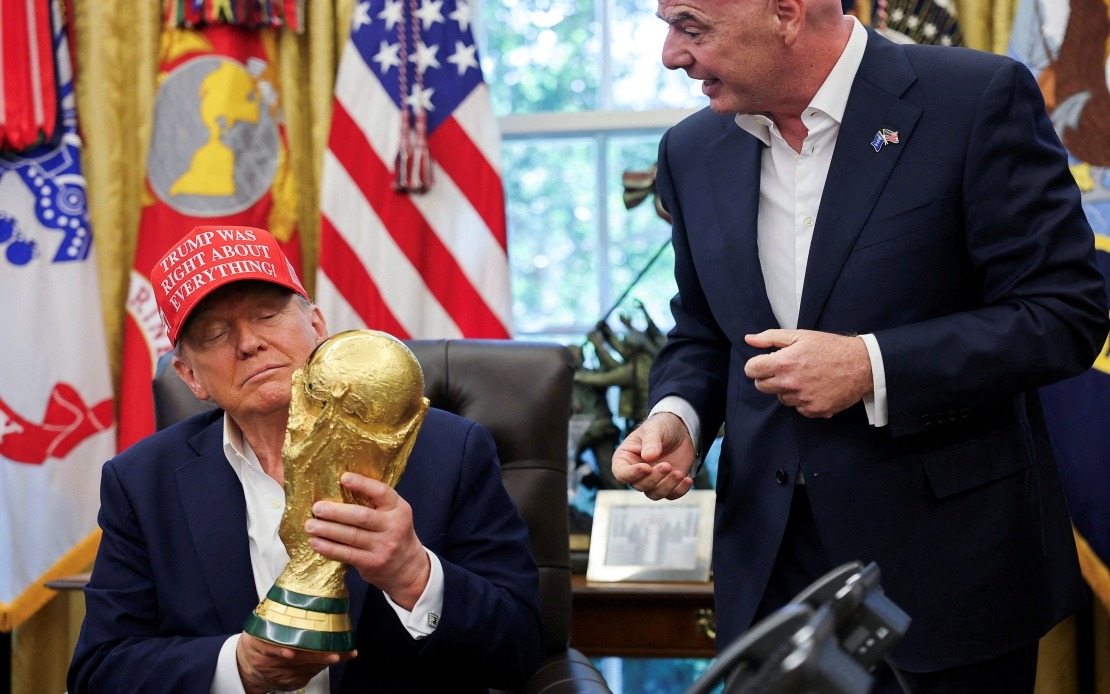
US President Donald Trump struck a notably diplomatic chord when discussing Spain in Istanbul on Sunday, declaring himself free from tension with Spanish Prime Minister Pedro Sanchez despite having threatened the European nation with comprehensive trade restrictions mere weeks earlier. The sudden shift emerged as Trump watched Spain claim World Cup glory with a 1-0 victory over Argentina, a context that underscored the unpredictability characterising contemporary international relations under his leadership. His comments to assembled reporters suggested that sporting spectacle and ceremonial congratulations could potentially reset the temperature in bilateral disputes that had reached boiling point at a NATO summit in Ankara, Türkiye earlier in the month.
The president's conciliatory language represented a dramatic reversal from rhetoric deployed during a news conference at the NATO gathering. At that gathering, Trump had levelled scathing criticism at Spain, describing the nation as a "wasted cause" and branding it a "terrible partner in NATO" with a "hopeless" and ineffectual government. His previous statements included a dramatic call to "cut off all trade with Spain, please, including visits" and an instruction not to "even talk to them." These declarations reflected genuine friction rooted in substantive disagreements over Madrid's unwillingness to grant American forces expanded access to military installations during emerging regional tensions involving Iran and Spain's apparent reluctance to meet NATO's aspired defence spending target of five percent of gross domestic product.
The underlying disputes driving Trump's earlier hostility carried genuine strategic weight beyond rhetorical theatre. Access to Spanish military facilities has long represented a cornerstone of American power projection across the Mediterranean and Atlantic spheres, while Madrid's defence spending commitments reflect broader European hesitation about substantially escalating military expenditure despite mounting geopolitical pressures. Spain's position as a NATO member occupying a geographically pivotal location—controlling passage between the Atlantic and Mediterranean through the Strait of Gibraltar—grants it leverage that could explain both Trump's frustration and his subsequent willingness to compartmentalise grievances when politically advantageous.
In Istanbul, Trump adopted a sportingly magnanimous perspective on the World Cup final itself, characterising the match as "exciting" and a "great event" while acknowledging that Spain had simply executed superior football. Though he noted the competition between the two finalists remained "very close," he assigned no blame to Argentina for falling short and expressed no regret regarding their defeat despite his administration's complex relationship with the South American nation. His praise for Spain's "great team" and his congratulations extended to Spanish officials reflected the kind of personalised diplomacy that Trump frequently employed when seeking to reset fractured relationships or present himself as above petty grievance.
This diplomatic recalibration carries implications extending well beyond ceremonial pleasantries or football-related commentary. Within the complex architecture of contemporary transatlantic relations, European leaders frequently interpret American rhetoric as signalling shifting priorities and potential room for negotiation on previously intractable positions. For Spain's government, Trump's willingness to separate football-field civility from geopolitical friction might indicate openings for addressing the military base access and defence spending concerns through diplomatic channels rather than unilateral American sanctions. Conversely, the rapid oscillation between hostility and friendliness could reinforce European perceptions of unpredictable American leadership that alternates between ultimatums and reconciliation based on largely arbitrary triggers.
Malaysian and broader Southeast Asian observers of this transatlantic dynamic should note the instructive pattern emerging. Trump's approach demonstrates how contemporary American statecraft increasingly compartmentalises different domains of engagement, separating strategic disputes from ceremonial recognition and personal rapport-building. This approach carries direct relevance for regional partners managing their own bilateral relationships with Washington, particularly those navigating tensions over military cooperation, trade arrangements, or security commitments. The Spain episode illustrates that disagreements need not prove permanently disqualifying and that American administrations may pivot swiftly when political or public relations considerations shift.
The symbolic geography of Istanbul as the location for Trump's rapprochement comments adds additional texture to the diplomatic narrative. As a city straddling continents and historically a nexus of great power competition, Istanbul serves as an appropriate stage for the recalibration of relationships between American and European leadership. That Trump chose this moment and location to signal détente with Spain, rather than maintaining the confrontational stance articulated at the NATO summit in the same country weeks earlier, suggests consideration of how American messaging plays across different contexts and audiences.
Looking forward, the durability of this apparent reconciliation remains uncertain. Trump's historical pattern demonstrates a propensity for rapidly reverting to antagonistic rhetoric when fresh grievances surface or when political calculations shift. Spain's government, like other European partners, must weigh whether this conciliatory messaging represents genuine movement on outstanding disputes or merely tactical positioning pending the next point of friction. The absence of concrete commitments or substantive movement on the underlying disagreements—military base access and defence spending—suggests that Trump's friendly words may constitute atmospherics rather than substantive policy shifts.
For the broader European Union and NATO alliance structure, this episode underscores the unpredictability that Washington's current leadership introduces into traditionally stable institutional relationships. While Spain may welcome the softening of rhetorical temperature, Madrid cannot assume that defence spending commitments or military facility negotiations will suddenly become easier. Rather, the episode demonstrates how contemporary American diplomacy operates through constant recalibration based on immediate contexts rather than through the predictable frameworks that characterised Cold War-era alliance management. European capitals watching this dynamic must remain simultaneously prepared for both warmer engagement and sudden reversal as American priorities and political calculations continue evolving.

