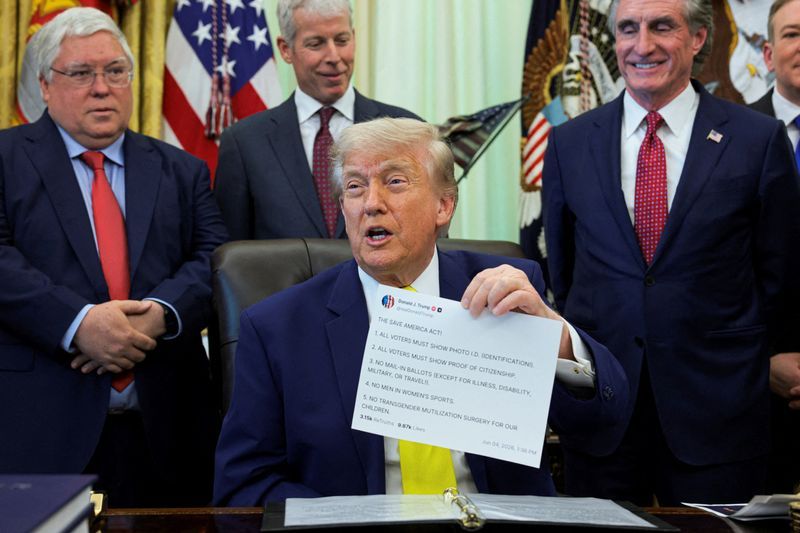
Two prominent media organizations have launched a legal challenge against a controversial service that charges wealthy subscribers substantial fees for early access to posts from Donald Trump and other high-ranking U.S. officials on the Truth Social platform. The lawsuit, filed in Manhattan federal court by the Intercept and the Freedom of the Press Foundation, targets Truth API, an offering from Trump Media & Technology Group that can cost up to $100,000 monthly for expedited access to ten prominent Truth Social accounts, including that of the president himself.
Truth API commenced operations on August 1, just days after Democratic senators Elizabeth Warren of Massachusetts and Adam Schiff of California formally requested the U.S. Securities and Exchange Commission investigate whether the service jeopardizes financial market stability while enriching Wall Street investors, politically connected insiders, and Trump personally. The timing raised questions about whether the venture was designed to capitalize on the president's unique ability to move markets through his communications, particularly on sensitive topics such as tariff announcements and geopolitical developments.
At the heart of the legal complaint lies a fundamental tension between market access and democratic principles. The plaintiffs argue that Truth API constitutes a "profoundly corrupt" arrangement because Trump stands to gain financially whenever affluent subscribers purchase early access to his announcements. This creates what critics view as an inherent conflict of interest, where the president could theoretically time or craft market-moving statements with financial gain in mind, effectively selling information advantage to the wealthiest market participants before it reaches the general public.
The constitutional dimension adds another layer to the challenge. The plaintiffs contend that the First Amendment guarantees all Americans equal access to presidential communications and official government announcements. By allowing the White House to post statements exclusively on Truth Social through the paid feed system, they argue, the administration violates foundational principles of press freedom and public information access. According to their filing, many of Trump's approximately 9,000 to 11,000 Truth Social posts and reposts during his second term never received corresponding official White House announcements through traditional channels, effectively creating a two-tiered information system.
Trump's financial stake in the venture substantially exceeds what typical corporate shareholders might accumulate. Through his Donald J. Trump Revocable Trust, he holds 41.3 percent of Trump Media, a position currently valued at approximately $950 million. His eldest son, Donald Trump Jr., serves as a Trump Media director and oversees the trust's management, creating a family-controlled structure around the enterprise. This concentrated ownership raises questions about governance and whether appropriate checks exist to prevent exploitation of the president's official position for personal enrichment.
Truth API's subscriber base extends well beyond the president's account. The service also provides early access to posts from Vice President JD Vance, Health and Human Services Secretary Robert F. Kennedy Jr., FBI Director Kash Patel, and official White House accounts. This broader subscriber offering transforms the initiative from a niche service into a comprehensive early-warning system for market-sensitive government communications, potentially conferring enormous competitive advantages to financial actors willing to pay premium fees.
Trump Media has mounted a vigorous defense, with company representatives dismissing the lawsuit as a weaponization of the courts by political opponents seeking to suppress the president's speech. A spokesperson noted that "countless" other platforms and news organizations already redistribute Trump's content through subscription services, arguing that Truth API represents merely one option among many for following his communications. During an earnings call, interim Chief Executive Kevin McGurn characterized the service more modestly, suggesting it merely enables subscribers to receive information "fractionally faster" than other audiences, framing the advantage in technical rather than substantial terms.
The regulatory environment complicates the dispute's trajectory. The Securities and Exchange Commission, which would ordinarily investigate whether Truth API undermines market integrity, is led by three Republican commissioners, raising questions about the agency's willingness to scrutinize a service that benefits the Republican president. This composition suggests that any SEC action would face political headwinds, potentially limiting the practical enforcement avenues available to those concerned about market manipulation.
For Malaysian and Southeast Asian observers, this controversy illuminates broader tensions surrounding technology, political power, and market access that transcend national boundaries. As digital platforms increasingly serve as primary channels for government communication worldwide, the structural incentives created when political leaders maintain direct financial interests in those platforms warrant careful consideration. The case underscores how technology platforms can facilitate unprecedented concentration of information power, particularly when combined with financial incentives that reward early access to market-moving announcements.
The lawsuit also reflects deepening divisions over the appropriate relationship between democratic institutions and commercial platforms. If courts ultimately side with the plaintiffs, the precedent could reshape how governments and political figures conduct official communications in the digital age. Conversely, if Trump Media prevails, it would establish that officials may legitimately monetize early access to government information, a principle with potentially far-reaching implications for market fairness and democratic accountability globally.
Regional governments and regulatory bodies across Southeast Asia may find this dispute instructive as they grapple with their own challenges regarding political communication, platform governance, and financial market integrity. The case demonstrates that without robust legal frameworks and institutional checks, the combination of political power and technology ownership creates significant risks of market distortion and democratic degradation, regardless of a nation's development level or political system.
The Truth API controversy ultimately represents more than a simple dispute between media organizations and a political figure. It crystallizes fundamental questions about whether democratic societies can sustainably permit their leaders to maintain major financial interests in the platforms they use for official communications, and whether market participants deserve equal access to information from government sources. As litigation proceeds, these questions will likely resonate far beyond American shores.

