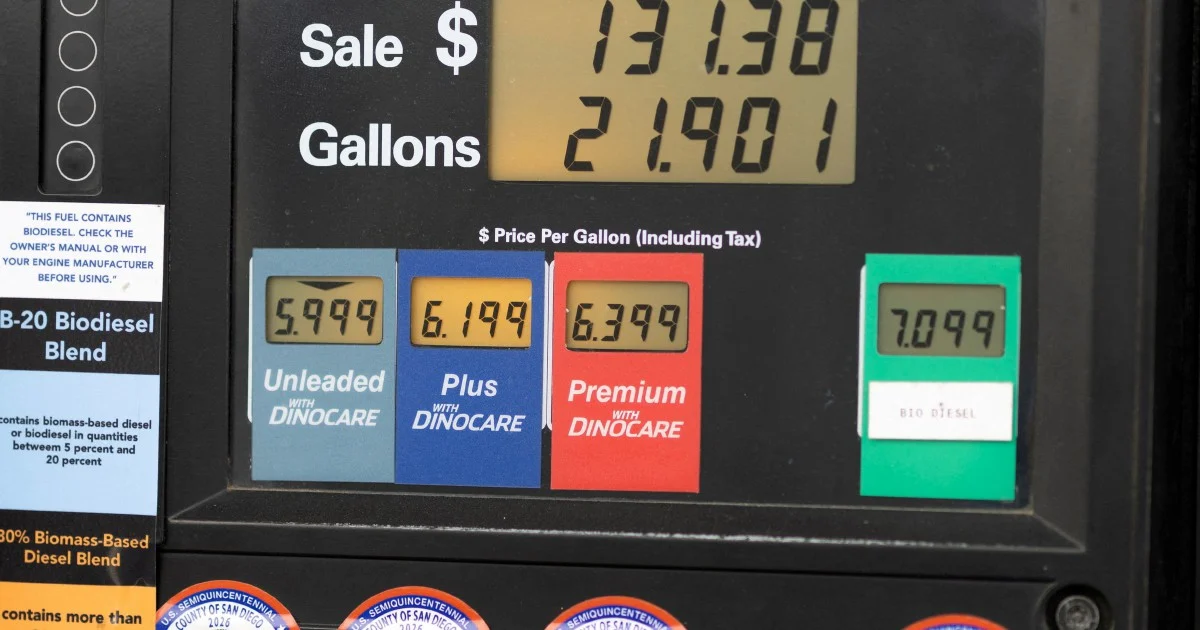
Donald Trump moved swiftly on Wednesday to order a formal investigation into the leading oil corporations in the United States, citing frustration over the pace at which petrol prices are declining at the pump. The directive comes as the American president confronts intensifying political pressure regarding the economic fallout from the conflict in the Middle East, which has created uncertainty in global crude markets and kept fuel costs elevated for American consumers.
The investigation signals Trump's attempt to address voter concerns about the cost of living, a persistent economic challenge that has dominated political discourse in the lead-up to elections. Gasoline prices remain a visceral issue for American households, affecting everything from daily commutes to broader household budgets, making them a potent political flash point. By directing scrutiny towards oil companies, Trump is positioning himself as responsive to public grievances about energy costs, a messaging approach that appeals to middle-class voters squeezed by inflation across multiple sectors.
The timing of the investigation reflects broader geopolitical turbulence in the Middle East, where military actions and regional tensions have sent shockwaves through international petroleum markets. These developments have constrained the supply side of the energy equation, preventing the natural market correction that would otherwise drive prices downward more rapidly. Oil companies operate within a complex global system where supply disruptions in critical producing regions inevitably ripple outward, affecting refineries and distribution networks worldwide, including American fuel stations.
Trump's move essentially redirects public frustration toward corporate actors rather than attributing price pressures to structural market forces or geopolitical realities beyond executive control. This framing is strategically significant because it implies that adequate regulatory scrutiny or antitrust action could moderate prices, even though crude oil is a globally traded commodity where domestic enforcement tools have limited influence. The investigation could examine whether firms are engaging in pricing manipulation or have implemented excessive profit margins during a period of constrained supply.
For Malaysian and Southeast Asian businesses, Trump's initiative underscores how American energy policy decisions continue to influence regional economic trajectories. Malaysia, as both an oil and natural gas exporter, watches closely when Washington adopts aggressive stances toward petroleum producers. Any investigation that shifts perceptions about future regulatory environments in the US could affect investor confidence in energy sector stocks across the region and reshape capital flows into exploration and production ventures.
The US petroleum industry operates within an interconnected global market where American regulatory decisions create precedent effects felt internationally. Major multinational oil corporations headquartered in the United States or with substantial American operations face potential compliance costs, reputational risks, and possible sanctions arising from such investigations. These cascading effects eventually influence energy pricing and availability across all markets, not merely within US borders.
Critics have pointed to Trump's strategy as potentially counterproductive, arguing that investigations into oil majors during a period of actual supply constraints might discourage investment in exploration and refining capacity, ultimately worsening future price pressures. Energy economists warn that if companies become more cautious about capital expenditure due to regulatory uncertainty, the industry's ability to respond to future demand could be compromised, paradoxically creating the very supply problems that drive prices upward.
The investigation also reflects enduring political divisions over energy policy in the United States. While some observers support aggressive oversight of petroleum producers, others contend that deregulation and reduced federal intervention would encourage production and achieve better price outcomes. Trump's approach attempts to thread this needle by maintaining a pro-business posture while appearing tough on corporate behaviour that he attributes to inadequate pricing discipline.
Southeast Asian nations, particularly those dependent on energy imports, have reason to monitor how this investigation unfolds. Singapore's refining sector, for instance, processes crude from multiple sources including the Middle East, and is sensitive to both crude prices and regulatory shifts in major consumer nations. Similarly, energy-intensive industries across the region—from petrochemicals manufacturing to power generation—face margin pressures when American policy uncertainty disrupts global petroleum pricing signals.
The investigation's scope and methodology remain to be clarified, but Trump's directive signals that his administration views the oil industry as accountable for failing to translate reduced geopolitical risk into corresponding price reductions. Whether the investigation identifies systemic problems or concludes that market forces alone explain current pricing will have implications for future executive and legislative energy policy. This will, in turn, reverberate through global supply chains and energy markets that support economic activity throughout Asia.
Moving forward, the investigation may either result in specific regulatory recommendations or serve primarily as a political exercise demonstrating executive responsiveness to consumer concerns. Regardless of its substantive findings, the mere announcement has already signalled to oil companies that pricing discipline and transparent communications with government authorities are expected, potentially influencing boardroom discussions about supply strategies and price-setting approaches in coming quarters.