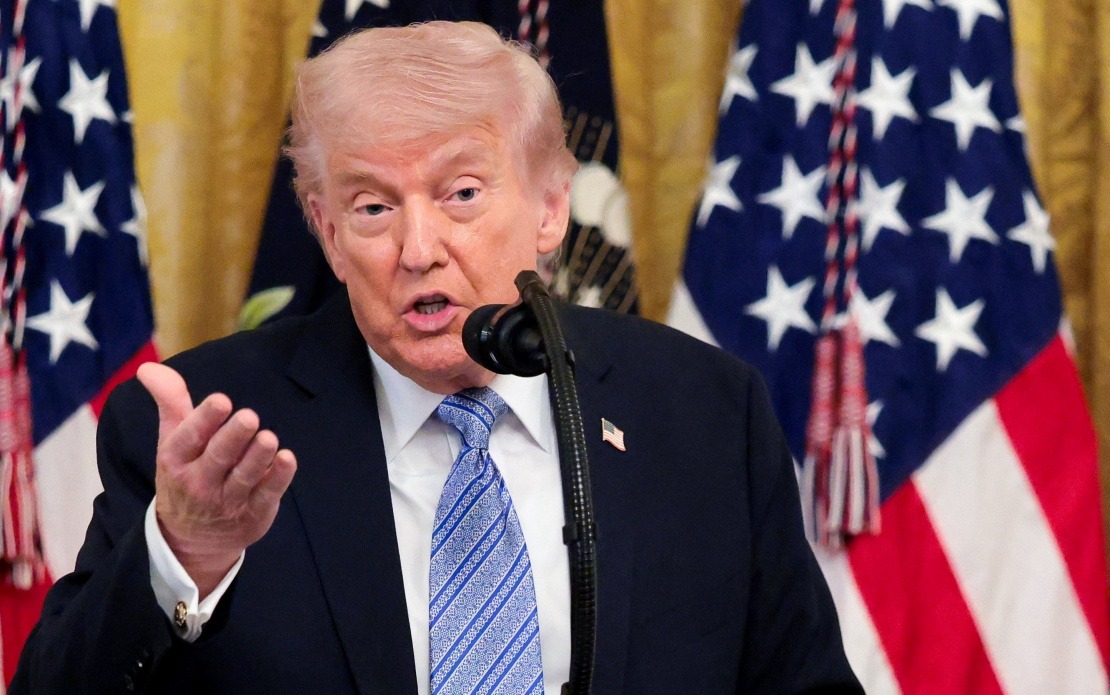
US President Donald Trump announced on Monday that he had conducted a productive teleconference with Andy Burnham, the newly installed British Prime Minister, signalling early momentum in United States-United Kingdom diplomatic relations following Burnham's recent appointment to lead the UK government. Trump shared details of the exchange on his Truth Social platform, characterising the interaction as exceptionally positive and laying groundwork for future high-level engagement between the two nations.
The American president indicated that the bilateral discussion encompassed a broad spectrum of issues central to the Anglo-American partnership. Among the topics addressed during the call were the enduring strength of diplomatic and strategic relations between Washington and London, a relationship that has historically served as a cornerstone of Western alignment and transatlantic security cooperation. Trump's emphasis on this historical partnership reflects the traditional importance both nations assign to their mutual engagement across multiple domains.
Beyond general diplomatic pleasantries, the conversation ventured into specific policy areas with direct implications for both economies and regional stability. Energy security emerged as a notable focus, with North Sea oil development featuring prominently in discussions—a matter of significance given the energy transition debates currently shaping European policy and Britain's own offshore energy portfolio. This signals continued American interest in traditional energy sources and British capacity to contribute to wider Western energy security amid global supply chain concerns.
Trade relations formed another substantive pillar of their discussion, reflecting the priority both administrations place on bilateral commercial ties. The UK, having exited the European Union, has sought to establish independent trade arrangements with major partners including the United States. Such dialogue typically explores tariff frameworks, market access for goods and services, and regulatory harmonisation—issues affecting everything from agricultural exports to financial services where both nations maintain significant interests.
Military and defence cooperation constituted a third major element of the Trump-Burnham exchange. The US-UK alliance encompasses intelligence sharing through the Five Eyes agreement, joint military operations, nuclear deterrence coordination, and weapons system interoperability. Ongoing discussions about maintaining and strengthening these defence partnerships remain crucial, particularly given evolving security challenges in Europe and beyond. Trump's reference to this alliance underscores the administration's commitment to preserving institutional arrangements that have defined Western security architecture for decades.
Perhaps most notably, the presidents discussed demining operations in the Hormuz Strait, a critical chokepoint through which vast quantities of global energy supplies transit daily. This reflects shared strategic concerns about maritime security, freedom of navigation, and the broader Middle Eastern security environment. British naval presence in the region has historically been substantial, and coordination with American forces on such operations demonstrates the depth of security cooperation between the two nations, with direct ramifications for regional stability and global trade.
Trump characterised the overall tenor of the conversation as remarkably positive, noting that the call proved engaging and progressed favourably. Such framing serves multiple purposes: it establishes constructive diplomatic foundations with a newly arrived counterpart, signals stability to international markets and allies, and projects American confidence in bilateral relations. For Burnham's nascent government, receiving validation from the American president carries symbolic weight in demonstrating international standing and securing cooperation from a leading global power.
The president further indicated that in-person bilateral meetings would materialise in the relatively near term, suggesting both leaders prioritise face-to-face engagement despite the preliminary nature of their relationship. Such meetings typically occur at international forums, state visits, or specially convened bilateral summits and provide opportunity for deeper negotiation on substantive matters that telephone diplomacy cannot fully resolve. The prospect of such engagement suggests momentum in the relationship and mutual investment in strengthening ties.
For Malaysian and Southeast Asian observers, the Trump-Burnham conversation carries broader significance within the evolving global geopolitical landscape. The Anglo-American partnership remains foundational to regional security architecture, including mechanisms affecting maritime safety, naval operations, and intelligence sharing that have implications for Southeast Asian waters and supply lines. The Hormuz Strait reference particularly resonates given Malaysian dependence on stable Middle Eastern energy supplies and regional waterway security concerns affecting ASEAN nations.
Burnham's recent ascension to the British premiership represents a significant political transition in the UK, and his early engagement with the American administration establishes crucial diplomatic channels at a formative moment in his tenure. The substantive range of topics discussed—from energy and commerce to defence and regional security—demonstrates that bilateral relations encompass interconnected domains requiring coordinated policy approaches. Neither nation operates in isolation, and their strategic choices reverberate through global markets, alliance systems, and geopolitical calculations affecting countries well beyond their borders.
The emphasis on topics like North Sea oil and Hormuz Strait security reflects enduring concerns about energy stability and maritime freedom that unite developed Western economies despite occasional divergences on specific policy details. For Malaysia and the broader Southeast Asian region, stability in these distant theatres contributes to regional security and economic prosperity. Burnham's willingness to engage substantively with Trump on such matters signals his administration's commitment to active engagement in global affairs, reinforcing predictability in international relations that smaller economies depend upon for stability and planning certainty.

