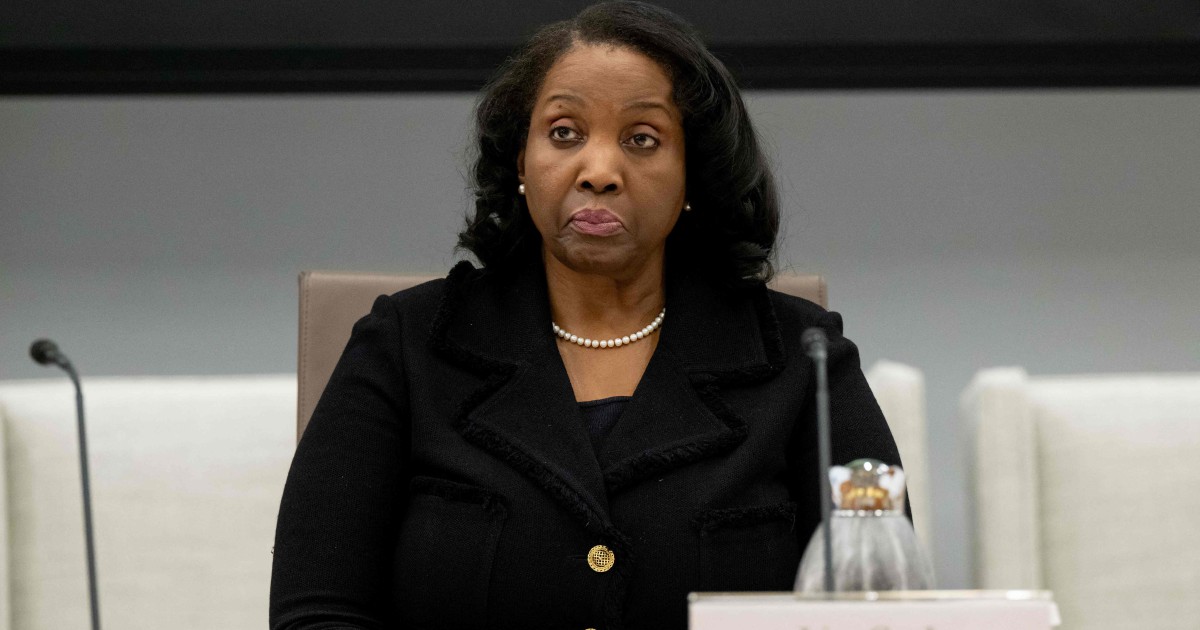
President Donald Trump has reinitiated efforts to remove Federal Reserve Governor Lisa Cook, triggering fresh uncertainty around US monetary policy and the independence of the central bank. The renewed push comes as a White House letter obtained by AFP on Friday demonstrates Trump's determination to pursue the matter despite a setback from the Supreme Court in June when the justices rejected his initial attempt at removal.
Cook, who has served as a Federal Reserve Governor since 2022, faces allegations related to mortgage fraud. The case highlights emerging friction between the executive branch and the central bank, an institution traditionally insulated from direct political pressure. For observers across Southeast Asia, including Malaysia, developments affecting the Federal Reserve carry significant weight given the US dollar's pivotal role in regional financial markets and the substantial holdings of US securities by regional central banks and institutional investors.
The Supreme Court's June decision effectively blocked Trump's earlier removal bid, establishing legal boundaries on presidential authority to dismiss Federal Reserve leadership. However, the White House's continued pursuit suggests Trump views the earlier ruling as a procedural rather than substantive defeat. This pattern of persistent legal challenges reflects broader tensions over the extent of executive power in influencing monetary policy decisions, a debate that resonates beyond American borders as global markets remain acutely sensitive to shifts in Federal Reserve direction and philosophy.
The reinstatement of removal efforts carries implications for Malaysia's banking sector and broader Southeast Asian financial stability. The Federal Reserve's decisions on interest rates and monetary tightening directly influence capital flows, currency valuations, and borrowing costs across the region. Any institutional weakening of the Fed's independence could theoretically alter how decisively it acts on inflation control, affecting emerging market currencies and investment flows. Malaysian financial regulators and policymakers monitor Fed governance closely for signs of political interference that might compromise the institution's credibility as an inflation-fighting authority.
Cook's background as an economist and board member has generally aligned with mainstream central banking thinking, though her tenure has coincided with shifting Federal Reserve priorities. Her removal, should it succeed through alternative legal channels, could reshape the composition of the Fed's leadership in ways that ripple through global financial networks. The specific allegations concerning mortgage fraud, while serious, also raise questions about whether such personal conduct matters constitute legitimate grounds for removal from a policy-setting position versus administrative or regulatory action through other mechanisms.
The broader pattern of Trump's approach to Federal Reserve governance reflects a philosophical clash over whether the central bank should operate with genuine autonomy or remain more responsive to presidential preferences. This tension is hardly unique to the Trump administration, but the explicit pursuit of removal through multiple legal avenues marks an unusually direct challenge to institutional norms. Observers in Malaysia and across ASEAN note that such institutional stress in the world's largest economy inevitably creates ripple effects, requiring regional policymakers to adjust their own frameworks to compensate for potential volatility.
Cook's potential removal would not fundamentally alter the Federal Reserve's structural mandate or operational capacity, yet symbolic and compositional changes at the board level do influence policy direction over time. The ideological orientation of board members shapes voting patterns on interest rate decisions and regulatory stances toward the financial industry. Malaysia's financial sector, deeply enmeshed with US capital markets through trade financing, foreign investment, and currency hedging arrangements, therefore maintains keen interest in who steers American monetary policy and how freely they can do so without political pressure.
The timeline for Trump's renewed effort remains unclear from the White House correspondence. Previous removal attempts have typically faced resistance not only from courts but also from congressional critics concerned about setting precedents that might undermine presidential checks and balances. Some legal scholars argue that sitting Federal Reserve governors enjoy protections precisely because their decisions must sometimes contradict presidential economic preferences, particularly during periods of inflation when tight monetary policy creates short-term political costs despite long-term benefits.
The mortgage fraud allegations require scrutiny independent of their utility as political leverage. If genuine misconduct occurred, appropriate administrative channels exist within the Federal Reserve and possibly regulatory agencies. However, weaponising such allegations as a mechanism for reshaping board composition raises governance questions that extend beyond the US system itself. International observers and trading partners increasingly scrutinise US institutional resilience, with Federal Reserve independence representing a cornerstone of confidence in American financial stability and the dollar's global role.
For Malaysian investors and policymakers, the Cook case exemplifies broader questions about how political systems navigate the relationship between elected leadership and technical expertise. Central banking in particular demands insulation from electoral pressures so that fighting inflation—often unpopular in the short term—receives consistent priority. The Federal Reserve's credibility ultimately rests on demonstrated commitment to price stability regardless of which party occupies the White House. Any successful effort to remove governors for political reasons would weaken that credibility and potentially force regional authorities to adjust their assumptions about American policy direction and Fed reaction functions.
The outcome of Trump's renewed removal effort will likely influence how subsequent administrations approach Federal Reserve governance. Should new legal theories succeed in expanding presidential removal authority, the precedent could reshape central banking norms globally. Conversely, if courts again reject the effort, institutional precedent further solidifies the Fed's autonomy, reassuring markets about the consistency and technical integrity of American monetary policy decisions. For Malaysian market participants and financial institutions monitoring global developments, clarity on this question carries direct implications for interest rate forecasting, currency positioning, and capital allocation strategies throughout the region.

