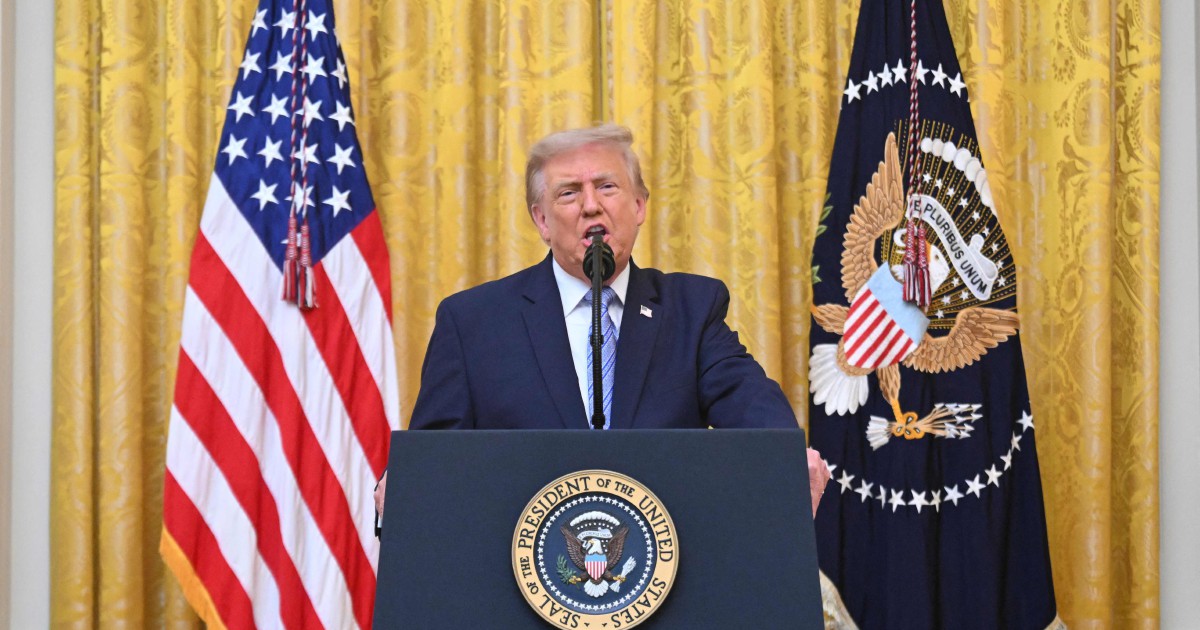
During a public address delivered on Thursday, US President Donald Trump resurfaced a collection of electoral fraud allegations that have been comprehensively investigated and dismissed by election officials, courts, and independent fact-checkers over the past four years. The President's remarks centred on accusations that foreign adversaries—specifically China and Venezuela—engineered interference in the 2020 presidential contest through mechanisms ranging from voter database theft to direct manipulation of voting infrastructure.
Trump's assertion that China orchestrated the theft of millions of American voter files represents one of the most serious allegations raised during his address. This claim lacks substantive evidence and contradicts findings from the Department of Homeland Security, state election officials across all 50 states, and independent cybersecurity researchers who have examined voting systems and data security infrastructure. Election security experts have noted that while voter file breaches have occurred in isolated instances unrelated to foreign actors, no credible evidence supports the notion of a coordinated Chinese operation targeting the 2020 election at the scale Trump suggested.
Equally unfounded are the President's implications regarding Venezuelan involvement in American voting machine manipulation. These suggestions appear to draw from theories previously circulated by Trump allies concerning Dominion Voting Systems and other election technology providers. Comprehensive audits, recounts, and court-ordered examinations in multiple states—many overseen by Republican election officials—have consistently validated the accuracy of machine tallies and the integrity of tabulation processes. Venezuela's technical capacity to remotely manipulate American voting systems across jurisdictions remains implausible given the decentralised architecture of US election infrastructure.
The recirculation of these claims carries particular significance for international observers tracking American political dynamics. Southeast Asian nations, increasingly concerned with election security and foreign interference in their own democratic processes, have watched how the United States addresses such allegations. The pattern of unsubstantiated fraud claims in America can influence global conversations about election integrity and the vulnerability of democratic institutions to disinformation campaigns—a concern directly relevant to Malaysia's own electoral framework and regional stability.
Courts at every level have examined Trump's election fraud allegations with considerable thoroughness. Federal judges, many appointed by Republican administrations, dismissed over 60 lawsuits challenging the 2020 result. The Supreme Court declined to hear cases raising these issues. State election officials representing both political parties certified results following mandatory audits and recounts. The Department of Justice conducted an investigation that found no evidence of fraud sufficient to change the outcome. These institutional rejections of the President's claims reflect not partisan resistance but the weight of evidence and constitutional processes.
Fact-checkers and election integrity organisations have extensively documented the falsity of specific allegations. Claims about voting machines switching votes have been debunked through physical examination and forensic analysis. Allegations of deceased voters casting ballots have been investigated and found to represent statistical anomalies rather than systemic fraud. Claims about illegal immigrants voting have been studied and found to occur at negligible rates inconsistent with claims of election-determining fraud. Each major allegation has undergone scrutiny sufficient to establish its baselessness beyond reasonable dispute.
The repeated airing of these discredited claims raises questions about their political utility and psychological appeal. For Trump supporters who have invested belief in fraud narratives, the President's continued invocation of these allegations reinforces conviction regardless of evidence. For others, the persistence of these claims despite comprehensive refutation demonstrates how political institutions struggle to establish agreed-upon facts in polarised environments. This dynamic extends beyond American borders, as societies worldwide grapple with how to maintain shared epistemological ground essential for democratic functioning.
For Malaysia and other developing democracies, Trump's approach to electoral claims offers cautionary lessons. Election security requires not only robust technical systems and legal frameworks but also leadership committed to accepting electoral outcomes even when unwelcome. When elected officials systematically promote discredited fraud allegations, they undermine public confidence in institutions regardless of whether actual fraud occurred. This erosion of institutional legitimacy can prove particularly damaging in newer democracies where public trust remains fragile.
The international dimensions of Trump's allegations deserve scrutiny from a Malaysian perspective. By naming China and Venezuela specifically, the President invokes foreign adversaries in ways that amplify geopolitical tensions while remaining grounded in unfounded claims. For a region like Southeast Asia, where great power competition increasingly influences regional stability, distinguishing between credible security concerns and baseless conspiracy theories becomes essential to informed policymaking. The case of the 2020 election demonstrates how superficially plausible allegations can circulate globally despite lacking evidentiary foundation.
Election officials nationwide have expressed frustration with the continued promotion of false fraud claims, noting that such narratives complicate their efforts to communicate election security measures to voters. When officials must constantly rebut disproven allegations rather than educating the public about genuine vulnerabilities and safeguards, election administration itself becomes compromised. This dynamic affects not only American elections but influences how democratic societies globally approach election security discourse.
Moving forward, the persistence of these allegations raises questions about how democracies can establish authoritative fact-finding mechanisms that command public trust. In Malaysia's context, where election administration occurs under close scrutiny from various political stakeholders, the American experience underscores the importance of transparency, independent oversight, and clear communication from election officials. Building institutional credibility before crisis points—rather than attempting to restore it after allegations emerge—represents a lesson applicable across democracies seeking to strengthen their electoral systems.

