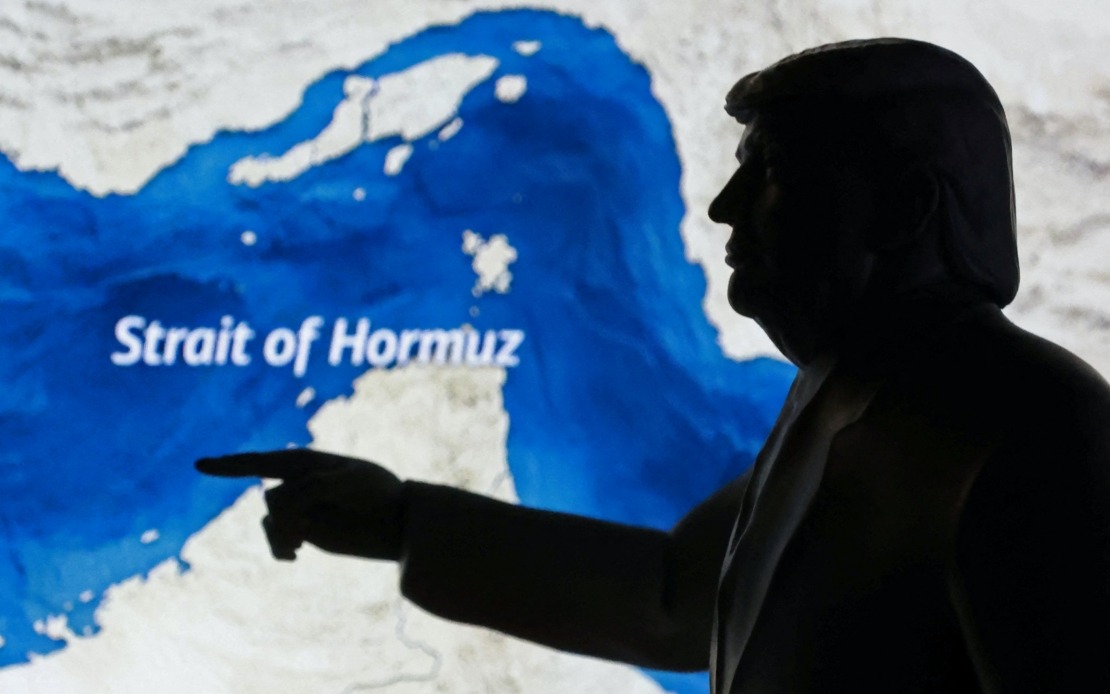
United States President Donald Trump has issued a stark ultimatum to Iran, declaring that Washington will systematically destroy Iranian infrastructure in response to any hostile action against commercial vessels transiting the Strait of Hormuz. In a statement posted on his Truth Social platform, Trump specified that the American military would target and destroy one bridge or power plant for each attack, with facilities near or within Tehran itself potentially serving as targets. The declaration represents a significant hardening of the US position and marks a dramatic escalation of rhetoric in the ongoing dispute between Washington and Tehran.
The threat comes amid an intensifying cycle of military exchanges between the two nations. The US has conducted a series of strikes across Iranian territory over the past week, prompting Tehran to retaliate with its own operations against facilities and military installations it claims are operated by American forces at various locations throughout the region. This tit-for-tat dynamic has created a dangerous spiral of military action and counter-action, with each side responding to perceived provocations from the other.
The escalation is particularly significant given that both countries had nominally committed to de-escalation just weeks earlier. In June, the US and Iran signed a Pakistani-brokered framework agreement intended to end hostilities stemming from a conflict that began in February. That accord was designed to establish the foundation for a comprehensive peace settlement and represented what appeared to be a genuine diplomatic breakthrough after months of tension. The framework was hailed by international observers as a potential turning point in regional stability.
Yet the framework has proven fragile in practice. Despite the agreement's existence, the underlying tensions and mutual suspicions have continued to fuel military operations and hostile rhetoric. The situation reflects the deep structural challenges in US-Iran relations, where decades of antagonism, competing regional interests, and fundamentally opposed strategic objectives make sustained peace difficult to achieve. For Malaysia and other Southeast Asian nations dependent on stable energy supplies and maritime trade, the deterioration of the ceasefire is particularly concerning.
The Strait of Hormuz remains one of the world's most critical chokepoints for global energy commerce. Approximately one-third of all seaborne traded oil passes through these waters, making the security environment there a matter of acute international significance. Threats to shipping in the region directly affect energy prices and supply reliability across Asia and beyond. Malaysia, as a trading nation heavily dependent on maritime commerce and energy imports, has a substantial strategic interest in maintaining freedom of navigation and preventing any disruption to shipping lanes.
Trump's explicit threat to target civilian infrastructure—particularly power plants that provide electricity to civilian populations—also raises serious international legal questions. While each nation frames its actions as defensive responses to aggression, destroying power generation facilities that serve civilian communities could potentially violate international humanitarian law and the Geneva Conventions. The explicit naming of facilities in or near Tehran suggests the threat encompasses urban infrastructure serving millions of civilians, a distinction that international law treats seriously.
The Pakistani-brokered nature of the original framework agreement underscores the regional dimension of this conflict. Pakistan, as a major South Asian power with significant influence in the Islamic world, had positioned itself as a neutral mediator capable of bridging the gap between Washington and Tehran. The apparent failure of that framework, so soon after its signing, diminishes Pakistan's standing as a peace broker and signals to other regional powers that mediation efforts may be futile when fundamental strategic interests remain incompatible.
For Southeast Asian nations, the implications extend beyond the immediate energy security concerns. The deterioration of the ceasefire demonstrates how quickly hard-won diplomatic agreements can unravel when underlying grievances persist. It also illustrates the vulnerability of smaller nations to disruptions caused by great power conflicts in other regions. Maritime traders from Malaysia, Singapore, Vietnam, and Thailand operating through the Strait of Hormuz face heightened risk, potentially driving up insurance costs and affecting regional trade competitiveness.
The context of Trump's statement—posted on social media rather than conveyed through formal diplomatic channels—also reflects the unpredictability that has characterized US-Iran relations in recent years. Direct, unfiltered messaging from national leadership can quickly harden positions and eliminate the space for diplomatic negotiation. When threats are made publicly and in absolute terms, as Trump's statement clearly does, reversing course becomes politically difficult even if circumstances change or cooler heads prevail.
The coming weeks will be critical in determining whether this latest escalation triggers a broader military conflict or whether diplomatic channels can be reopened. Regional actors including Saudi Arabia, the United Arab Emirates, and other Gulf Cooperation Council members are watching closely, as any serious conflict in the Strait of Hormuz would have catastrophic consequences for regional stability and global energy markets. For Malaysian policymakers and business leaders, maintaining awareness of these developments and their potential impact on regional trade and stability remains essential during this volatile period.

