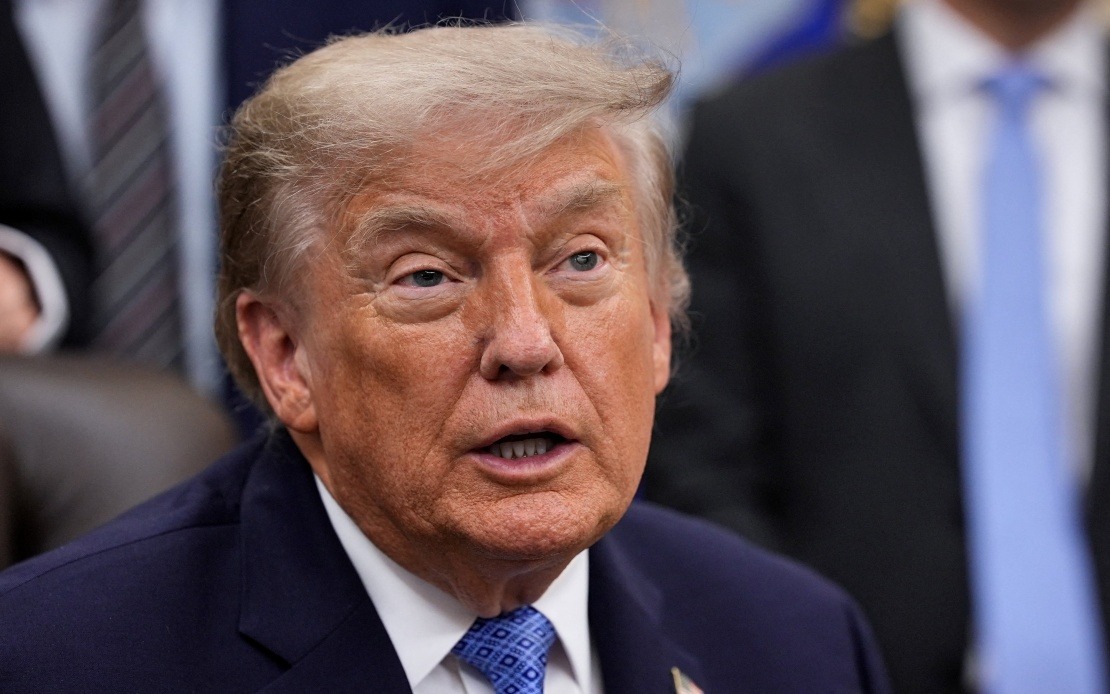
President Donald Trump is set to command one of American television's most coveted time slots on Thursday evening for a nationally televised address, according to an announcement posted on his Truth Social platform. Scheduled for 9 pm Eastern time—a window that guarantees maximum viewership across the United States—the speech represents a significant moment in the political calendar, though the administration has provided no indication of its subject matter.
The timing and formality of prime-time presidential addresses carry particular weight in American political culture. Such broadcasts are traditionally reserved for moments of genuine national significance, whether to announce major policy shifts, respond to crises, or address matters of profound concern to the American public. The choice of this specific time slot underscores the gravity with which the Trump administration views whatever announcement or statement is forthcoming.
While the White House has remained silent on the speech's content, speculation centres on several pressing issues currently dominating headlines across the United States. The deteriorating situation involving Iran has consumed significant media attention in recent months, with the conflict experiencing renewed escalation in recent days. This volatile regional situation has had tangible economic consequences for American consumers, with petrol prices climbing steadily as markets react to geopolitical uncertainty. Whether Trump intends to address the Iran situation directly, outline military strategy, impose new sanctions, or seek congressional approval for further action remains unclear at this stage.
The lack of advance disclosure about the address's focus has created uncertainty among analysts and political observers seeking to gauge its potential impact. Trump's previous prime-time address last December came amid mounting domestic criticism of his economic stewardship, when he chose the television platform to defend his administration's fiscal record. That speech demonstrated his willingness to use prime-time slots to respond to political pressure and shape public narrative around contested issues.
This second address since Trump's return to office in January 2025 comes at a delicate moment for his Republican Party. Midterm elections—a crucial political test occurring roughly four months hence—loom on the horizon, and polling data has shown concerning trends for Republicans seeking to maintain or expand their legislative majorities. The party's electoral prospects have softened compared to historical patterns, suggesting that Trump's address may serve multiple purposes: addressing an immediate crisis while simultaneously attempting to rally his political base ahead of crucial elections.
For Malaysian and Southeast Asian observers, the speech carries regional significance beyond American domestic politics. The Iran situation directly affects energy markets that influence petrol prices and economic stability across the region. Southeast Asia's substantial reliance on stable energy supplies and its interests in maintaining freedom of navigation through critical waterways make developments in US-Iran tensions matters of material concern. Any escalation Trump announces could ripple through global energy markets and affect inflation pressures already challenging emerging economies in the region.
The historical context of Trump's first term includes his dramatic withdrawal from the Iran nuclear agreement, subsequent escalatory tensions, and the targeted killing of Iranian general Qasem Soleimani. His return to office has seen a renewal of confrontational rhetoric toward Tehran, raising questions about whether his Thursday address will signal further military or diplomatic escalation. Regional nations maintain delicate balances in their Iran relationships and would need to calibrate responses to any major policy announcements emanating from Washington.
Domestically within the United States, the address also reflects broader questions about presidential communication strategy and the deployment of prime-time television addresses. In an era of fragmenting media consumption and social media dominance, the choice to utilise traditional broadcast television carries its own statement. Trump's reliance on his Truth Social platform to announce the address itself represents the contemporary intersection of legacy media and digital communication.
The Republican Party's mediocre midterm polling prospects suggest that Thursday's address may serve as an inflection point in the campaign season. If Trump chooses to address economic grievances alongside potential military or diplomatic moves, he may attempt to reframe the political narrative ahead of critical elections. Conversely, if the address focuses narrowly on Iran policy without addressing bread-and-butter economic concerns, it could miss an opportunity to reverse flagging Republican electoral fortunes.

