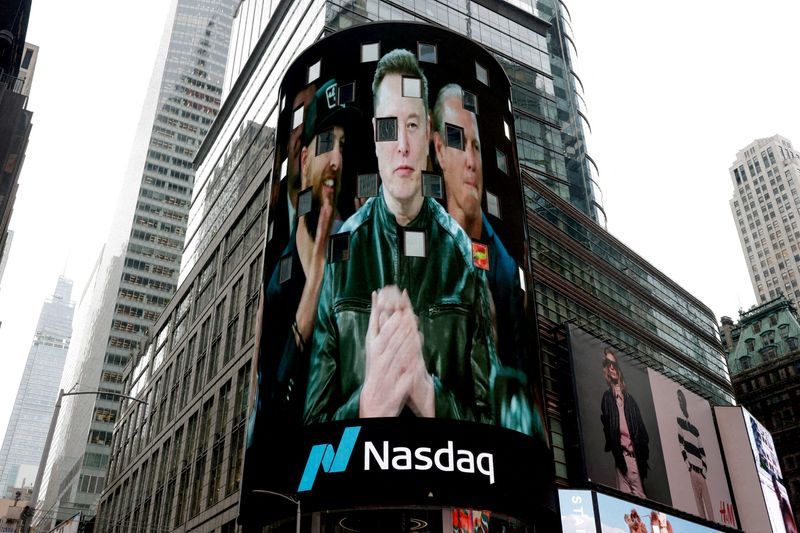
US President Donald Trump acquired shares worth up to $50,000 in Elon Musk's SpaceX during June, creating a direct financial interest in one of America's most prominent defence and aerospace contractors, according to public financial disclosures filed in late August. The purchase, made on June 23 and disclosed on August 12 before becoming public on August 22, comes at a sensitive moment when the Trump administration is actively shaping policy decisions that could substantially benefit the space technology firm.
The transaction represents one component of Trump's broader investment activity during June, when the president completed more than 1,000 stock trades across his portfolio. While the precise value of the SpaceX holding remains uncertain due to federal disclosure rules that require officials to report asset ranges rather than exact figures, the investment nonetheless establishes a tangible financial link between the president and Musk's enterprise at a time of heightened policy attention to commercial space activities.
SpaceX achieved a historic valuation milestone in mid-June when it completed the largest initial public offering in US history, with the company priced at $1.77 trillion. This extraordinary valuation reflected investor confidence in the company's dominance in satellite communications, space launch services, and artificial intelligence development. The timing of Trump's purchase came after this IPO milestone, suggesting he invested at or near the company's public market debut.
White House communications director Davis Ingle responded to inquiries about the investment by emphasising that independent third-party financial institutions manage Trump's portfolio autonomously, without any direction from the president or his family members. According to Ingle's statement, these financial managers operate according to passive investment strategies designed to mirror recognised market indexes, specifically the Schwab 1000 index. This assertion aims to suggest that Trump's SpaceX shares represent automatic index fund replication rather than deliberate strategic investment choices by the president.
However, the investment creates potential complications given SpaceX's dependent relationship with federal government approval processes. The company functions as an established military contractor and regularly requires authorisations from various government agencies for its operations and contracts. More immediately significant, Trump on Thursday issued direct instructions to his administration to dramatically accelerate the pace of US commercial space launches, a directive that would disproportionately benefit SpaceX given its commanding market position in the American commercial launch sector.
This situation parallels concerning financial entanglements involving other administration officials. Kelly Loeffler, Trump's newly appointed Small Business Administration leader, accumulated substantial wealth through SpaceX's IPO based on earlier investments she had made in xAI, Musk's artificial intelligence venture that subsequently merged with SpaceX. Analysis by PitchBook, a data provider tracking private company valuations, suggests Loeffler's initial xAI investment appreciated to somewhere between $7 million and $2.6 billion on the IPO day alone, while her subsequent investment was worth between $2.2 million and $25.4 million at that moment. Notably, Loeffler made additional investments in xAI even after Trump nominated her for the SBA position, indicating ongoing financial entanglement with Musk's enterprises.
For Malaysian and Southeast Asian observers, this pattern of financial conflicts involving major government contractors reflects broader concerns about governance standards in developed democracies. The alignment of personal financial interests with policy decisions affecting those companies raises questions about the independence of government decision-making, particularly when such decisions involve military contractors and strategic technology companies like SpaceX that operate globally.
The SpaceX situation extends beyond simple conflict-of-interest concerns to touch on matters of national security and space policy. SpaceX dominates American military space capabilities, launches national security satellites, and operates critical infrastructure for US defence communications. When senior government officials hold financial stakes in such companies while simultaneously directing policy that enhances those companies' market position and profitability, the appearance of impropriety becomes substantial, regardless of whether actual improper influence occurred.
The disclosure mechanism itself demonstrates limitations in preventing or even clearly documenting such conflicts. Federal officials use valuation ranges rather than precise figures, making it impossible for public scrutiny to determine exact holdings and their precise values. Trump's SpaceX purchase could range from $15,001 to $50,000, a variance exceeding 300 percent, rendering meaningful analysis of his financial exposure impossible. This opacity extends to determining whether the investment was truly automatic through index fund replication or reflected more deliberate portfolio allocation decisions.
For regional observers in Southeast Asia, where governance concerns and capital flows from the United States significantly influence investor confidence and foreign policy perceptions, such incidents carry consequences beyond American domestic politics. Thailand, Vietnam, and the Philippines maintain expanding partnerships with American defence and space technology companies, and the integrity of those relationships depends partly on confidence that US government officials make decisions based on national interest rather than personal financial advancement.
The convergence of Trump's SpaceX investment, his administration's newly announced push to accelerate commercial space launches, and SpaceX's status as a heavily regulated military contractor creates a complex ethical environment that demands careful monitoring. While the White House's explanation invoking passive index fund management may technically satisfy legal disclosure requirements, it does little to address public concerns about the appearance of conflicts of interest in an administration already viewed with substantial scepticism by international observers.
Moving forward, the question for American governance standards involves whether existing disclosure mechanisms and conflict-of-interest rules provide adequate safeguards when elected officials maintain financial stakes in companies directly affected by their policy decisions. The SpaceX situation suggests those safeguards may be inadequate, particularly when the administration itself benefits from enhanced perception that it is business-friendly and supportive of American technology companies.

