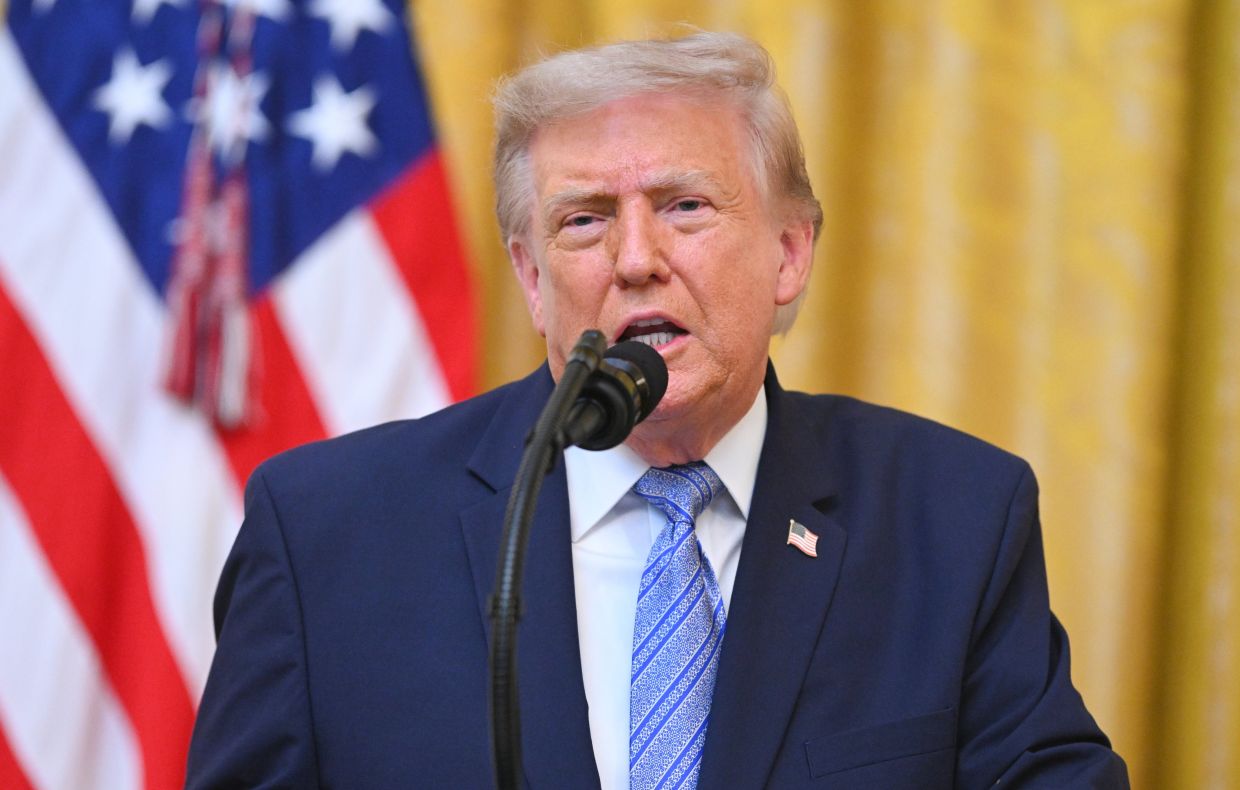
During one of the most confrontational addresses of his second term, President Trump combined allegations of Chinese interference in American elections with domestic calls for stricter voting procedures and warnings to media outlets, crystallising what his administration views as interlocking threats to the integrity of US democratic processes and national security.
The centrepiece of Trump's remarks focused on China, which he accused of perpetrating what he characterised as the "largest compromise of election data in history." By framing the allegation as a critical national security matter requiring immediate intervention, Trump sought to elevate the incident beyond a typical cybersecurity breach into a question of foundational US institutional vulnerability. For Southeast Asian observers, the escalation reflects the intensifying technological competition between Washington and Beijing, with election infrastructure becoming an explicit battleground in their strategic rivalry.
Beyond the specific data breach claim, Trump expanded his accusations to encompass what he described as a broader campaign of political influence. He alleged that China had systematically worked to sway American business leaders and journalists against his administration, portraying a coordinated effort to undermine his position within the country's own power structures and public discourse. The assertion suggests Trump views Chinese interference not merely as external electoral meddling but as penetration of American civil society itself.
Trump further contended that China's election interference operations were deliberately designed to threaten his political survival during his first term, characterising the campaign as state-sponsored and existential in nature. This framing transforms election security from a technical issue into a deeply personalised political narrative, one in which foreign powers are depicted as specifically targeting his presidency rather than attempting to influence American policy direction more broadly.
On the domestic front, Trump devoted substantial time to articulating concerns about election integrity ahead of this year's midterm contests. His remarks emphasised vulnerabilities in the voting system and cited instances of past fraud, though his treatment of these topics prioritised his political narrative over detailed analysis of specific vulnerabilities or proven systemic failures. The focus reflected his administration's broader legislative agenda centred on reforming American electoral processes.
The proposed reforms Trump championed included mandatory voter identification and proof of citizenship requirements, measures that his administration has tied to the SAVE America Act. Such proposals remain contentious in American politics, with supporters arguing they enhance electoral security while critics contend they create unnecessary barriers to voting rights. The proposals are likely to shape legislative negotiations in Congress and influence how states approach their own election administration in the coming years.
Trump's criticism of China extended beyond election interference into the broader contours of US-China relations. His remarks signalled what he framed as an end to American "complacency" in the face of Chinese actions, positioning his address as a pivotal moment for recalibrating US global strategy. This rhetorical shift suggests his administration intends to pursue a more openly adversarial approach to Beijing across multiple domains, from trade and technology to security and political interference.
Regional implications for Southeast Asia merit consideration, particularly for nations navigating the US-China strategic competition. As both powers intensify their technological and political rivalry, countries in the region may face pressures to align more firmly with one side or the other, particularly on questions of digital infrastructure, foreign investment, and political positioning. Trump's emphasis on treating Chinese interference as a national security emergency could influence how the US approaches partnerships with regional allies on cybersecurity and intelligence matters.
In a striking addendum to his election-focused remarks, Trump launched a direct attack on American media organisations, warning that he was considering revoking the broadcast licences of television networks ABC and NBC. The threat, framed as a response to what he characterised as unfair coverage, introduced a third dimension to his address beyond China and electoral reform: the relationship between executive power and press freedom in the United States. Such threats to media licensing represent a significant escalation in rhetoric regarding government control over journalistic institutions.
The convergence of these three themes—foreign election interference, domestic voting reform, and press accountability—reveals Trump's conception of threats to American democracy as simultaneously external and internal. By linking them in a single address, he constructed a narrative in which Chinese interference, voting vulnerabilities, and hostile media coverage represent interconnected dangers requiring coordinated responses. Whether this framing resonates politically or generates criticism will likely depend on how American voters respond in upcoming elections and how Congress engages with his proposed legislative agenda.
For international observers and policymakers, Trump's address signals a more assertive and confrontational American posture both domestically and internationally. The emphasis on treating Chinese interference as an existential threat, combined with proposed electoral reforms and media pressure, suggests his second term will feature heightened political polarisation and intensified great power competition. Nations throughout Southeast Asia and the broader Indo-Pacific region will need to carefully assess how these American policy shifts affect regional stability and their own strategic calculations regarding alignment with Washington or Beijing.

