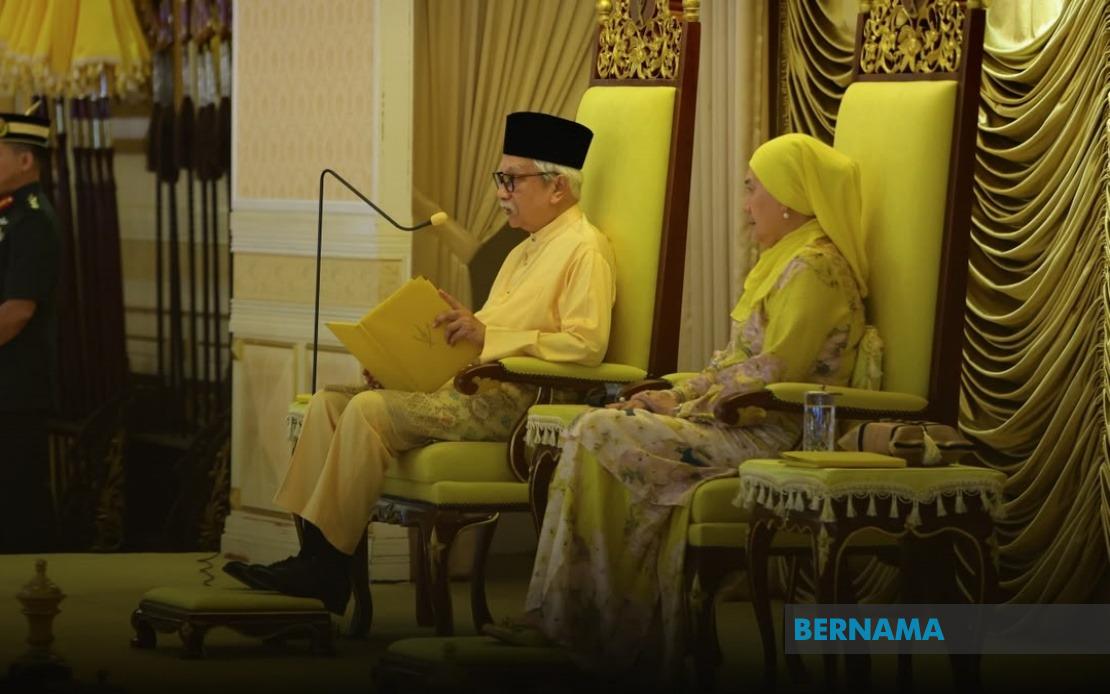
The Yang Dipertuan Besar of Negeri Sembilan, Tuanku Muhriz Tuanku Munawir, has delivered a pointed message to the state's elected representatives, reminding them that their primary obligation must be serving the public rather than pursuing narrow political or personal interests. The reminder came during the appointment and swearing-in ceremony of the Negeri Sembilan Menteri Besar at Istana Besar Seri Menanti in Kuala Pilah, a setting that underscored the formal nature of the guidance being imparted to state legislators.
In his address, the royal leader articulated a fundamental principle of democratic governance: that members of the State Legislative Assembly bear a weighty responsibility that transcends party politics or individual advancement. His emphasis reflects growing concerns across Malaysia about the quality of representation and whether elected officials remain focused on their constituents' genuine needs or become consumed by factional disputes and ambitions.
The core of Tuanku Muhriz's message centred on the intermediary role that state legislators must fulfil. They serve as crucial conduits between ordinary citizens and the machinery of government, tasked with channelling the voices, aspirations, concerns, and practical needs of the people they represent directly into legislative chambers where policy decisions are forged. This function is foundational to representative democracy and cannot be discharged effectively if lawmakers allow personal or party considerations to cloud their judgment.
Tuanku Muhriz stressed that every legislative initiative, development strategy, and governmental decision must be evaluated and calibrated according to whether it genuinely reflects the priorities expressed by constituents and remains firmly anchored to advancing their collective welfare and prosperity. This standard provides an objective measure against which representatives can assess their own performance and against which the public can hold them accountable.
The royal address also implicitly addressed questions of institutional integrity. When elected officials subordinate constituent interests to political calculations or self-interest, public trust erodes and democratic institutions themselves become delegitimised. The message carried an implicit warning that elected representatives cannot take for granted the mandate they have been given, nor can they assume that the privilege of office will be indefinitely tolerated if they abuse it.
Negeri Sembilan's political landscape has experienced periodic turbulence in recent years, with shifts in government and coalition changes reflecting broader patterns across Malaysia. Against this backdrop, Tuanku Muhriz's reminder assumes added significance as a statement about what ought to transcend short-term political manoeuvring. The ceremonial context of his remarks—the formal swearing-in of a new Menteri Besar—provided an opportune moment to emphasise these enduring principles to the entire legislature.
For Malaysian observers more broadly, the message resonates beyond one state's borders. Questions about whether elected representatives genuinely serve public interests or become captured by factional politics have become increasingly prominent in national discourse. States and federal territories across the country grapple with similar challenges of ensuring that legislators remain focused on substantive governance rather than purely political positioning.
The emphasis on loyalty and commitment being directed toward the state and its people, rather than to political parties or personal advancement, addresses a critical tension in contemporary Malaysian politics. While party affiliation remains important in a parliamentary system, the principle that legislators should ultimately answer to their constituents rather than to party leadership reflects democratic values that must be continually reinforced, particularly in moments when political calculations might tempt representatives to stray from this priority.
Tuanku Muhriz's intervention also highlights the role that traditional institutions continue to play in Malaysian governance. The royal reminder, delivered during an official ceremonial function, carries weight and symbolic importance that complements formal constitutional and legal frameworks. Such interventions, when they occur, often signal broader concerns about standards of governance and representation that warrant public attention.
The timing of the address, coinciding with the appointment ceremony of the Menteri Besar, suggests that the royal guidance was intended to set a tone for the new administration and to establish clear expectations for how the state government and its representatives should conduct themselves. This represents a reminder about the standards and principles that should animate governance at the state level.
For constituents across Negeri Sembilan and by extension throughout Malaysia, Tuanku Muhriz's remarks offer a framework for evaluating their own representatives' performance. Do they consistently advocate for infrastructure, services, and policies that address identifiable community needs? Do they appear motivated primarily by constituent welfare, or do their positions seem shaped by internal party dynamics or personal ambition? These questions provide a practical template against which citizens can assess whether their representatives are heeding the guidance offered during this ceremonial occasion.

