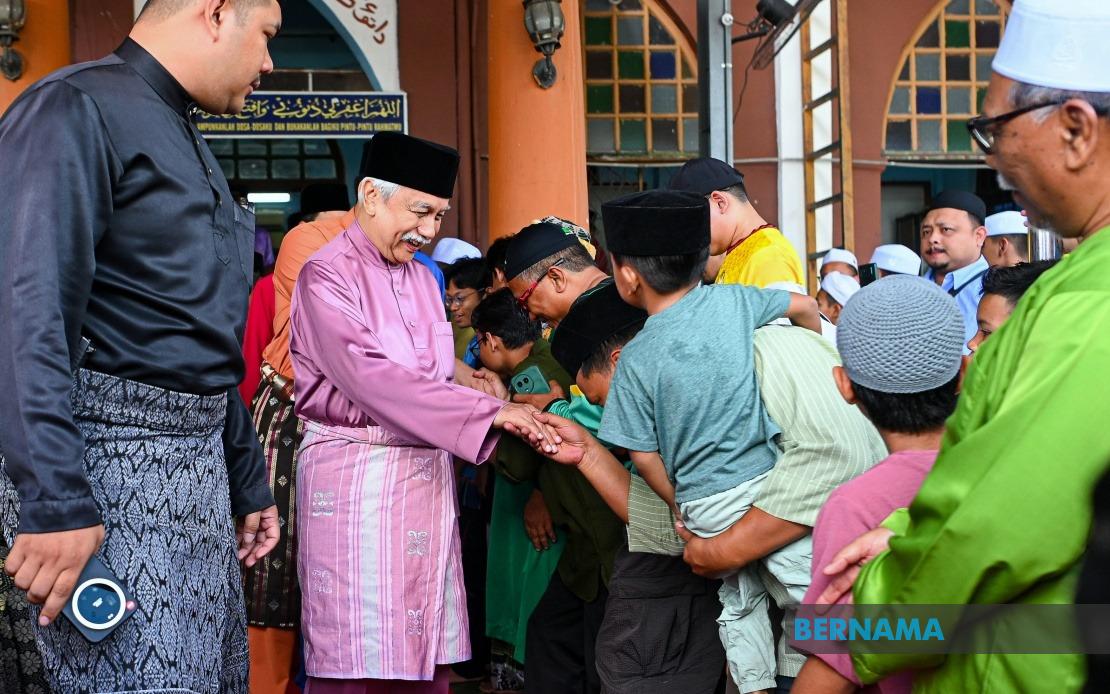
Tuanku Muhriz Tuanku Munawir, the Yang Dipertuan Besar of Negeri Sembilan, participated in Friday congregational prayers at Masjid Kariah Pantai in Seremban on 17 July, joining an assembly exceeding 500 Muslim worshippers for the occasion. The royal appearance underscored the continued engagement of Negeri Sembilan's traditional leadership with faith-based community gatherings across the state, reflecting the constitutional role of the sultanate in matters of Islam within the state.
The Yang Dipertuan Besar arrived accompanied by his two sons, Tunku Besar Seri Menanti Tunku Ali Redhauddin and Tunku Zain Al-'Abidin, both of whom are prominent figures in the state's royal household hierarchy. Their presence alongside the ruler demonstrated the royal family's commitment to visible participation in communal religious observances, a practice that carries significant symbolic weight within Negeri Sembilan's governance structure and cultural identity.
The event drew attendance from several key figures in the state administration. Undang of Luak Sungei Ujong Datuk Klana Petra Muhammad Faris Johari, who holds an important traditional leadership position within the Negeri Sembilan's Luak system, was present throughout the proceedings. Additionally, Menteri Besar Datuk Seri Aminuddin Harun attended the prayers, signifying the alignment of both traditional and elected state leadership in public religious engagements.
The Friday sermon delivered by Imam Amru Zubair Abu Hanifah centred on contemporary challenges affecting Islamic faith and practice. In choosing this thematic focus, the imam addressed concerns that resonate across Malaysia's Muslim-majority population, where issues ranging from religious literacy to external ideological pressures have become subjects of significant discourse within Islamic circles. The sermon's emphasis on faith preservation reflects broader ecclesiastical concerns being articulated across Malaysia's religious institutions.
Following the completion of the congregational prayers, Tuanku Muhriz and his sons engaged directly with attendees, moving through the prayer hall to interact with members of the assembled congregation. This direct engagement represents a customary practice among Malaysia's royal households, wherein rulers maintain visible accessibility during community occasions despite their constitutional status and the formal protocols surrounding their public appearances.
A notable gesture during the post-prayer activities involved the presentation of contributions to younger worshippers who had attended the Friday prayers. Such monetary gifts, commonly distributed at religious gatherings by royalty and senior officials, serve multiple social functions within Malaysian Islamic communities—acknowledging young people's participation in religious practice while providing material encouragement for continued religious observance among the youth demographic.
The location of the event, Masjid Kariah Pantai, is situated within Seremban's urban landscape and serves as a neighbourhood mosque catering to residents in that particular district. The mosque's hosting of such a significant public religious gathering reflects its role as a focal point for communal religious life beyond its primary function as a place of worship, a characteristic common to many mosques across Malaysia's urban centres.
This gathering exemplifies the ongoing tradition in Malaysian states where senior leadership, including royal figures and chief ministers, maintain visible participation in regular Friday prayers and religious observances. Such practices reinforce the institutional relationship between government administration and Islamic affairs at the state level, a constitutional reality enshrined in Malaysia's federal system where Islam falls under state jurisdiction rather than federal oversight.
For readers across Southeast Asia observing Malaysian governance, this event illustrates the continued integration of religious observance within formal state practices and the prominence of Islam in the political and cultural life of Malaysian states like Negeri Sembilan. The attendance of multiple tiers of leadership—traditional, royal, and executive—demonstrates how Islamic practice remains embedded within Malaysia's hierarchical power structures and public ceremonial calendar.

