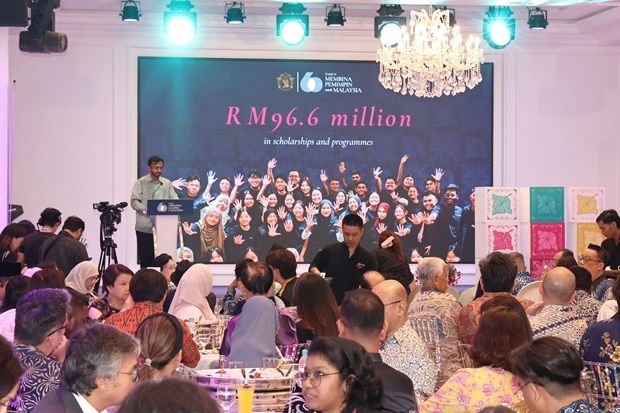
The Tunku Abdul Rahman Foundation (YTAR) commemorated its 60th anniversary on August 13 at Bangunan Sultan Abdul Samad, reflecting on six decades dedicated to unlocking educational pathways for Malaysian youth regardless of socioeconomic background. Established through Act 43 in 1966, the foundation has evolved from a community-driven initiative into a cornerstone national institution shaping the nation's intellectual capital and workforce development.
The foundation's genesis reflected the priorities of a newly independent Malaysia. Following the death of the nation's first Prime Minister, Tunku Abdul Rahman Putra al-Haj, Utusan Melayu launched a nationwide crowdfunding campaign on his birthday to establish an education fund in his honour. This grassroots effort raised more than M$60,170.20, an amount equivalent to approximately RM380,000 in contemporary currency, demonstrating widespread public commitment to educational advancement. Education Minister Tan Sri Mohamed Khir Johari subsequently proposed to the Federal Government that this communal endeavour be transformed into a formally constituted national institution through legislative framework, anchoring it as a permanent mechanism for human capital development.
Over six decades, YTAR has transcended the traditional scholarship provider model to become a comprehensive talent identification and development ecosystem. The foundation has supported more than 12,000 Malaysian youth through multiple pathways including educational loans, academic scholarships, financial assistance packages, and employability skills programmes. National Unity Minister Datuk Aaron Ago Dagang announced at the ceremony that the organisation has cumulatively disbursed RM96.6 million, representing a substantial public investment in the nation's future. This scale of resource deployment underscores the strategic importance placed on educational access as foundational to national development and social mobility.
The foundation's enduring relevance lies in its commitment to meritocratic principles transcending demographic boundaries. By supporting deserving students irrespective of race, colour, or religious affiliation, YTAR has functioned as an instrument of national cohesion, fostering networks of leaders and professionals united by shared experience of educational opportunity. This approach aligns with Malaysia's foundational vision of building a inclusive society through equitable access to advancement mechanisms. The ripple effects extend across sectors—from public administration and judiciary to healthcare, academia, and creative industries—creating a distributed leadership class shaped by the foundation's philosophical commitment to character formation alongside academic excellence.
Kularetnam Vijayakumar, YTAR's chief executive officer, articulated the organisation's defining insight: that the foundation represents collective Malaysian aspiration rather than singular institutional achievement. The 60-year journey reflects successive generations of custodians, supporters, and beneficiaries perpetuating the belief that educational investment yields transformative societal returns. This intergenerational stewardship model distinguishes YTAR from transactional donor relationships, embedding it within a continuum of national purpose-building that predates its formal establishment and extends indefinitely forward.
The late Tunku Abdul Rahman's philosophical framework, articulated during Malaysia's formative period, emphasised that national prosperity depended fundamentally upon youth development. His granddaughter, YTAR Chairperson Datin Sri Sharifah Menyalara Syed Hussein, reinforced this vision while charting the foundation's evolution beyond financial aid provision. Contemporary programming emphasises comprehensive capability development—integrating financial support with mentorship, skills training, and values formation—recognising that sustainable individual and national advancement requires multidimensional investment. This expanded mandate reflects sophisticated understanding that educational access alone, without accompanying personal development infrastructure, produces incomplete outcomes.
Testimonies from pioneering scholarship recipients crystallised the foundation's transformative impact. Ch'ng Kim See, who received support in 1967 during acute financial hardship, subsequently became a prominent librarian commanding regional leadership in South-East Asian history and library science. Her journey illustrates how targeted support at critical junctures enables individuals to overcome structural barriers and subsequently contribute disproportionately to knowledge advancement. Similarly, Dr Zakaria Ali, now recognised as a forerunner of fine arts in Malaysia, attributed his international education opportunity at Southwestern University in Austin, Texas, to YTAR support catalysed by his instructor's advocacy. Both trajectories demonstrate how foundational interventions compound through decades of professional contribution, multiplying initial investments manifold.
These success narratives, while individually inspiring, represent systemic outcomes. The alumni network of Tunku Scholars permeates Malaysia's institutional architecture—occupying teaching positions at universities, serving on judicial benches, leading medical facilities, and directing civil service departments. This distributed influence creates powerful network effects enhancing social cohesion and institutional capacity. When leaders across sectors share formative experiences rooted in meritocratic advancement and educational access, they carry implicit commitments to replicating those opportunities, sustaining virtuous cycles of opportunity and contribution.
The foundation's evolution reflects broader sectoral trends reshaping higher education finance. With public university expansion constrained by fiscal pressures and private institution costs escalating, philanthropic mechanisms have assumed greater importance in maintaining access for financially disadvantaged yet academically capable students. YTAR's sustained disbursement trajectory demonstrates that coordinated, patient capital can meaningfully address equity gaps without requiring permanent government budget expansion. This model carries significance for Malaysian policymakers confronting educational financing challenges whilst maintaining accessibility commitments.
National Unity Minister Aaron Ago Dagang leveraged the 60th anniversary occasion to advocate corporate sector participation in educational talent development through corporate social responsibility frameworks. This appeal reflected recognition that expanding Malaysia's scholarship capacity requires mobilising private sector resources alongside public institutional effort. As YTAR approaches its seventh decade, broadening the philanthropic base beyond founding-era participants becomes essential for sustaining impact amid demographic expansion and rising educational costs. Corporate engagement potentially transforms talent development from episodic institutional activity into systemic priority embedded across multiple organisational contexts.
The foundation simultaneously opened nominations for the 2026 Pingat Tunku Award, introducing self-nomination pathways for graduates of public and private institutions nationwide. This democratisation of recognition processes amplifies inclusivity, enabling accomplished alumni from diverse institutional backgrounds to gain formal acknowledgment. Such procedural innovations suggest YTAR's commitment to remaining contemporary whilst honouring historical commitments.
As Malaysia navigates demographic transition, technological disruption, and regional competitive dynamics, institutional mechanisms ensuring meritocratic advancement remain strategically vital. The Tunku Abdul Rahman Foundation's 60-year trajectory demonstrates sustained returns from investing in human potential across generations. Looking forward, the foundation's challenge involves scaling impact to accommodate expanded cohorts whilst maintaining rigorous selection standards and comprehensive support infrastructure. The intergenerational contract exemplified by YTAR—wherein society invests in youth development, yielding leadership and contributions that perpetuate the cycle—remains fundamentally relevant to national advancement. The foundation's anniversary celebration ultimately affirmed that investing in Malaysia's youth constitutes the most durable foundation for sustainable national development.

