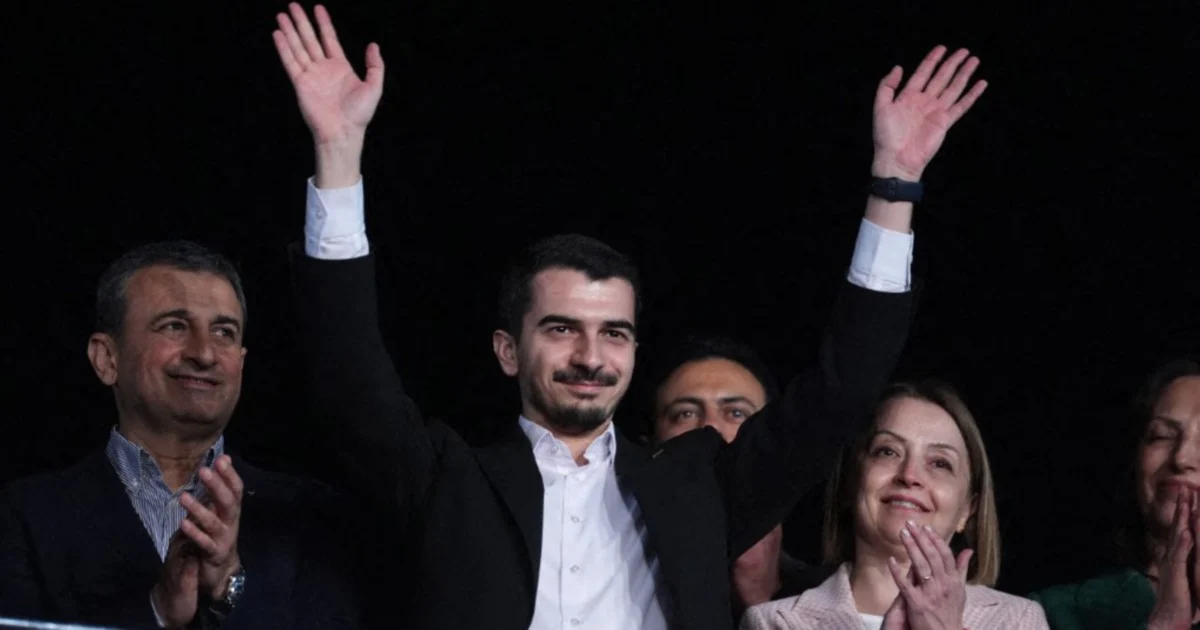
Turkish prosecutors have moved against a significant network of officials and business figures in Ankara, with authorities ordering the detention of 36 people as part of a far-reaching corruption inquiry. The investigation, which has captured widespread attention given its political dimensions, involves the mayor of an Ankara district governed by Turkey's main opposition party, along with numerous others suspected of involvement in systematic bribery and public tender irregularities. The Ankara chief prosecutor's office confirmed the detention orders on Tuesday, setting in motion what appears to be one of the more expansive graft investigations in the capital region in recent years.
The inclusion of the opposition-controlled district mayor in the probe signals that corruption allegations are cutting across Turkey's fractious political landscape, though the timing and scope of the investigation are likely to fuel debate about the independence of the judiciary and prosecutorial authorities. Opposition figures have frequently alleged that the government weaponizes judicial mechanisms against their party, allegations the government consistently denies. The current inquiry will inevitably be scrutinised through this lens, particularly given Turkey's polarised political environment where accusations of selective prosecution feature prominently in public discourse. The scale of the operation—involving three dozen suspects—suggests prosecutors have constructed what they consider a substantial case involving multiple layers of alleged misconduct.
Public procurement and tender processes have long been vulnerability points in Turkey's governance framework, with successive governments facing challenges in preventing manipulation and corruption. These mechanisms often serve as conduits for illicit arrangements between officials, business associates, and contractors seeking public contracts. The alleged involvement of both government administration officials and private sector actors in this investigation indicates the inquiry is targeting what prosecutors may view as an interconnected corruption network rather than isolated wrongdoing. Such arrangements typically involve kickback schemes, phantom bids to create appearance of competition, and preferential treatment in contract awards—practices that inflate public expenditure and divert resources from their intended purposes.
The detained individuals are expected to face questioning about their alleged roles in bribery payments and orchestrated tender processes. Typically in such investigations, authorities examine financial transactions, communications records, and testimony from cooperating witnesses to establish patterns of corrupt conduct. The breadth of detentions suggests prosecutors may have developed documentary or testimonial evidence spanning multiple transactions or arrangements. Given the involvement of municipal authorities, the inquiry likely focuses on district-level procurements for public works, service contracts, or infrastructure projects—areas where opportunities for corruption are particularly pronounced.
For Malaysia and Southeast Asia, this Turkish investigation underscores challenges that many developing and emerging economies face in combating institutional corruption despite formal anti-graft frameworks. Like several nations in the region, Turkey maintains dedicated anti-corruption agencies and prosecutorial units, yet enforcement remains inconsistent and subject to political considerations. The apparent involvement of opposition-linked officials, meanwhile, illustrates how corruption investigations can become entangled with partisan politics, potentially eroding public confidence in their legitimacy regardless of investigative merits. This dynamic resonates particularly in Southeast Asian contexts where similar tensions between genuine anti-corruption efforts and political instrumentalisation frequently complicate governance reform.
The Ankara chief prosecutor's office characterisation of the investigation as targeting bribery and tender-rigging reflects standard terminology used in prosecutions involving public procurement fraud. Tender-rigging, in particular, represents a sophisticated form of corruption where competition is artificially manipulated to ensure predetermined winners receive contracts. Such schemes cause measurable economic harm by inflating costs, reducing quality of goods and services, and misallocating public resources. When municipal authorities are implicated, as in this case, the damage extends to local service delivery and infrastructure quality—directly affecting residents' access to basic services and public amenities.
The detention order authorisation represents a critical stage in Turkish criminal procedure. Once detained, suspects typically face questioning for up to 72 hours before authorities must either secure formal indictment, extend detention through judicial approval, or release them. During this window, prosecutors attempt to gather confessions, corroborating statements, and additional evidence. The involvement of a sitting mayor complicates procedural dynamics, as such detentions attract immediate media scrutiny and political commentary that may constrain investigative flexibility.
Turkey's judicial independence has faced international criticism in recent years from human rights organisations and foreign governments. The European Union, in its regular progress reports, has highlighted concerns about the politicisation of prosecutions and selective enforcement. Whether this Ankara investigation will ultimately be perceived as legitimate anti-corruption work or partisan targeting will depend substantially on how transparently the case proceeds, the quality of evidence prosecutors present, and the consistency with which similar allegations against government-aligned officials are pursued. These perceptions matter significantly for institutional legitimacy and public trust in rule of law.
For observers in Malaysia and across Southeast Asia, the Ankara inquiry serves as a case study in the complexities of fighting public sector corruption in polarised political environments. Effective anti-corruption work requires not merely prosecutorial zeal but also public confidence that enforcement mechanisms operate impartially. The tension between these imperatives—particularly when opposition-affiliated officials face investigation—remains a persistent challenge that transcends national boundaries and affects governance quality across multiple jurisdictions in the region.

