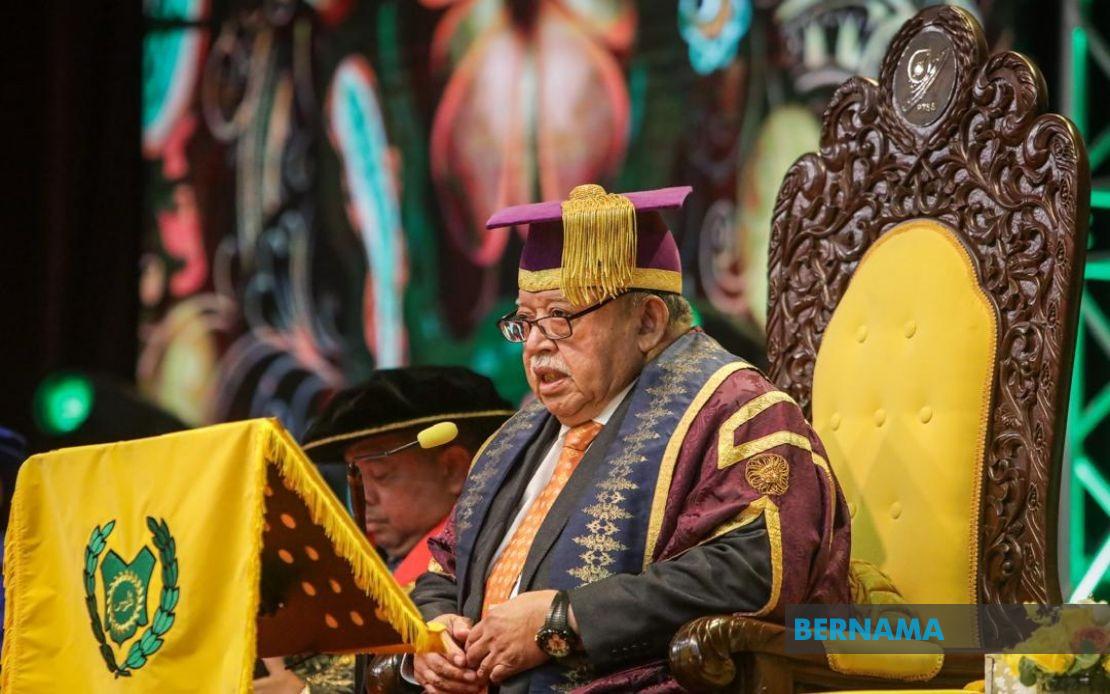
Malaysia's technical and vocational education sector holds the key to developing the innovative and adaptable workforce the nation requires to thrive in an increasingly complex global economy, according to the Raja of Perlis, Tuanku Syed Sirajuddin Jamalullail. Speaking at the 2026 Northern Zone Polytechnic and Community College Convocation Ceremony at Dewan Harumanis in Politeknik Tuanku Syed Sirajuddin (PTSS) in Arau on August 3, the Ruler stressed that TVET institutions must continue producing graduates equipped not only with technical prowess but also with the creative and forward-thinking capabilities demanded by modern industries.
The emphasis on innovation came as the Raja addressed the transformative forces reshaping Malaysia's economic landscape. Technological advancements including artificial intelligence, automation, robotics and widespread digitalisation are fundamentally altering how businesses operate and the skills employers demand from workers. In this environment, TVET institutions occupy a pivotal position—they must bridge the gap between theoretical knowledge and practical application, preparing graduates to navigate rapid change rather than simply mastering static skill sets. The Ruler's remarks underscored recognition at the highest levels of government that innovation is no longer a luxury but has become the bedrock upon which national progress and international competitiveness depend.
Central to the Raja's message was a call for cultivating an innovation culture throughout TVET institutions. The Ruler observed that innovation extends far beyond the generation of novel ideas; instead, true innovation involves translating conceptual thinking into tangible solutions that meaningfully serve society and advance national development objectives. This perspective reflects a growing understanding in Malaysia that vocational education must produce not merely skilled technicians but problem-solvers capable of identifying and addressing real-world challenges. By emphasising this broader conception of innovation, the Ruler signalled that Malaysian TVET should aspire beyond producing workers who can execute existing processes—it should develop leaders and innovators within their respective technical fields.
Equally significant were the Ruler's remarks regarding moral and ethical foundations. Tuanku Syed Sirajuddin cautioned graduates against prioritising technical expertise at the expense of character and integrity. In contemporary Malaysia, where professional scandals and ethical lapses periodically capture headlines, this reminder carries particular weight. The Ruler articulated a vision of excellence that encompasses not merely technical competence but also honesty, trustworthiness and unwavering commitment to societal wellbeing. This holistic approach to graduate formation aligns with broader national concerns about standards of professionalism across sectors and reflects the conviction that sustainable national development depends upon a workforce guided by strong moral principles alongside technical capabilities.
The convocation ceremony itself represented a significant milestone for Malaysia's TVET ecosystem. Held over nine days from August 3 to August 9, the ceremony brought together 6,104 graduates from polytechnic and community college programmes across Perlis, Kedah and Penang. This substantial cohort demonstrates the scale of human capital being developed through the TVET pathway in northern Malaysia. The Northern Zone's three-state coverage reflects the geographic spread of vocational education infrastructure and the institutional commitment to making technical training accessible across the peninsula rather than concentrating resources in urban centres.
Among the ceremony's highlights was the recognition of Teerti Ganapathi Rao, 22, a Diploma in Digital Technology graduate from PTSS's Department of Information and Communication Technology. Rao received the Director-General of Polytechnic and Community College Education Award during the ceremony's opening session, indicating exceptional performance and contribution to the institution. Selection for such prestigious recognition typically reflects not only academic achievement but also demonstrated leadership potential and commitment to the values the institution seeks to cultivate. Rao's recognition symbolises the calibre of graduates emerging from Malaysia's polytechnic system and provides a tangible example of the type of skilled professional the nation requires.
For Malaysian policymakers and educators, the Raja's remarks provide authoritative validation that TVET deserves continued investment and prioritisation within the national education framework. Historically, vocational pathways have sometimes been perceived as secondary alternatives to traditional academic routes, a perception that creates barriers to attracting top talent and undermines institutional excellence. By publicly emphasising TVET's centrality to national development, the Ruler signals that technical and vocational qualifications constitute pathways of genuine prestige and opportunity. This messaging carries significant weight in Malaysia's education landscape and may influence both student choices and resource allocation decisions.
The timing of these remarks also reflects Malaysia's broader economic positioning strategies. As the nation navigates the transition toward higher-value manufacturing, digital services and knowledge-based industries, TVET's role becomes increasingly critical. Unlike countries that have de-emphasised vocational education in favour of university degrees, Malaysia is recognising that sustainable economic growth requires a balanced ecosystem encompassing both academic and technical pathways. This recognition positions the nation advantageously as it competes regionally and globally for investment and talent in sectors ranging from advanced manufacturing to digital infrastructure.
The Northern Zone convocation also highlights the geographic distribution of opportunity within Malaysia's TVET system. By hosting ceremonies that celebrate graduates from multiple states and institutions, the system reinforces the principle that excellence in technical and vocational training extends beyond Kuala Lumpur and the central corridor. This geographic inclusivity has implications for regional development; graduates dispersed across Perlis, Kedah and Penang can become agents of economic diversification within their home states rather than necessarily migrating to major urban centres for employment. Such distributed human capital development supports broader Malaysian objectives regarding inclusive growth and equitable regional development.
Moving forward, the Raja's emphasis on balancing innovation with integrity offers TVET institutions clear direction for institutional development. Programmes must be designed not merely to impart current technical knowledge but to cultivate graduates' capacity for continuous learning and ethical decision-making. This might involve integrating entrepreneurship modules, sustainability principles and professional ethics throughout curricula rather than treating these as peripheral additions. For institutions like PTSS, which serves as a flagship polytechnic in the northern region, such integration becomes increasingly important as they position themselves as centres of excellence capable of competing internationally for student recruitment and academic partnerships.
The broader context of Malaysia's TVET sector reveals an ecosystem increasingly confident in its role and mission. The growth of institutions, expansion of programme offerings and rising enrolment numbers all suggest that vocational pathways are gaining acceptance among Malaysian families and students. Yet the sector remains cognisant that quantity alone cannot drive excellence or competitiveness. The focus must remain on quality, innovation and ethical formation—precisely the themes the Raja of Perlis articulated at PTSS. As Malaysia navigates the complexities of the fourth industrial revolution and beyond, the success of institutions like those represented at this convocation ceremony will substantially determine whether the nation successfully transitions toward higher-value economic activities and sustains its regional competitive position.

