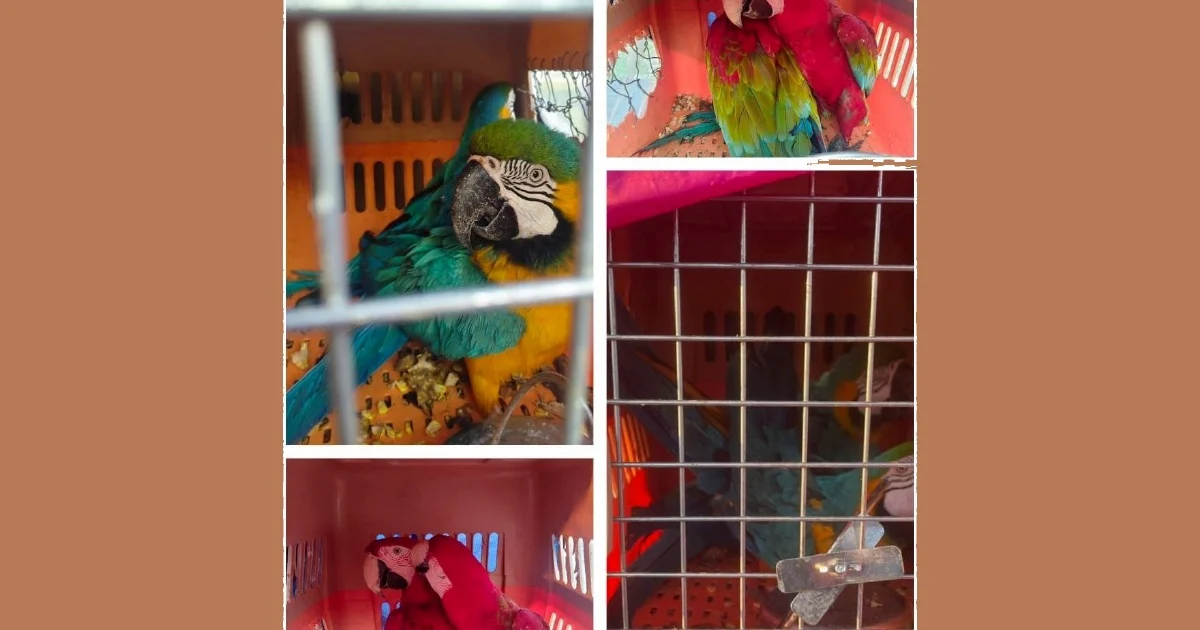
A major wildlife trafficking operation unravelled in Kelantan yesterday when enforcement officers apprehended two men discovered moving eight protected macaws valued at RM400,000 near Tumpat. The seizure marks another important intervention in Malaysia's ongoing struggle against the illegal exotic bird trade, which has become increasingly sophisticated despite regular enforcement campaigns.
The operation took place on Jalan Bandar Tumpat, where officers conducted what appears to have been a routine inspection that yielded unexpectedly significant results. The two men were close associates, adding a personal dimension to the investigation that authorities are likely exploring further. Both suspects have been taken into custody pending investigation under relevant wildlife protection legislation.
Macaws, the vibrant large parrots native to Central and South America, command extraordinary prices in black markets throughout Asia. Their striking plumage, intelligence, and rarity make them highly prized among private collectors willing to circumvent international wildlife protection agreements. The RM400,000 valuation attached to these eight birds underscores the substantial financial incentives driving wildlife smuggling operations in Southeast Asia, where demand from affluent collectors continues to threaten wild populations.
The seizure illustrates how smuggling networks operate along Malaysian roads and transit routes. Kelantan's strategic position along major transportation corridors makes it a frequent transit point for illegal wildlife trafficking destined for markets in Thailand, Vietnam, and beyond. These corridors have traditionally been used for various contraband, but the growing sophistication of wildlife trafficking suggests criminal syndicates are increasingly viewing endangered species as lucrative commodities equivalent to narcotics or electronics.
International protections for macaws remain robust on paper. Most macaw species fall under Appendix I of the Convention on International Trade in Endangered Species (CITES), theoretically prohibiting commercial trade. Yet enforcement remains inconsistent, particularly in transit countries where resources for wildlife monitoring are stretched thin. Malaysia, as a signatory to CITES, maintains legal obligations to intercept such shipments, making this operation a demonstration of domestic enforcement capacity.
The timing and location suggest intelligence may have guided the operation, though authorities have not yet detailed their investigative methodology. Successful trafficking busts increasingly rely on informant networks, coordination between multiple agencies, or international intelligence sharing. The specificity of discovering this particular shipment implies a level of operational focus that goes beyond random roadside checks, potentially indicating that authorities are developing better understanding of smuggling routes and methodologies in the region.
Protected species trafficking represents a hidden dimension of Malaysia's law enforcement challenges, often overshadowed by narcotics operations yet equally damaging to biodiversity. The illegal wildlife trade generates estimated billions annually worldwide, ranking alongside drug trafficking and arms smuggling in scale. For Malaysia, which hosts extraordinary biodiversity within its borders, these trafficking operations represent not merely criminal activity but threats to global conservation efforts.
These macaws, if successfully smuggled, would have likely ended up in private collections across Asia, where they would exist in conditions far removed from their natural habitat. The welfare implications compound the conservation concerns—captive macaws often suffer from inadequate care, poor nutrition, and psychological stress. Beyond individual animal suffering, each seizure represents a species population destabilised by illegal extraction, disrupting ecological balance in already vulnerable ecosystems.
The investigation now moves into phases where authorities determine whether these men operated independently or formed part of larger trafficking networks. The friendship between the suspects may suggest either a casual arrangement between accomplices or a more structured relationship within an organized syndicate. Understanding the supply chain—how these birds were obtained, where they originated, who commissioned their transport, and where they were destined—will be crucial for identifying broader network structures that authorities can then target with further interventions.
Kelantan residents and regional observers should note that this seizure reflects broader patterns of illegal trade flowing through Malaysian territory. While individual busts provide temporary satisfaction, sustainable solutions require sustained investment in enforcement capacity, international cooperation, and demand reduction in destination markets. Without addressing the underlying economics driving trafficking—the extraordinary prices collectors willingly pay for rare birds—enforcement agencies will continue responding to symptoms rather than addressing root causes.
The case also highlights potential gaps in surveillance and intelligence systems along major transport routes. That a RM400,000 shipment could reach Tumpat suggests either extraordinarily good luck on the authorities' part or significant capability among enforcement networks. Either scenario raises questions about how many similar operations succeed undetected along less-monitored routes, particularly at borders and port facilities where inspection resources remain constrained.
For Southeast Asia more broadly, this seizure contributes to growing recognition that wildlife trafficking demands the same serious attention historically reserved for narcotics control. Regional cooperation mechanisms, improved intelligence sharing, and harmonized enforcement standards could substantially disrupt trafficking networks operating across multiple jurisdictions. Malaysia's successful intervention in this instance demonstrates that capability exists; scaling such operations requires political commitment and sustained resource allocation.

