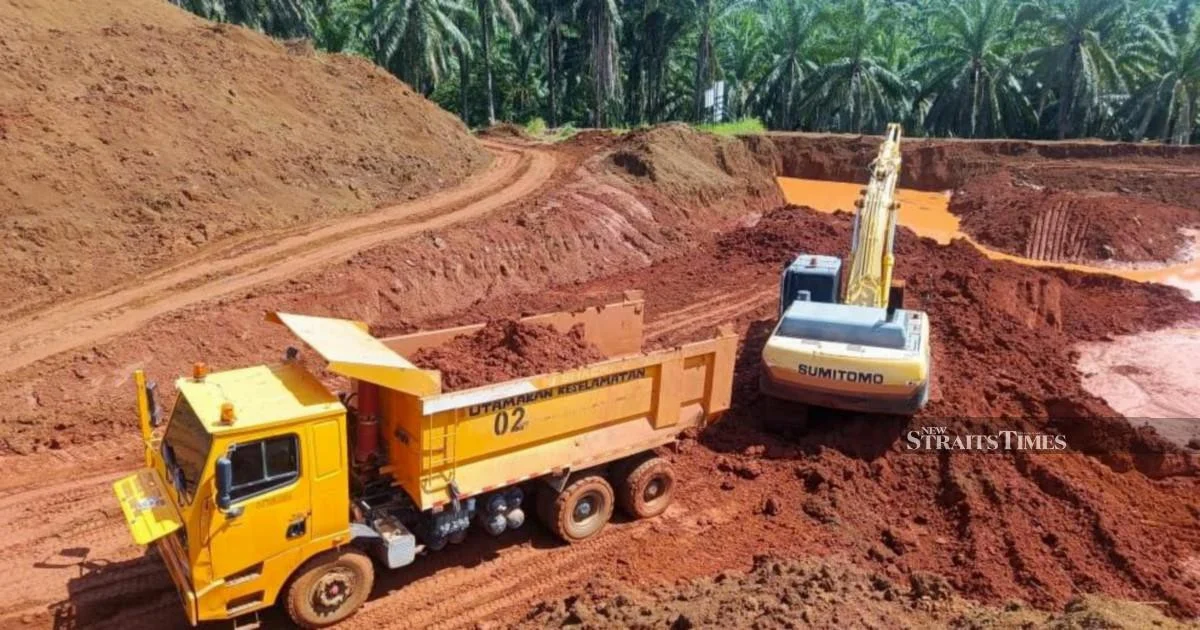
Police arrested two men in Marang yesterday as part of an expanding crackdown on illegal mineral extraction operations, with enforcement agencies seizing machinery and equipment valued at RM1.8 million during the operation. The arrests represent a significant escalation in efforts to combat unauthorised transfers of silica sand, a valuable mineral resource that has become increasingly subject to regulatory violations across Terengganu and neighbouring states.
The two suspects are believed to have operated within a network engaged in the clandestine movement of silica sand, circumventing established licensing procedures and export controls designed to ensure transparency in the mineral trade. Investigators are examining whether the operation had connections to larger smuggling networks or whether it functioned as an isolated enterprise. The scale of equipment seized suggests a well-organised undertaking with substantial investment in machinery for extraction, processing, or transport operations.
Silica sand—comprising high-purity silicon dioxide—holds considerable commercial value across multiple industries. Construction sectors rely heavily on silica sand for concrete production and mortar applications, while glass manufacturers depend on consistent supplies for their operations. Electronics manufacturers and foundries similarly require silica sand as a critical input. The material's widespread industrial demand has created lucrative black-market opportunities, particularly when operators can bypass licensing fees, environmental compliance costs, and export duties that legitimate processors must absorb.
Terengganu has emerged as a focal point for illegal mineral extraction activity, partly due to its substantial natural deposits and coastal geography facilitating smuggling operations. Maritime access enables illicit shipments to evade inland checkpoints, and the state's relatively sparse enforcement presence in certain districts has historically created operational openings for unlicensed miners. Previous operations in the region have uncovered sophisticated logistics networks that transport illegal sand to Singapore, Indonesia, and other regional markets where enforcement may be less stringent.
The environmental consequences of unregulated silica sand extraction extend beyond regulatory violations. Unrestricted mining destabilises riverbanks and coastal zones, accelerating erosion and degrading ecosystems crucial for aquaculture and fisheries. In Malaysia's vulnerable delta regions and river systems, illegal extraction accelerates sedimentation problems and alters water flow patterns, ultimately affecting downstream communities dependent on natural resources. Unlike licensed operators bound by environmental impact assessments and restoration obligations, illegal extractors typically abandon sites without remediation.
The RM1.8 million machinery seizure reflects law enforcement commitment to raising operational costs for illegal miners. When authorities confiscate capital-intensive equipment—excavators, pumps, processing units, and transport vehicles—they impose significant financial penalties that discourage recidivism. This asset recovery strategy complements criminal prosecution, as convicted individuals face both imprisonment and permanent equipment loss. The cumulative effect across multiple enforcement actions can gradually erode the financial viability of unlicensed operations.
Investigations into the two arrestees will likely examine financial transactions, supplier relationships, and buyer networks to trace upstream funding sources and downstream customers. Authorities frequently discover that seemingly independent operators actually answer to larger crime syndicates coordinating multiple extraction sites across different jurisdictions. Understanding these organisational structures enables enforcement agencies to disrupt entire supply chains rather than merely addressing individual incidents. Such intelligence gathering often reveals connections between mineral smuggling networks and other organised crime activities.
Regional cooperation remains essential for combating silica sand smuggling, given the transnational nature of the illicit trade. Silica sand extracted from Malaysian waters or reserves frequently transits through regional ports toward Asian markets, requiring coordination between Malaysian agencies and neighbouring countries' enforcement bodies. Singapore, Indonesia, and Thailand have implemented their own controls, but inconsistent enforcement standards and varying regulatory frameworks create opportunities for smugglers to route contraband through more permissive jurisdictions. Enhanced information sharing and joint task forces could substantially improve interdiction success rates.
For the mining and construction industries operating legally, intensified enforcement operations provide competitive advantages by raising costs for illicit competitors. Licensed sand suppliers in Terengganu and throughout Malaysia have consistently advocated for stronger enforcement, arguing that illegal operators undercut their prices and destabilise markets. When government enforcement heightens compliance risks, demand naturally shifts toward legitimate suppliers offering legal certainty alongside environmental and social responsibility credentials increasingly valued by international clients and sustainability-conscious developers.
The arrests also signal heightened regulatory attention to lesser-known mineral commodities. While enforcement focus has traditionally concentrated on tin, copper, and rare earths, silica sand's expanding commercial importance—particularly as semiconductor manufacturing expands across Southeast Asia—has elevated its regulatory profile. Malaysian authorities recognise that comprehensive resource management requires monitoring diverse mineral types, not merely the highest-profile commodities traditionally associated with smuggling investigations.
Moving forward, authorities may consider implementing digital licensing systems and real-time tracking mechanisms for legitimate silica sand operations, thereby creating verifiable audit trails that distinguish legal extraction from illegal activity. Technology-enabled solutions, combined with intelligence-led enforcement and cross-border cooperation, offer realistic pathways toward substantially reducing illicit mineral transfers while supporting Malaysia's legitimate extractive industries.

