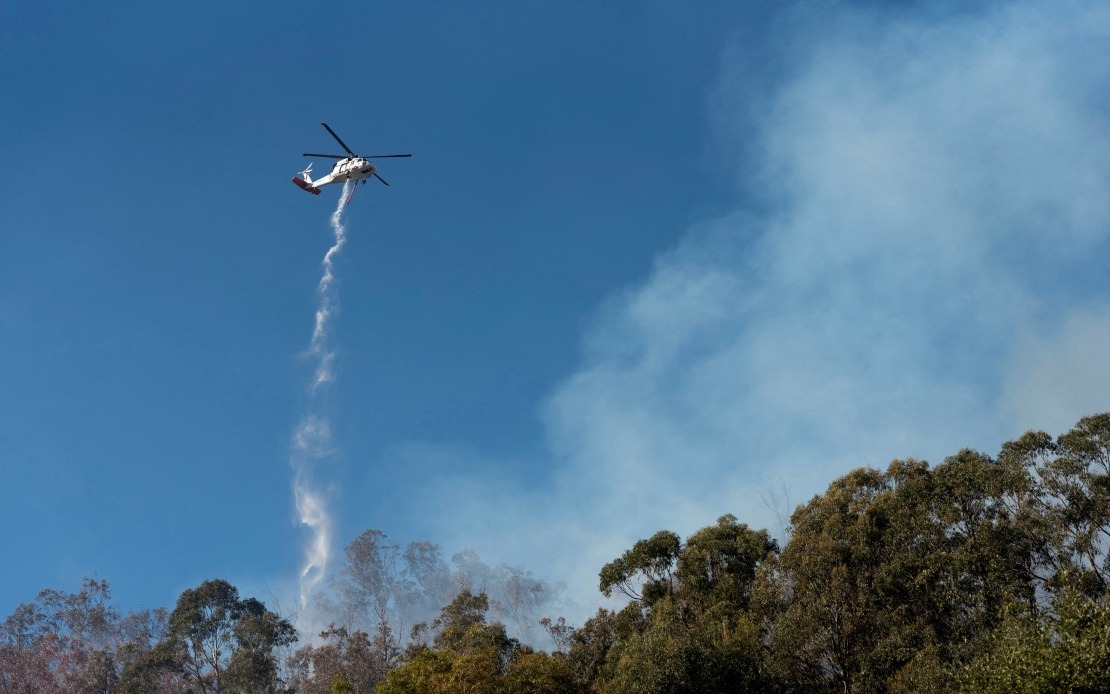
A tragic accident has claimed the lives of two aviation professionals engaged in wildfire suppression operations in central Utah. The helicopter, a Sikorsky S-64 aircraft operating under contract with the US Forest Service, went down on Friday morning near Richfield while conducting active firefighting missions. The National Interagency Fire Centre confirmed that the crash resulted in the deaths of the pilot and one crew member, though their identities have not yet been publicly disclosed. The incident underscores the inherent dangers faced by personnel who dedicate themselves to protecting communities from catastrophic wildfires.
The Federal Aviation Administration placed the accident timeline at approximately 10 am local time on Friday, with the aircraft operating in support of the Widemouth 2 Fire, which has become one of Utah's most significant fire events of 2024. The National Transportation Safety Board has assumed investigative leadership, though preliminary findings suggest the helicopter descended in remote terrain under circumstances that remain under examination. Officials have indicated that the exact cause of the crash is still unknown, with conditions at the time of the incident requiring further analysis by accident investigation specialists.
Access to the crash site presented substantial challenges for emergency responders and recovery teams. The rugged topography of the region, combined with active fire behaviour and elevated temperatures, initially prevented authorities from reaching the wreckage safely. Compounding these difficulties, the helicopter impact itself triggered additional fire ignition at the crash location, creating a secondary hazard that complicated rescue and recovery efforts while raising serious safety concerns for personnel attempting to reach the site.
Utah Governor Spencer Cox released a statement acknowledging the sacrifice of those involved in wildland firefighting operations. He emphasised that wildland firefighting ranks among the world's most hazardous professions, with participants accepting extraordinary personal risks to safeguard communities and natural resources. Cox urged the public to extend patience and space to investigating authorities and emergency responders as they continued their work at the scene and gathered evidence about the accident's circumstances.
The Widemouth 2 Fire itself has grown into a major ecological and community crisis in central Utah. The blaze ignited on July 27 following a lightning strike that caught hold of bone-dry timber, brush, and grass on the Fishlake National Forest near Kanosh, a small community in the region's interior. The fire's rapid expansion during the preceding weeks reflected a dangerous convergence of environmental factors: prolonged drought conditions, extreme heat, and unpredictable wind patterns that pushed flames across the landscape with alarming speed.
The consequences of the Widemouth 2 Fire have been severe for local residents and the built environment. Evacuation orders displaced families from threatened areas, and property destruction has already mounted significantly. Officials have confirmed that at least six structures have been consumed by the advancing flames, with the potential for additional losses as fire activity continues. The destruction extends beyond buildings, encompassing damage to critical infrastructure and ecosystem resources across a vast area.
The scale of the fire's geographic footprint demonstrates the extraordinary challenge facing suppression teams. According to Utah Fire Info, the integrated state interagency wildfire information service, the Widemouth 2 Fire has consumed more than 114,000 acres—roughly equivalent to 461 square kilometres of landscape. Despite concentrated effort from multiple agencies and personnel, containment efforts have achieved only 24 per cent containment as of the latest reporting period, indicating that the majority of the fire's perimeter remains actively burning or vulnerable to flare-ups.
This incident carries particular resonance for Southeast Asian observers and policymakers. While Malaysia and neighbouring countries face different wildfire dynamics, often related to peatland fires and transboundary haze phenomena, the fundamental reality of aviation risk in fire suppression remains universal. The deployment of helicopters in firefighting operations has become increasingly central to modern wildland fire management in developed nations, and the technical and human demands of such work demand constant attention to safety protocols and risk assessment.
The tragedy also illuminates broader questions about resource allocation and preparedness in large-scale fire management. The Widemouth 2 Fire's size and intensity required deployment of sophisticated equipment and specialized personnel—resources that represent substantial public investment. The loss of equipment and trained personnel, combined with the ongoing challenge of containing a major wildfire, reflects the escalating costs of managing catastrophic fire events in an era of changing climate patterns and extended fire seasons.
For Malaysian readers, the incident serves as a reminder that wildfire hazards, though manifesting differently in tropical climates, demand comparable vigilance and investment in prevention, detection, and suppression capabilities. The willingness of aviation professionals to accept extraordinary risks in fire suppression—demonstrated through the actions of those who died in the Utah crash—reflects a global commitment to protecting communities from natural disasters that increasingly characterise our warming world.

