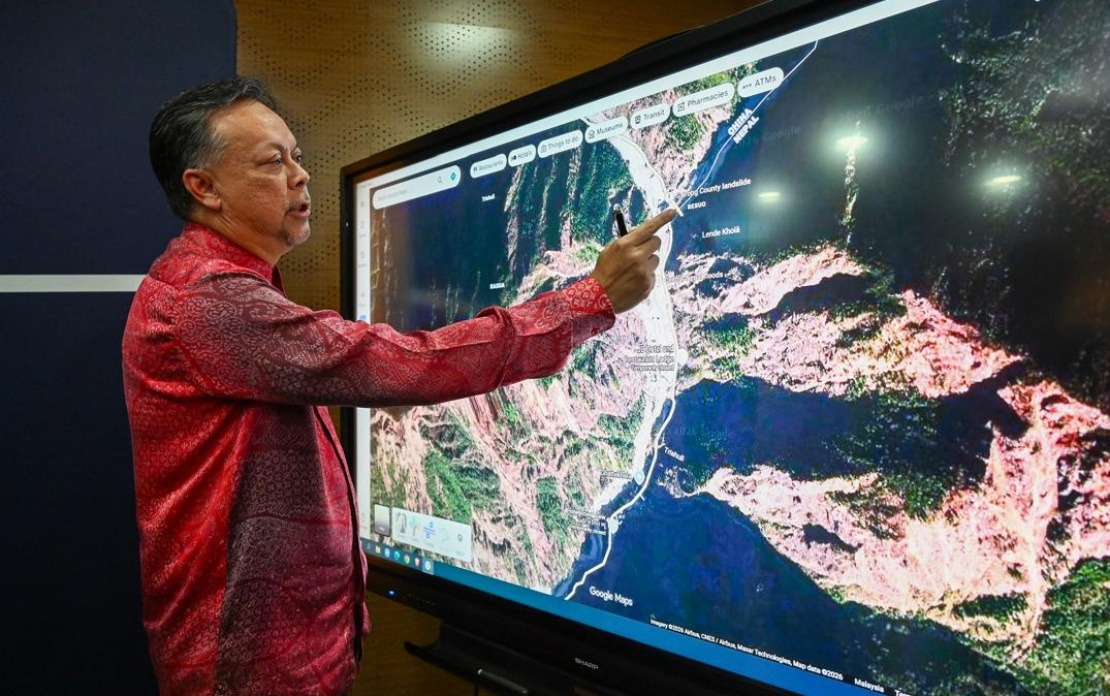
The Malaysian Foreign Ministry reported on Wednesday that two of the 57 citizens unaccounted for following destructive flash floods and landslides in Nepal have been successfully found, though verification of their identities and status is still underway. As of 2.22 pm that day, the remaining 55 Malaysians could not be contacted, with authorities cautioning that this figure remains subject to change as information is processed and verified through multiple channels. The news comes as search and rescue operations continue in the Rasua district, where the Bote Koshi River overflowed on 26 August, triggering a humanitarian crisis that has claimed lives and displaced thousands across the Himalayan nation.
Datauk Syed Mohamad Hasrin Tengku Hussin, Deputy Secretary-General of the Foreign Ministry handling bilateral affairs, emphasised the critical importance of cross-checking all incoming information to prevent duplication and confusion in tracking the missing nationals. The verification process involves confirming identities, determining current locations, and establishing the actual welfare status of each individual reportedly found. Officials are drawing from data supplied by Nepalese authorities, Tourism Malaysia, local tour operators, and distressed family members in Malaysia, a multi-source approach necessary because initial reports are often incomplete or contradictory in such emergencies. This meticulous methodology, while time-consuming, is essential given the scale of the disaster and the volume of inquiries flooding in from anxious relatives.
In response to Foreign Minister Datuk Seri Mohamad Hasan's directive, the ministry has significantly expanded its operational footprint. An official dispatched from the Malaysian High Commission in Dhaka to Kathmandu is now assisting the Malaysian Embassy in Nepal by coordinating intelligence flows, tracking situational developments, and maintaining liaison channels with Nepalese government agencies. The embassy itself is working in tandem with Nepal's Foreign Ministry emergency response unit, the Nepal Tourism Board, and numerous tour operators to systematically compile and authenticate information about untraced Malaysians. This collaborative approach reflects the reality that governments across borders must pool resources during transnational disasters to maximise the chances of locating citizens quickly.
Nepalese rescue teams have thus far pulled 528 individuals from the affected areas—490 nationals and 38 foreign nationals—yet no Malaysians have been positively identified among those rescued to date. This ambiguous status partly explains why verification work remains painstaking; absence of evidence in rescue tallies does not necessarily confirm safety, nor does it confirm the worst. The scale of destruction has rendered conventional communication channels largely inoperative across the disaster zone. Roads have been severed, bridges collapsed, electricity grids severed, and mobile networks incapacitated, creating an information blackout that complicates both rescue operations and family outreach efforts across Malaysia.
The challenging terrain and severely degraded infrastructure have transformed what would ordinarily be straightforward search operations into complex logistical undertakings. Landslides continue to pose hazards, water levels remain unpredictable owing to seasonal runoff from higher elevations, and weather patterns in the Himalayan foothills can shift rapidly. These constraints, compounded by the sheer scale of Nepal's own domestic disaster burden, have stretched local rescue capacity. The Nepalese authorities are simultaneously attending to their own citizens caught in the calamity, meaning international search efforts must be carefully coordinated to avoid duplicating efforts or placing additional strain on already stretched personnel and resources.
To manage the crisis and maintain contact with affected Malaysians and their families, the Foreign Ministry established a 24-hour operations centre in Putrajaya immediately following the initial reports. This nerve centre serves as the central repository for all information received, the hub through which calls from worried relatives are processed, and the command point from which guidance flows to Malaysian diplomatic missions in the region. Within the first two to three hours of activation, the operations room fielded between 12 and 15 inquiries from family members and acquaintances seeking updates on Malaysians believed to have been in Nepal at the time of the disaster. Every such contact is recorded, analysed, and cross-referenced against official tallies maintained by Nepalese authorities and internal ministry databases to systematically build a comprehensive picture of the Malaysian diaspora's status.
The initial figure of 57 unreachable Malaysians itself represents a compilation across multiple reporting channels, each bringing its own accuracy challenges. Tourism Malaysia provided lists of registered tour participants, private tour operators contributed manifests from their guided groups, Nepalese authorities supplied information from their disaster registries, and individual family members filed reports based on last contact or travel plans. The Foreign Ministry's central reconciliation task involves merging these disparate datasets while eliminating double-counting and identifying genuine cases requiring urgent attention. That 55 of the original 57 remain unverified underscores both the volume of confirmations required and the inherent delays built into any large-scale international emergency response.
For Malaysian families anxiously waiting for news, the ministry has established dedicated communication channels. The Putrajaya Operations Room accepts calls at +603 8887 4570 and email inquiries directed to [email protected]. When contacting authorities, relatives are advised to provide comprehensive details including full legal names, passport identification numbers, planned travel routes, last known locations before communication ceased, and any reachable telephone contact information. This granular data collection enables officials to match individual reports against known travel groups, guest lists from hotels and lodges in the area, and any emergency contacts provided to local authorities by tour operators.
The August 26 catastrophe represents one of Nepal's most serious weather-related disasters in recent years, with authorities warning of ongoing risks posed by water level fluctuations in border rivers and secondary flooding from accumulated debris and compromised waterways. The combined effect of flash flooding and terrain destabilisation has created zones where movement remains dangerous even as rescues continue. For Malaysian authorities, this compounds an already difficult situation; rescue teams cannot simply push into affected areas unilaterally but must coordinate with Nepalese counterparts and work within constraints imposed by terrain, weather, and humanitarian logistics. The stated aspiration is hope for positive outcomes, yet officials have frankly acknowledged that circumstances remain severe and outcomes cannot be guaranteed.
Beyond the immediate search and rescue phase lies a lengthier process of documentation and support for any Malaysians found. The ministry must assist with medical treatment if needed, facilitate repatriation, help citizens reconnect with families, and document their experiences for post-disaster reports. Malaysian citizens in Nepal span various categories—tourists on holiday packages, trekkers, business professionals, and long-term residents—each with distinct needs and documentation requirements. The scale of coordination required extends across multiple Malaysian government agencies and private sector entities including tour firms, airlines, and hospitality providers. This unified whole-of-nation approach, while evident in the ministry's coordination efforts, will require sustained commitment over weeks and months to properly resolve all cases.
The disaster underscores vulnerabilities faced by Malaysian citizens abroad, particularly in regions prone to natural hazards. While Nepal is a popular trekking and tourism destination for Malaysians seeking mountain experiences and cultural immersion, the mountainous geography that attracts visitors simultaneously creates risks during extreme weather events. Modern digital connectivity, normally taken for granted, becomes unavailable precisely when it is most needed. The incident will likely prompt reviews of travel advisory protocols, pre-departure safety briefings, and emergency contact procedures that Tourism Malaysia and the foreign service extend to Malaysian nationals planning journeys to high-risk environments. Lessons learned from this event will shape how Malaysia prepares for and responds to future transnational disasters affecting its citizens abroad.

