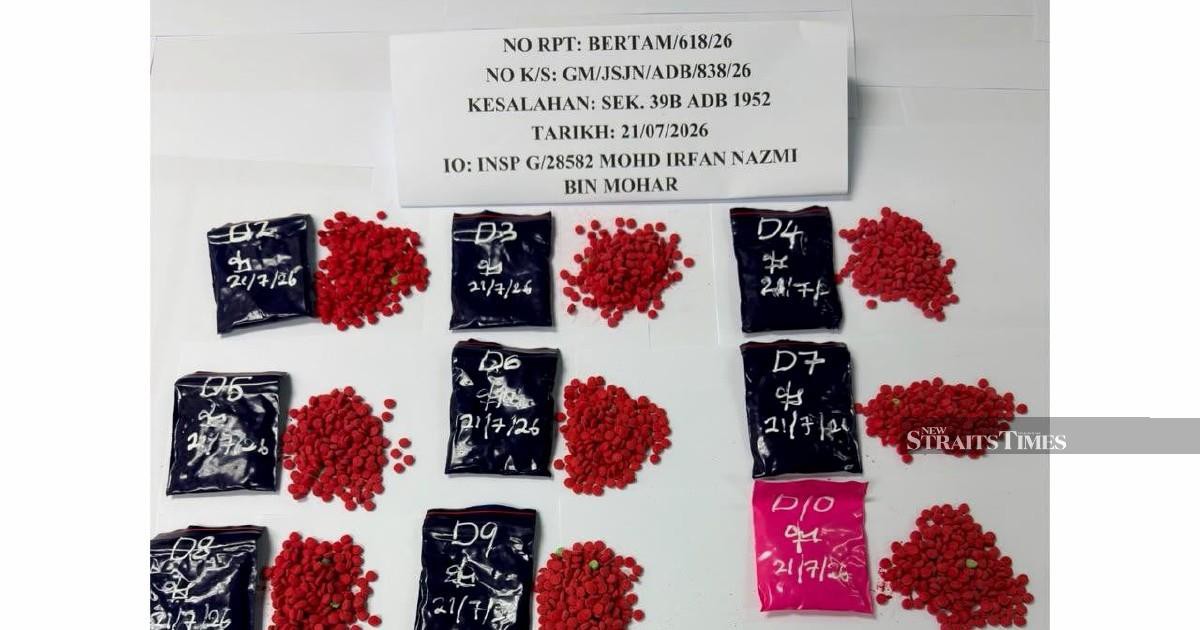
Law enforcement officers in Kelantan have arrested two men from Myanmar following an enforcement operation that culminated in the seizure of a significant consignment of illicit methamphetamine tablets. The apprehension took place in Gua Musang after a pursuit that highlighted ongoing tensions surrounding drug trafficking along Malaysia's northern corridor.
The suspects were nabbed during the operation, which netted 6,000 yaba pills with an estimated street value around RM60,000. These psychoactive pills, commonly known as yaba or "crazy medicine," represent a persistent challenge for Malaysian authorities charged with combating cross-border drug smuggling. The seizure demonstrates the continuing flow of methamphetamine derivatives from regional production hubs into Malaysian territory, where demand among certain demographics has created a lucrative black market.
The brief chase leading to the arrests underscores the operational challenges faced by police in intercepting organised drug movements. While the duration of the pursuit was relatively short, it reflects the calculated risks taken by trafficking networks attempting to move contraband through Kelantan's transportation networks. The state's geography—spanning major routes between Thailand and peninsular Malaysia—renders it a crucial transit point for regional drug smuggling operations.
Yaba pills have emerged as a particular concern across Southeast Asia in recent years, with production primarily concentrated in the Golden Triangle region straddling Thailand, Laos, and Myanmar. These tablets, typically containing methamphetamine and caffeine, carry potent psychoactive properties and are marketed under various brand names. The pills command premium prices in downstream markets, making them attractive to trafficking organisations operating within established supply chains.
For Malaysian authorities, the seizure represents another data point in an escalating pattern of drug interdiction. The country's location as a regional transshipment hub places enormous pressure on enforcement agencies tasked with screening the vast volumes of cargo, vehicles, and travellers moving across its borders. Kelantan's position as a frontline state in this effort means police forces there encounter a disproportionate share of trafficking attempts.
The apprehension of Myanmar nationals aligns with broader enforcement trends. Myanmar, despite being a signatory to international drug control conventions, remains a major source jurisdiction for methamphetamine and precursor chemicals destined for markets across Asia. The political instability following the 2021 military coup has further complicated drug control efforts, with various armed groups operating in border regions where clandestine production facilities proliferate with minimal oversight.
For Malaysian readers and policymakers, the incident reinforces the interconnected nature of regional drug challenges. Disrupting supply requires coordinated action across borders, yet cooperation between national authorities remains inconsistent. Thailand's own struggles with methamphetamine production and trafficking create additional complications for Malaysia's enforcement agencies, as drugs produced there also transit Malaysian territory en route to international markets.
The seizure also reflects resource allocation priorities within Malaysian law enforcement. Border security agencies and narcotics units have intensified operations in northern states following intelligence suggesting increased trafficking activity. Recent months have witnessed multiple seizures across Kelantan, Terengganu, and Perak, suggesting either heightened enforcement success or escalating trafficking attempts—likely a combination of both factors.
Beyond immediate law enforcement metrics, incidents like this illuminate persistent vulnerabilities within Malaysia's border infrastructure. While customs and immigration screening capabilities have improved, organised trafficking networks continuously adapt their methods and routes. The arrest of just two individuals, while tactically significant, represents a marginal disruption to larger distribution systems operating across the region.
The value attached to the seized consignment—approximately RM60,000—reflects retail street pricing rather than wholesale acquisition costs, illustrating the substantial profit margins that incentivise continued trafficking despite enforcement risks. These margins fund trafficking organisation operations and create powerful incentives for recruitment and operational persistence even in the face of periodic setbacks like this Gua Musang operation.
Looking forward, the arrests and seizure contribute to growing evidence that yaba pills remain a priority trafficking commodity for regional criminal enterprises. Malaysian authorities will likely intensify interdiction efforts in coming months, particularly targeting known transit routes and courier networks. Cooperation with Thai and Myanmar law enforcement agencies, where feasible, may yield intelligence advantages in disrupting upstream production and consolidation points.
For communities affected by methamphetamine use—particularly in states like Kelantan where addiction rates have increased—such seizures offer modest encouragement. Each consignment intercepted represents potential harm reduction, though the volume of seizures typically represents only a fraction of total market supply. Comprehensive solutions require addressing demand-side factors through treatment, rehabilitation, and public health initiatives alongside enforcement operations.

