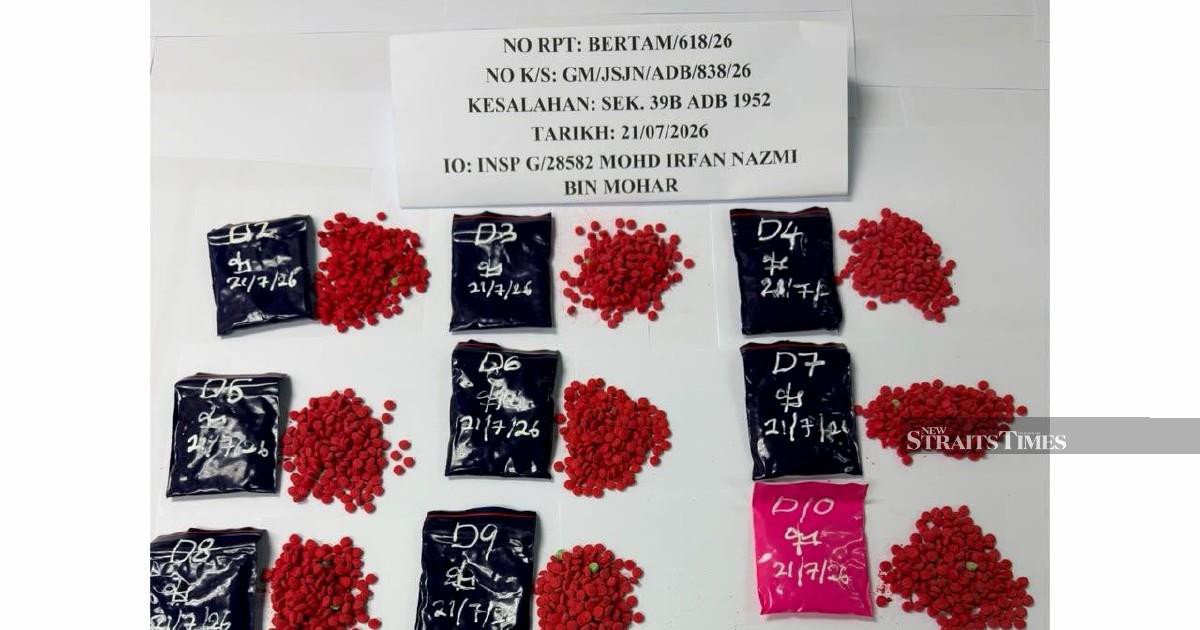
Law enforcement in Kelantan has secured another significant narcotics seizure with the arrest of two Myanmar nationals during an operation in Gua Musang yesterday. The suspects were intercepted after a brief pursuit, yielding a substantial cache of yaba pills believed to be destined for local distribution networks. The contraband, comprising approximately 6,000 tablets, carries an estimated street value of RM60,000 and represents the continuing flow of amphetamine-type stimulants across the Thailand-Malaysia border corridor.
Yaba, commonly known as the "madness drug" due to its potent methamphetamine content combined with caffeine and other compounds, remains a persistent challenge for regional enforcement agencies. The drug has established deep market penetration in Malaysia, particularly among younger demographics and in urban centres, despite decades of targeted policing efforts. The pills are typically manufactured in clandestine laboratories across the Greater Mekong Subregion, with Thailand and Myanmar serving as primary source points before transshipment through strategic border zones.
The Gua Musang district, situated within Kelantan state in Malaysia's northeastern peninsula, occupies a strategically vulnerable position in the nation's drug interdiction landscape. The region's geography—characterized by dense forested terrain, remote crossing points, and limited surveillance infrastructure—creates persistent vulnerabilities for trafficking networks operating across the international boundary. Gua Musang has previously featured prominently in major drug seizure operations, reflecting its role as a transit hub within broader transnational smuggling routes extending toward central and southern Malaysian markets.
The apprehension of foreign nationals engaged in cross-border trafficking echoes a broader pattern documented by Malaysian authorities over recent years. Myanmar continues to emerge as a significant source jurisdiction for amphetamine precursors and finished products, driven by permissive regulatory environments and the proliferation of uncontrolled manufacturing facilities operating with limited governmental oversight. The correlation between instability within Myanmar's border regions and heightened narcotics production represents a phenomenon of considerable concern to Malaysian policymakers tasked with border management and public health protection.
Roads through Kelantan and adjacent Terengganu have long functioned as primary distribution arteries for drugs emanating from northern source regions. Law enforcement agencies report that trafficking organizations employ increasingly sophisticated methods to conceal contraband, including utilization of private vehicles with hidden compartments, coordination with local facilitators, and timing of movements to coincide with reduced surveillance periods. The involvement of foreign nationals suggests coordination with established Malaysian-based criminal networks possessing distribution infrastructure and customer relationships within the domestic market.
The RM60,000 valuation attached to this seizure reflects retail-level pricing within Malaysia's underground drug economy, where yaba commands premium prices relative to wholesale acquisition costs in source countries. This significant price differential creates powerful financial incentives for trafficking organizations, particularly given the relative accessibility of manufacturing facilities and the minimal barriers to entry within the production landscape. For individual couriers, participation in such operations—often under coercive circumstances or debt bondage arrangements—typically yields compensation far below the ultimate street value, illustrating the exploitative hierarchies characterizing international drug trafficking networks.
The police chase component of yesterday's interception suggests that enforcement officers implemented proactive patrol strategies and maintained heightened alertness at known trafficking junctures. The pursuit itself indicates awareness among operational units regarding vehicular patterns consistent with drug transport activities. Enhanced checkpoint operations, intelligence-driven deployments, and coordination among federal and state-level agencies have incrementally improved interdiction capacity, though the sheer volume of potential trafficking routes continues to challenge resource allocation across Malaysia's extensive border regions.
This arrest forms part of a broader counternarcotics campaign involving collaboration between Malaysian authorities and regional partners through ASEAN frameworks and bilateral agreements. Intelligence sharing regarding trafficking methodologies, courier networks, and organizational structures has yielded incremental improvements in enforcement effectiveness. Nevertheless, the persistence of major seizures underscores the fundamental supply-demand dynamics perpetuating the trade—robust domestic market demand continues to exert powerful pull effects that trafficking networks remain well-positioned to exploit through established distribution channels.
The incident highlights the multifaceted challenges confronting Malaysia's drug control strategy, extending beyond enforcement toward demand reduction, treatment infrastructure, and community education initiatives. Yaba's accessibility, affordability relative to alternative stimulants, and the sustained enthusiasm among target consumer populations ensure continued trafficking pressure. For Malaysian policymakers, the challenge involves balancing intensified border interdiction efforts with investments in preventative healthcare and social interventions addressing the underlying vulnerability factors driving substance dependency within affected populations.
The arrested Myanmar nationals now face processing through Malaysia's judicial system, where drug trafficking offences carry substantial criminal penalties including lengthy imprisonment. Their cases will likely generate procedural complexity regarding extradition considerations, consular notifications, and potential treaty obligations governing the treatment of foreign nationals within the Malaysian penal system. Authorities in Myanmar may face requests for assistance in identifying the organizational networks facilitating transshipment operations, potentially yielding intelligence applicable to broader regional drug enforcement initiatives.
Looking forward, the Gua Musang seizure reinforces intelligence assessments regarding persistent trafficking threats emanating from northern source zones. Malaysian enforcement agencies have indicated continued focus on dismantling established trafficking routes, particularly those demonstrating systematic utilization of foreign couriers and coordination with domestic distribution networks. Enhanced cooperation with Thai counterparts, improved physical border barriers, and technological surveillance systems remain critical components of Malaysia's evolving strategy to contain narcotics infiltration while addressing the complex socioeconomic factors sustaining both supply and demand dimensions of the regional drug trade.

