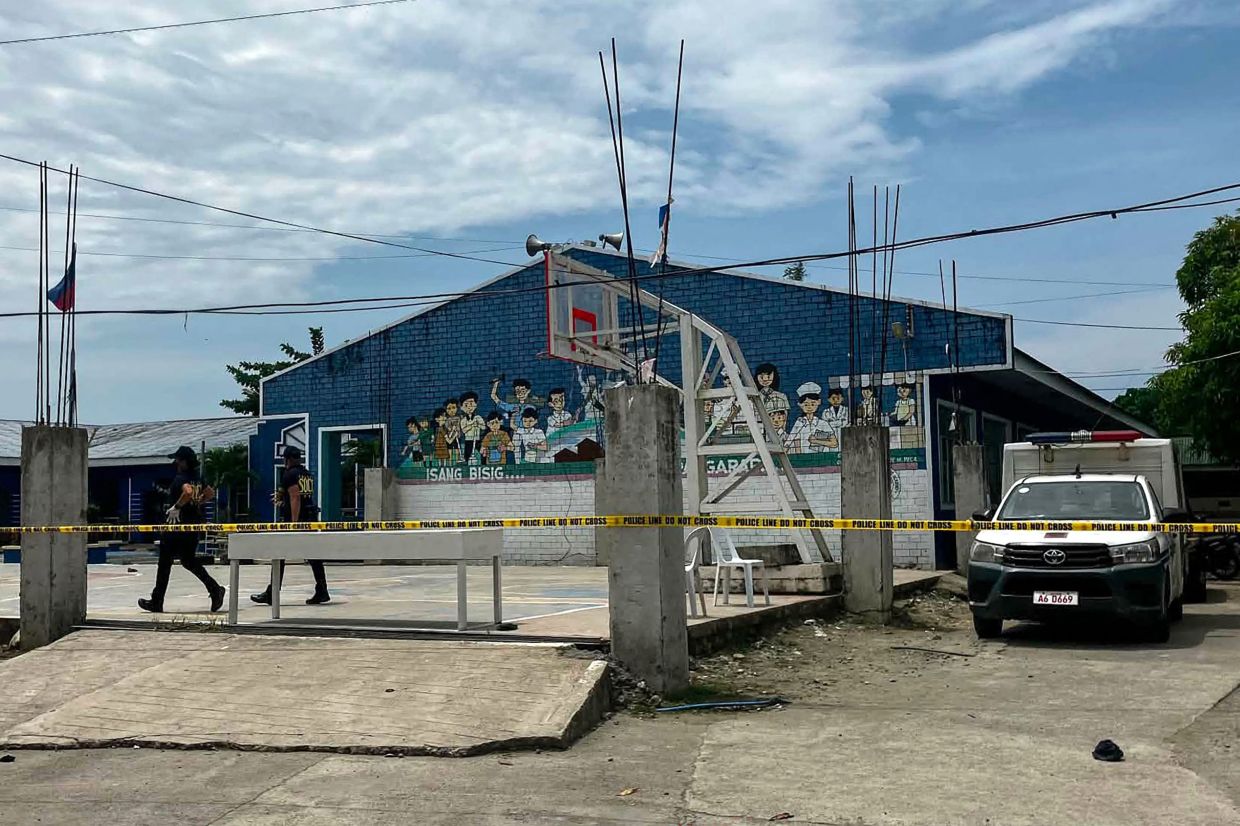
A shooting rampage at a public high school in Tacloban city has left the Philippines grappling with questions about school security and youth violence. Two students aged 14 and 15, wielding handguns, unleashed gunfire at San Jose National High School during mid-morning hours on Monday, resulting in the deaths of three fellow pupils and injuries sustained by seven others. Both suspects were apprehended at or near the school grounds, according to Brig. Gen. Jason Capoy, the regional police chief overseeing the investigation into the incident.
The perpetrators, who knew each other well and had no prior criminal records, both studied at the institution where the violence erupted. During preliminary police questioning, both suspects indicated they had experienced bullying within the school environment, though authorities have not yet released comprehensive details regarding the nature or extent of the harassment they claimed to endure. This disclosure has prompted investigators to explore whether peer mistreatment served as a catalyst for the violence, marking a significant angle in understanding the tragedy.
The school, which operates as a government-funded facility accommodating over 1,500 students, had minimal security infrastructure in place when the attack occurred. The entry and exit points were monitored by only a single guard, creating multiple vulnerable access routes that the armed youths exploited to bring their weapons onto campus. One of the suspects obtained a 9 millimetre pistol from his aunt, a uniformed police officer, who is now facing investigation for her role in the weapon's availability. The second shooter carried a calibre 38 revolver. This breach in security protocols has become a focal point of the official inquiry, raising serious questions about how firearms passed through school perimeters undetected.
The violence unfolded across multiple locations within the school building. After opening fire in one classroom, the suspects pursued fleeing students into an adjacent room, forcing them to chase victims as pupils scattered in panic. Police recovered approximately 40 shell casings from the scene, indicating sustained gunfire. Among the casualties, the majority of both dead and injured students were female, according to police accounts.
Videographic evidence recorded by students captures the horror of those trapped inside locked classrooms. In footage circulating online, terrified pupils can be heard screaming and crying as shots ring out nearby. Some students are audible calling their mothers, their voices trembling with fear. Other recordings show crowds of students running from the campus, many visibly distressed and clinging to one another for emotional support as they fled the location. These raw depictions underscore the psychological trauma inflicted on the broader student body by the incident.
The arrest of the first suspect occurred directly on school grounds immediately after the shooting concluded. The second gunman, however, managed to evade initial capture by fleeing to a nearby residential dwelling where he concealed himself. Police located him after residents alerted authorities to his presence, leading to his eventual apprehension without further incident.
President Ferdinand Marcos Jr. responded to the tragedy by directing a comprehensive investigation into the attack and calling for heightened security measures across all schools, commercial establishments, and public spaces throughout the country. Through Communications Undersecretary Claire Castro, the president expressed deep sadness regarding the incident, acknowledging the profound grief experienced by bereaved families and the broader sense of insecurity felt by the public. This presidential directive signals recognition that the nation's institutional approach to safeguarding young people requires urgent reassessment and reinforcement.
Because both perpetrators are minors, their legal classification complicates criminal proceedings under Philippine law. The 14-year-old suspect falls below the minimum age threshold for criminal prosecution, which was established at 15 years through legislation enacted in 2006. Even for the older suspect, prosecution would hinge upon authorities establishing that he possessed clear awareness of the criminal nature of his actions and their consequences. Both youths will be transferred to government welfare agencies for further processing and potential rehabilitation upon conclusion of the police investigation.
Gun violence remains a persistent challenge throughout Philippine society, fuelled substantially by widespread circulation of unregistered and illegally-held firearms. Yet despite this backdrop of endemic firearms-related criminality, mass shooting incidents targeting schools have remained comparatively uncommon within the nation. The attack at San Jose National High School represents a stark departure from this pattern, injecting heightened anxiety about institutional safety for students and families nationwide.
The incident recalls a 2022 shooting at a prestigious university campus in the Manila metropolitan region. In that occurrence, a gunman opened fire immediately before a graduation ceremony, targeting a former municipal mayor against whom the shooter harboured an enduring personal dispute. That attack claimed four lives, including the intended victim, before the perpetrator faced arrest. The recurring nature of such high-profile armed assaults, despite their rarity in school settings, underscores that the nation continues confronting fundamental challenges regarding firearm accessibility, security infrastructure at educational institutions, and the underlying social tensions that occasionally explode into violence.
The police establishment has appealed to the general public to maintain composure during this period of national shock while encouraging citizens to furnish authorities with any intelligence potentially useful to ongoing investigative efforts. As Tacloban residents and the broader educational community process this tragedy, the incident will likely catalyse substantive policy discussions about firearm regulations, institutional security protocols, and mental health support systems for young people experiencing social difficulties within academic environments.