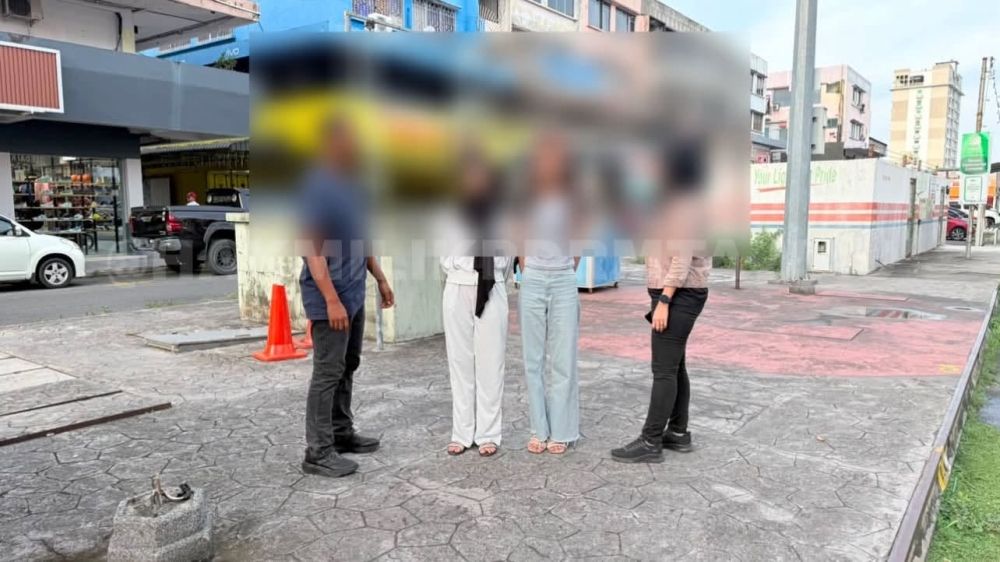
A dining incident in Tawau has resulted in criminal charges against two women following what authorities describe as a physical confrontation at a Bandar Fajar establishment on July 13. The arrest came after local police responded to reports of a disturbance at the restaurant, marking another instance of public disorder in the eastern Sabah town.
The circumstances leading to the altercation remain under investigation, with officers working to establish the sequence of events and identify any precipitating factors. Initial reports suggest the two individuals engaged in a direct physical confrontation, though the exact nature of their dispute has not been disclosed by authorities. Such incidents at commercial dining venues draw particular attention from law enforcement due to their potential to disturb other patrons and create public safety concerns.
Tawau, located in the southeastern corner of Sabah on Borneo island, has experienced occasional incidents of public disorder despite its status as a major commercial and administrative hub. The town serves as a gateway to several tourist destinations and agricultural regions, making its public safety record relevant to both residents and visitors. Restaurant and entertainment venues in the area have increasingly become focal points for police attention when social disturbances occur.
The detention of both women underscores the willingness of local law enforcement to pursue charges in interpersonal disputes that escalate to physical contact. Malaysian law enforcement agencies typically handle such cases under assault or affray provisions, depending on the severity of injuries and the degree of premeditation involved. The prompt police response suggests either that witnesses reported the incident quickly or that establishment staff alerted authorities immediately upon recognizing the escalating situation.
Bandar Fajar, as a commercial district within Tawau, hosts numerous restaurants, shops, and service businesses that cater to both the local population and transient workers in the region's resource extraction and trading sectors. The area's density of dining and hospitality establishments means that any disruption to normal operations can impact neighbouring businesses and contribute to broader concerns about public conduct in commercial spaces. Restaurant owners and managers across Sabah have in recent years expressed concerns about managing difficult customers and preventing physical confrontations on their premises.
The investigation phase will likely involve obtaining statements from witnesses, reviewing any available surveillance footage, and conducting medical examinations if injuries were sustained by either party. Evidence gathering in such cases often depends on the cooperation of other patrons present during the incident, as their accounts may clarify motivations and establish timelines. Police will also examine whether any prior relationship or grievance existed between the two women or whether the confrontation arose spontaneously from some triggering interaction.
From a broader legal perspective, public order offences of this type fall under Malaysian criminal law provisions addressing assault, affray, and disorderly conduct. Depending on the evidence gathered and the nature and extent of any physical contact, charges could range from simple assault to more serious offences if significant injury occurred or if weapons were involved. The outcome will depend on police recommendations and prosecutorial decisions regarding appropriate charges and sentencing recommendations.
For Tawau residents and business owners, such incidents reinforce ongoing discussions about maintaining civil standards in public spaces and the role of both individual responsibility and venue management in preventing disorder. Many restaurants in the region have implemented various strategies, from training staff in conflict de-escalation to installing surveillance systems and maintaining clearer house rules for patron conduct. The visibility of such arrests also serves as a reminder of legal consequences for those who resort to physical confrontation in shared commercial spaces.
The case also reflects wider patterns across Malaysia and Southeast Asia regarding public order challenges in fast-growing urban and semi-urban centres. As populations become more mobile and diverse, and as dining and entertainment culture expands, commercial venues increasingly serve as venues where misunderstandings or personality clashes can escalate quickly. The role of alcohol consumption, if relevant to this incident, often becomes a factor in such cases, though authorities have not commented on whether intoxication played any role here.
Both women remain in custody pending investigation completion and any subsequent court proceedings. Their identities have not been released publicly, as is customary in Malaysian police procedures for accused individuals unless charges are formally laid and courts authorize public identification. The investigation timeline will determine whether the matter proceeds to prosecution or whether alternative resolutions are explored through mediation or diversion programmes that increasingly form part of Malaysia's criminal justice approach.

