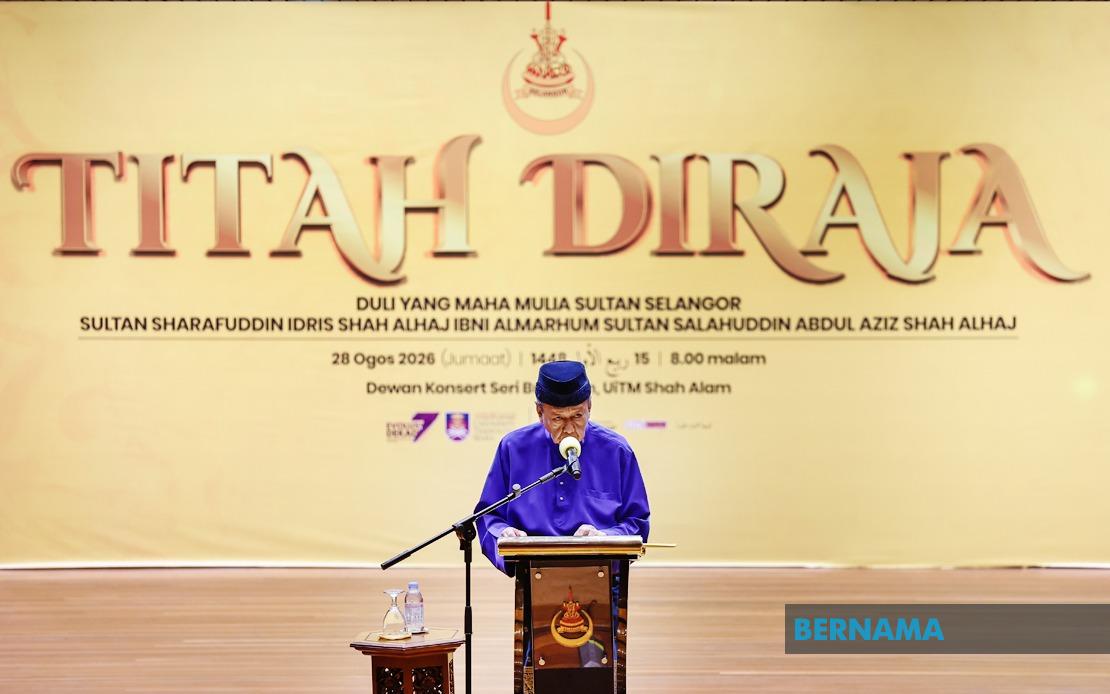
The Sultan of Selangor, Sultan Sharafuddin Idris Shah, has stressed that Universiti Teknologi MARA must continue to serve as a bridge to opportunity for Malay and Bumiputera students from low-income backgrounds and remote communities, even as the institution expands and strengthens. Speaking at the UiTM 2026 Royal Address at Dewan Konsert Seri Budiman in Shah Alam, His Royal Highness cautioned that the university's rapid growth should never come at the cost of abandoning the very students it was created to serve.
The monarch articulated a vision where the children of agricultural workers, fishermen, drivers, factory employees, and families struggling in rural poverty remain confident that academic ability and perseverance will open UiTM's doors to them. This principle, Sultan Sharafuddin insisted, lies at the heart of what UiTM has always stood for and must never be compromised. The remarks reflected concerns that as elite universities expand and compete globally, they sometimes drift away from their original social mission, a phenomenon not unique to Malaysia but a particular risk for institutions with explicit mandates to serve marginalised communities.
UiTM's trajectory since its establishment in 1965 has been remarkable by any standard. The institution began with merely 219 students and 11 lecturers, a modest foundation that seemed unlikely to transform higher education access in the country. Yet within ten years, student numbers had grown nearly thirty-fold to almost 7,000, accompanied by an expansion of the academic workforce to approximately 1,000 staff members. The curriculum broadened to encompass roughly 60 programmes across multiple states, signalling ambitions far beyond the original single campus.
Today, UiTM ranks among Malaysia's largest higher education institutions, graduating over 40,000 students annually and boasting an alumni network exceeding one million individuals. This scale presents both an asset and a responsibility. The vast network of successful graduates—now working as accountants, engineers, doctors, lawyers, architects, academics, entrepreneurs, civil servants, and corporate leaders across virtually every sector—testifies to UiTM's transformative impact. Yet Sultan Sharafuddin argued that this success should inspire not complacency but deeper commitment to the original mission.
Crucially, the Sultan proposed a concrete mechanism to strengthen UiTM's capacity to support financially vulnerable students. He called for the development of a systematic alumni contribution programme whereby graduates would commit to donating at least RM10 monthly or RM100 annually to the institution. While framing this as modest and affordable for working professionals, His Royal Highness appealed to sentiment and obligation, positioning the contribution as an act of gratitude and sacrifice to ensure UiTM's continued vitality.
The potential revenue from such a scheme would be substantial. If even a fraction of UiTM's one million alumni participated, the fund could accumulate to approximately RM100 million annually—a significant sum that could fuel the university's infrastructure development while simultaneously creating a dedicated financial cushion for students encountering economic hardship. This two-pronged benefit makes the proposal strategically sound, addressing both institutional advancement and student welfare simultaneously.
Sultan Sharafuddin invoked the popular student and alumni rallying cry of "UiTM Dihatiku"—roughly translated as "UiTM in my heart"—as evidence that emotional attachment to the institution exists. He suggested that formalising this attachment through financial contribution would transform sentiment into substantive action. The framing is psychologically astute; rather than portraying donations as charitable obligations, it positions them as expressions of genuine institutional loyalty and recognition of personal debt to UiTM.
The metrics by which UiTM's success should be measured, the Sultan argued, extend well beyond enrolment figures or graduation rates. Instead, the true measure lies in the extent to which the institution has fundamentally altered life trajectories and contributed to national development. This perspective reflects a distinctive Malaysian understanding of higher education's role—not merely as credentialing mechanism or knowledge repository, but as an engine of social transformation capable of breaking cycles of poverty and enabling upward mobility for previously excluded communities.
The attendance of Higher Education Minister Datuk Seri Dr Zambry Abd Kadir at the address suggested government alignment with these priorities, though the minister's remarks were not detailed. This official presence lent weight to the Sultan's message and implied that the government recognises the political and social importance of maintaining UiTM's accessibility mandate even amid pressures toward internationalisation and institutional prestige.
For Malaysian policymakers and educators, the Sultan's intervention carries implicit cautionary messages about the risks of gradual drift away from foundational social missions. Institutions that began as instruments of deliberate social policy—creating access where none existed—can subtly shift focus toward serving established elites once critical mass is achieved. Sultan Sharafuddin's emphasis on continued accessibility appears designed to resist this tendency and anchor UiTM firmly to its original purpose.
The proposal also reflects broader regional tensions regarding higher education equity. Across Southeast Asia, flagship universities increasingly balance international competitiveness against commitments to domestic equity. UiTM's specific mandate to serve Bumiputera communities makes this balance particularly acute, and the Sultan's intervention suggests the monarchy views the preservation of this mandate as important enough to warrant public intervention and specific proposals.
The alumni contribution scheme, if implemented effectively, could become a model for other Malaysian institutions seeking to strengthen financial support for disadvantaged students without burdening government budgets. The modest individual contribution level makes participation psychologically feasible while aggregate numbers could prove transformative, suggesting that creative financing mechanisms aligned with institutional identity and alumni goodwill can supplement traditional funding sources.
Ultimately, Sultan Sharafuddin's address represents a high-level reaffirmation of social commitment at a moment when institutional expansion could otherwise dilute foundational purpose. Whether the proposed alumni scheme gains traction will depend on implementation details and the enthusiasm with which it is promoted to graduates. Success would demonstrate that even established, successful institutions can deepen their original missions while continuing to grow.

