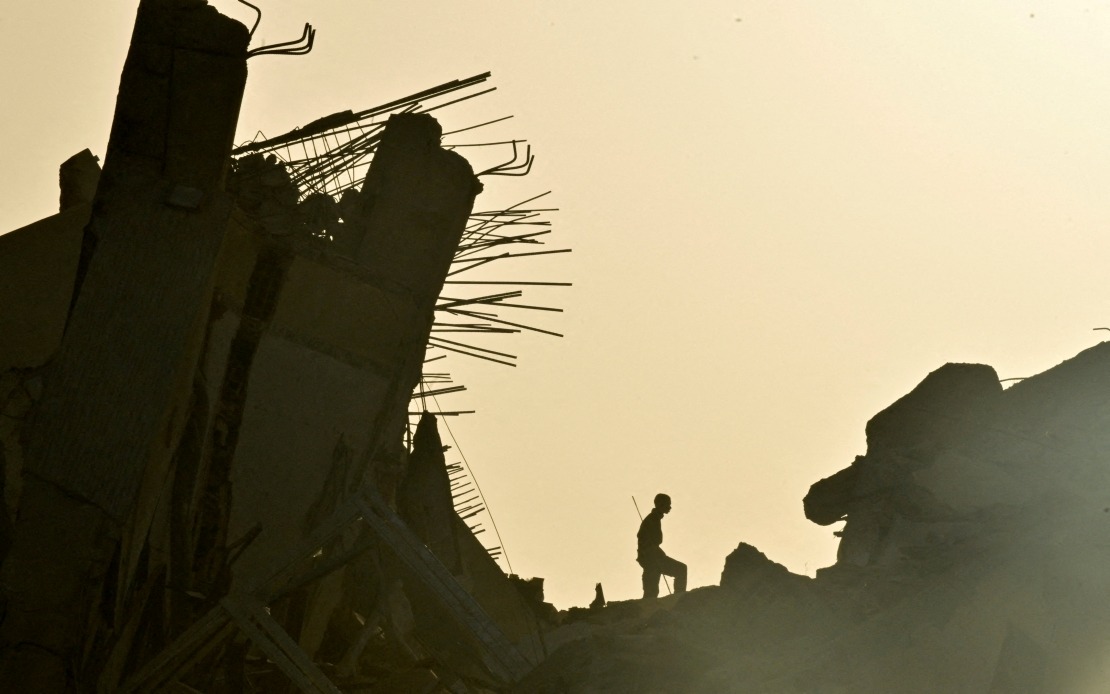
British charitable organisations have successfully gathered in excess of £10 million (US$13.4 million) in just days to support communities devastated by a series of earthquakes that struck Venezuela. The Disasters Emergency Committee, an umbrella group representing major UK-based aid organisations, formally announced its emergency appeal on Wednesday and has expressed profound gratitude for the rapid public response to the humanitarian crisis unfolding in the South American nation.
The speed and scale of donations underscore the British public's consistent willingness to contribute to international disaster relief efforts. Within a brief timeframe following the appeal launch, pledges and direct contributions have already exceeded the £10 million threshold, demonstrating significant public engagement with the plight of affected populations. This substantial financial commitment will provide critical resources to bolster ongoing humanitarian operations across affected regions of Venezuela.
On the ground, partner organisations coordinated through the DEC framework are intensifying their response operations around the clock. These agencies are prioritising the delivery of essential services to earthquake survivors, focusing on four core areas: provision of emergency shelter for displaced persons, access to clean water supplies, distribution of food aid, and deployment of medical personnel and supplies. The coordinated approach leverages the collective expertise and existing infrastructure of multiple established charities operating simultaneously across disaster-affected zones.
Actress Adjoa Andoh, who serves as ambassador for the International Rescue Committee, publicly launched the appeal campaign and provided a compelling statement reflecting on the generosity demonstrated by British donors. Andoh's involvement underscores the media and celebrity engagement often crucial to maximising public awareness of humanitarian emergencies. Her remarks highlighted the tangible difference that financial contributions make to individuals and families facing catastrophic loss and displacement following natural disasters of this magnitude.
Andoh emphasised that the collected funds represent more than monetary value but rather embody genuine human compassion directed toward people experiencing profound suffering and despair. She specifically acknowledged the International Rescue Committee and partner organisations operating within the DEC framework, noting their tireless work to provide immediate assistance to vulnerable populations in the earthquake's immediate aftermath. The actress stressed that without public donations, the scope and effectiveness of relief operations would be severely constrained, while adequate funding enables charities to scale up assistance and bring genuine hope to affected communities.
The International Rescue Committee, one of the DEC's constituent organisations, brings significant operational capacity to Venezuela relief efforts. This established agency operates across multiple countries experiencing humanitarian crises, possessing field experience, local partnerships, and established supply chains capable of rapidly mobilising resources. Their participation in the coordinated response demonstrates how international collaboration among charities can amplify the effectiveness of disaster relief operations beyond what individual organisations might achieve independently.
For Malaysian and Southeast Asian audiences, this development carries several relevant implications. First, it illustrates how international communities mobilise resources during natural disasters, a pattern increasingly relevant given the region's vulnerability to earthquakes, tsunamis, and typhoons. Second, it demonstrates the critical role of established charitable networks in coordinating rapid response to large-scale emergencies, a model applicable to regional disaster preparedness and response frameworks. Third, the significant fundraising success reflects broader patterns of international solidarity that transcend borders and economic interests.
Venezuela's earthquake, compounded by the nation's existing humanitarian challenges and economic crisis, has created a particularly acute emergency requiring sustained international support. The country has faced years of economic deterioration, healthcare system collapse, and widespread poverty, making disaster recovery exponentially more difficult than in more economically stable nations. Earthquake victims in Venezuela cannot rely on robust government services, comprehensive insurance coverage, or extensive domestic resources to facilitate reconstruction and recovery, rendering international humanitarian assistance even more essential.
The DEC framework itself represents a significant coordination mechanism, bringing together multiple UK-registered charities under a unified appeal structure. This approach reduces donor confusion by creating a single fundraising channel, pools resources for more efficient allocation, and enables better coordination of field operations among partner organisations. Historically, DEC appeals have mobilised substantial resources for major international disasters, and the Venezuela response demonstrates continued public trust in this established institutional structure for channelling aid effectively.
Looking ahead, humanitarian organisations stress that earthquake relief represents only the initial phase of extended recovery efforts. Medium and long-term reconstruction, psychosocial support for traumatised populations, healthcare system rehabilitation, and livelihood restoration typically require sustained funding extending well beyond immediate emergency response phases. As initial media attention to the Venezuela crisis inevitably diminishes, maintaining adequate funding streams becomes increasingly challenging despite ongoing community needs. The early success of the DEC appeal provides a foundation, but sustained commitment from international donors will prove essential as Venezuela confronts the profound reconstruction challenges ahead.

