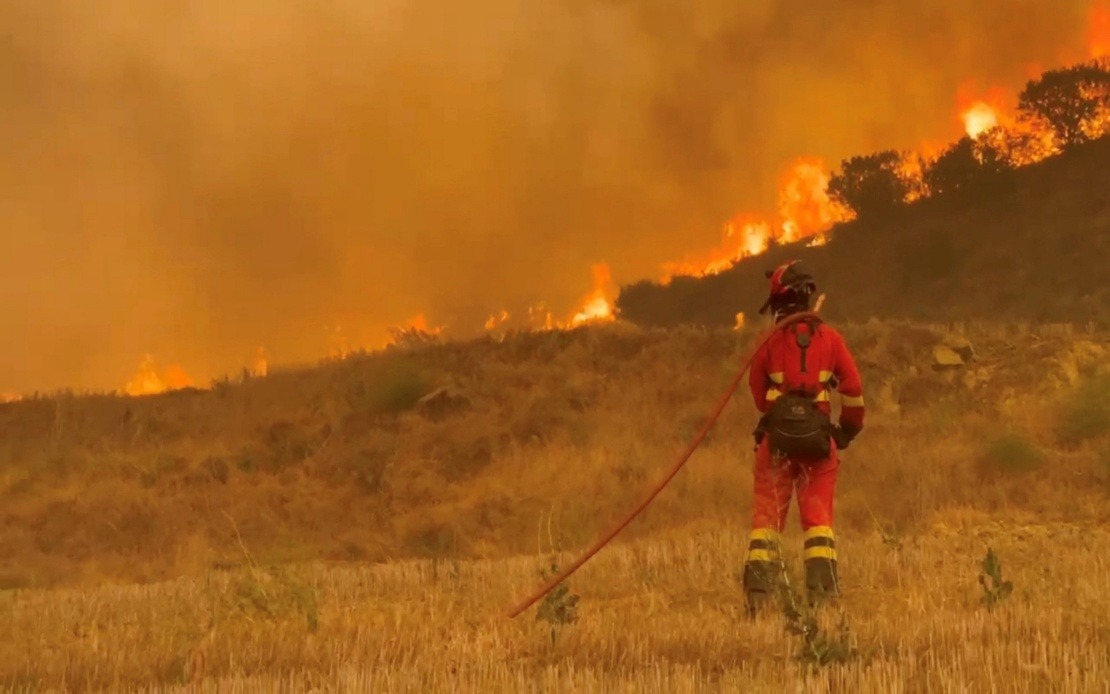
Britain's government is mounting a coordinated response to an intensifying climate crisis, with senior officials convening an urgent meeting to tackle cascading emergencies spawned by exceptional heat conditions sweeping across the country. The emergency gathering, set for Wednesday and to be chaired by Andy Burnham, reflects mounting alarm within government circles about the strain being placed on essential services and infrastructure during what is shaping up to be the hottest summer season ever recorded in the nation's meteorological history.
The convergence of extreme temperatures, widespread wildfires and severe water shortages represents an unprecedented challenge to Britain's institutions, with frontline responders and healthcare workers reporting critical pressures. Firefighters remain locked in combat with significant blazes, most notably a major wildfire consuming vast stretches of the New Forest in Hampshire, whilst simultaneously confronting unprecedented demand for emergency services. Farmers across the nation grapple with acute water scarcity affecting livestock and crop yields, and the National Health Service faces surging patient admissions linked directly to heat-related illnesses and complications affecting vulnerable populations.
The scientific evidence underpinning the government's alarm has become impossible to ignore. Britain's meteorological authority, the Met Office, released projections suggesting the summer of 2024 will establish a new temperature record when calculated across the entire season. Most strikingly, the agency has issued an exceptionally rare amber extreme heat warning specifically for Thursday, a designation normally reserved for conditions posing profound risks to public health and safety infrastructure.
The expanding geographic footprint of drought declarations underscores the severity of water stress engulfing the nation. Monday saw additional English regions formally designated as drought zones, compounding existing conditions already declared across approximately half of England following months of below-average rainfall and relentless high temperatures. The situation deteriorated further when Wales joined this increasingly grim picture, with drought status formally announced on July 30 across the principality as sustained heat accelerated water depletion across reservoirs and aquifers.
For Malaysian observers tracking global weather patterns and their human consequences, Britain's predicament offers sobering lessons about climate vulnerability affecting even wealthy, technologically advanced nations with sophisticated infrastructure. The UK's experience demonstrates that even countries with developed early warning systems, substantial financial resources and professional emergency services face profound challenges when weather systems reach extreme thresholds previously considered unlikely.
The human toll has already become visible in mortality data. During the May and June heat wave episodes earlier this year, Britain's health authorities recorded 2,877 excess deaths directly attributable to heat stress, representing a nearly doubled figure compared to the summer of 2025, when 1,504 excess deaths occurred during comparable periods. These figures quantify the lethal consequences when temperatures soar beyond thresholds that human physiology and public health infrastructure have evolved to manage.
Political responses have begun crystallising around competing visions of Britain's path forward. Green Party leadership, represented by Zack Polanski, has seized upon the crisis to advocate for transformative fiscal and energy policy measures. His proposed agenda includes immediate taxation of major fossil fuel corporations to generate revenue for firefighting helicopter operations, establishment of climate-controlled community spaces to shield vulnerable populations during peak heat episodes, statutory limitations on workplace temperatures, and a complete prohibition on new petroleum and natural gas extraction ventures in the North Sea. These proposals reflect a growing conviction among environmental advocates that incremental adjustments prove insufficient and that the crisis demands structural economic realignment.
The convergence of multiple simultaneous emergencies—fire suppression, healthcare demand management, agricultural collapse and water system stress—reveals the interconnected nature of climate impacts. Traditional crisis management protocols designed for discrete, isolated incidents prove inadequate when numerous systems experience simultaneous pressure from a single underlying cause. This systemic vulnerability applies not only to Britain but represents a broader cautionary pattern for all developed economies, including those in Southeast Asia increasingly exposed to heat waves, flooding and agricultural disruption.
The emergency meeting represents an acknowledgement that climate impacts have transitioned from abstract future scenarios into immediate operational realities demanding resource reallocation and institutional adaptation. Policymakers across the Commonwealth and internationally must now grapple with questions about how existing infrastructure, workforce capacities and fiscal arrangements can accommodate increasingly frequent and intense extreme weather events. Britain's experience suggests that responses focused exclusively on incident management prove insufficient; instead, systemic transformation addressing energy systems, urban design, agricultural practices and occupational standards becomes essential.
As the UK navigates this acute crisis phase, international observers are watching to discern whether wealthy democracies can mobilise sufficient political will and fiscal commitment to implement the comprehensive transformations that climate science indicates are necessary. The outcomes of this week's emergency deliberations and subsequent policy decisions will carry implications extending far beyond British shores, signalling to other nations—particularly those with fewer resources for adaptation—the feasibility and political viability of decisive climate action at the scale the moment demands.

