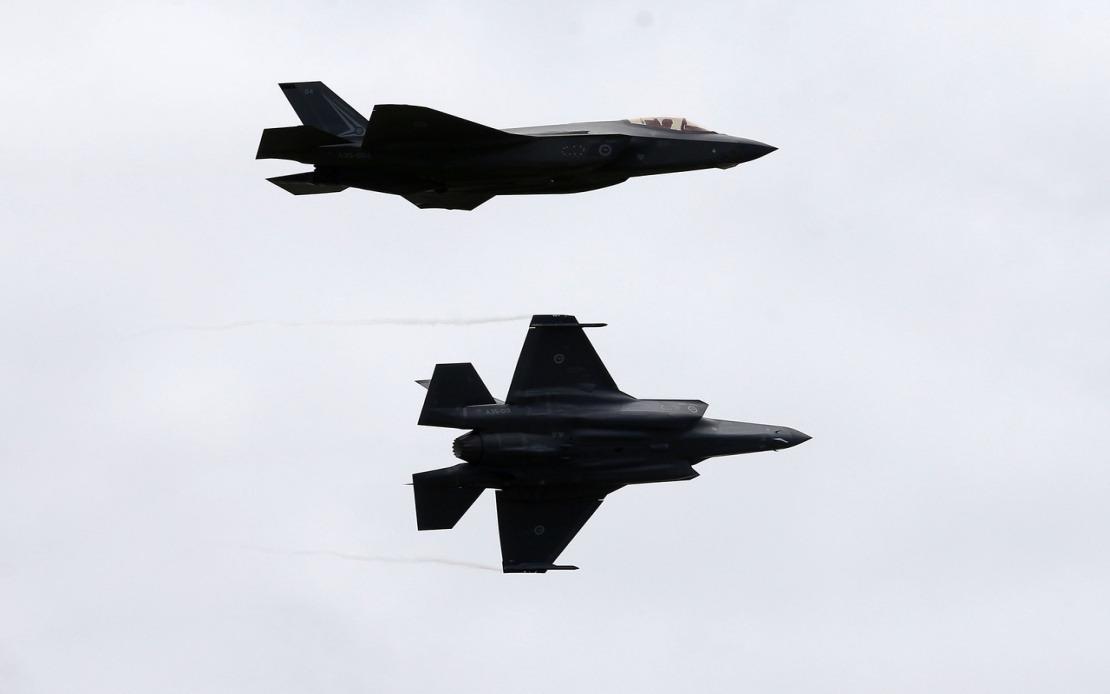
The United Kingdom, Italy, and Japan have formalised a substantial partnership aimed at creating one of the world's most advanced military aircraft. The three nations signed a £4.6 billion (US$6.1 billion) contract in Berlin on July 4 to propel development of a sixth-generation stealth fighter jet under the Global Combat Air Programme. This agreement represents a pivotal moment for the collaborative initiative, which has grown increasingly important as major democracies seek to bolster defence capabilities amid shifting geopolitical tensions in Europe, the Asia-Pacific, and beyond.
The Global Combat Air Programme seeks to deliver a cutting-edge combat aircraft intended for operational service by 2035. Unlike previous fighter jet generations developed primarily by individual nations, this venture pools resources and expertise across three leading industrial democracies, reflecting a broader trend toward multinational defence projects that distribute both costs and technological risks. The British government characterised the agreement as a watershed achievement, emphasising that the resulting fighter will represent a qualitative leap forward in aerial warfare technology and operational flexibility.
According to official statements, the aircraft will integrate seamlessly with existing platforms in the Royal Air Force's fleet, including Typhoons and F-35 Lightning II jets, while also interfacing with emerging autonomous systems. This layered approach—combining manned fighter aircraft with unmanned and autonomous elements—underscores a fundamental shift in modern military doctrine. Rather than relying exclusively on individual fighter superiority, contemporary defence strategies increasingly emphasise network-centric warfare, where human-piloted and autonomous systems operate in coordinated fashion to accomplish tactical and strategic objectives.
The contract specifies that funding will support the next critical phase of development, concentrating on detailed aircraft design and establishing fundamental performance parameters. Engineers and specialists from the three nations will undertake comprehensive testing regimes to validate concepts and ensure the platform meets exacting military standards. This phase is crucial because it transforms theoretical concepts into engineering blueprints and operational specifications that will guide prototype construction and eventual full-scale manufacturing.
Technologically, the fighter will leverage sophisticated digital engineering frameworks and artificial intelligence systems to optimise performance across multiple mission profiles. The integration of AI promises enhanced decision-making capabilities, improved situational awareness for pilots, and more efficient resource allocation during combat operations. These advanced computational systems distinguish sixth-generation fighters from their predecessors, offering potential advantages in contested airspace where processing speed and adaptive responses determine tactical outcomes.
The joint venture managing the programme is Edgewing, formed in 2025 as a consortium uniting Britain's BAE Systems, Italy's Leonardo, and Japan Aircraft Industrial Enhancement Co. Ltd. (JAIEC). This three-company partnership brings formidable aerospace expertise to bear. BAE Systems contributes extensive experience developing advanced military aircraft and systems; Leonardo brings Italian aerospace innovation and combat platform knowledge; JAIEC represents Japan's growing capabilities in defence aviation technology. The structure allows each partner to leverage existing infrastructure, supply chains, and intellectual property while advancing collective objectives.
For Malaysia and the broader Southeast Asian region, this development carries several implications. The advancement of next-generation fighter technology among advanced industrial nations shapes the strategic environment in which regional powers must operate. As air defence capabilities worldwide become more sophisticated, nations in Southeast Asia increasingly contemplate how to maintain credible defence postures while managing budgetary constraints. The technology pathways established by GCAP will likely influence global defence procurement decisions and capability development timelines across the region over the coming decades.
The 2035 service entry target reflects realistic engineering and production timelines. From contract signature to initial operational capability typically requires a decade or more for complex military platforms, accounting for design maturation, prototype development, extensive testing, manufacturing setup, and personnel training. This timeline also allows participating nations to phase in financial commitments, spreading costs across multiple fiscal years and reducing budgetary strain relative to accelerated programmes.
The collaboration also demonstrates how traditional Western defence partnerships continue adapting to contemporary challenges. Japan's inclusion marks a significant deepening of Japanese defence cooperation with British and European partners, reflecting Tokyo's strategic reorientation toward closer alignment with democratic allies amid concerns about regional stability. This partnership architecture potentially provides a model for other multinational defence initiatives, particularly as nations seek to distribute development costs while maintaining technological sovereignty and security over sensitive military systems.
As the programme progresses through its development phases, stakeholders across Europe, Asia-Pacific, and beyond will monitor technical achievements and integration challenges. Successful delivery of a next-generation fighter would represent a remarkable achievement in multinational defence cooperation, while delays or technical difficulties could test the commitment of participating governments and their willingness to maintain long-term collaborative relationships in defence innovation.

