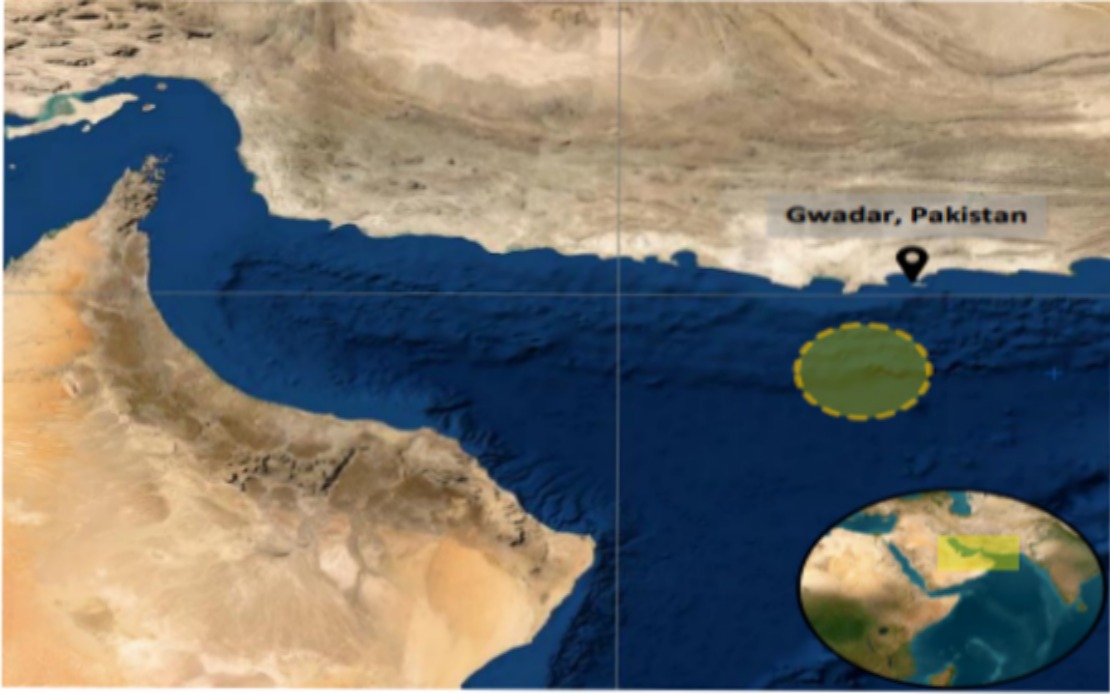
Shipping operators navigating one of the world's most critical maritime corridors face fresh uncertainty after the UK Maritime Trade Operations reported an incident involving a tanker and military forces in the Gulf of Oman near Gwadar on Pakistan's southwestern coast. The agency issued a formal advisory on Tuesday alerting vessels transiting the region to remain vigilant and review the latest maritime security assessments given the volatile operational environment.
The UKMTO's statement acknowledged that authorities were monitoring the situation and that investigations into the incident remained active, yet the agency withheld specifics about the vessel's identity, ownership, or the nature of the military involvement. Crucially, the advisory contained no information regarding casualties, damage to the tanker, or the extent of any confrontation that may have occurred. This lack of transparency has left shipowners and operators grappling with incomplete intelligence as they plan routes through one of the world's most economically vital waterways, through which roughly one-third of all globally traded maritime oil passes.
The incident arrives at a moment of considerable instability in the region, where longstanding friction between the United States and Iran has repeatedly flared into military confrontations. The Gulf of Oman and the adjacent Strait of Hormuz represent chokepoints through which global energy supplies flow, making even minor disruptions capable of triggering broader economic repercussions. For Malaysian shipping companies and energy importers, the implications are significant; Malaysia depends substantially on Middle Eastern crude oil and would face elevated costs and supply uncertainty if corridor security deteriorates further.
Tensions have simmered for years but have intensified recently through a series of provocative military operations, cyber incidents, and attacks on commercial vessels. Both regional and international powers maintain significant naval presences in the area, escalating risks for merchant traffic caught between competing strategic interests. The UKMTO's call for vessels to exercise heightened caution reflects the practical reality that the security environment remains unpredictable and that naval or paramilitary actors may target shipping without warning.
For Southeast Asian nations like Malaysia, Singapore, and Indonesia, which rely heavily on stable shipping routes for trade and energy security, such incidents underscore the fragility of global maritime commerce. The region's economies are deeply integrated into supply chains that depend on unimpeded passage through the Gulf of Oman and Hormuz. Disruptions to tanker traffic or escalating military incidents directly translate into higher fuel prices, slower cargo movements, and dampened economic activity across the region.
The advisory issued by UKMTO represents standard maritime protocol when security deteriorates; however, the absence of concrete details on this particular incident complicates decision-making for shipowners. Operators must weigh the commercial imperative to transit the route against insurance costs, security risks, and potential delays if vessels choose alternate passages around Africa or through the Suez Canal. These alternatives add weeks to journeys and substantially increase operational costs, pressures that disproportionately affect smaller regional carriers and ultimately raise prices for consumers across Southeast Asia.
The involvement of military forces in the incident, while unspecified, strongly suggests that state or state-aligned actors played a role. Previous incidents in the corridor have involved Iranian Revolutionary Guard Corps boats conducting aggressive maneuvers against tankers, attacks on vessels allegedly linked to Israel, and US naval interventions. The pattern of incidents has created an environment where commercial shipping faces unprecedented security challenges, distinguishing this corridor from most other major trade routes in terms of overt military activity affecting civilian maritime traffic.
Authorities conducting investigations face practical challenges in the Gulf of Oman, where multiple naval forces operate independently and accountability mechanisms remain weak. Information sharing between nations has proven inconsistent, and vessels have sometimes provided contradictory accounts of incidents. This opacity serves neither shipowners seeking insurance coverage nor analysts attempting to understand regional escalation patterns. Malaysian and other Southeast Asian governments have expressed concern about maritime security but possess limited leverage to influence outcomes in a region dominated by Gulf powers and global superpowers.
The broader geopolitical context amplifies concerns about this incident. US-Iran relations have deteriorated significantly, with each side pursuing military strategies that treat the Gulf of Oman as a contested zone. Iran views the corridor as critical to its economic survival and national security, while the United States emphasizes freedom of navigation and containing Iranian regional influence. This structural conflict creates persistent instability that commercial shipping must navigate, often with inadequate security infrastructure or international enforcement mechanisms.
For Malaysian policymakers and business leaders, the incident reinforces the importance of regional maritime security cooperation and investment in alternative energy sources. Greater reliance on liquified natural gas from non-Middle Eastern suppliers, diversification of shipping routes, and stronger regional naval coordination through mechanisms like the Regional Cooperation Agreement on Combating Piracy and Armed Robbery against Ships could help mitigate risks. However, such measures require sustained political will and substantial financial investment.
The UKMTO advisory will likely remain in effect as investigations proceed, serving as a reminder to shipping companies of the enduring vulnerabilities in one of the world's most strategically important corridors. For Malaysian readers and policymakers, the incident reinforces the reality that global economic stability remains hostage to regional geopolitical tensions thousands of kilometres away, with consequences that ultimately reach Malaysian ports, fuel stations, and household budgets.

