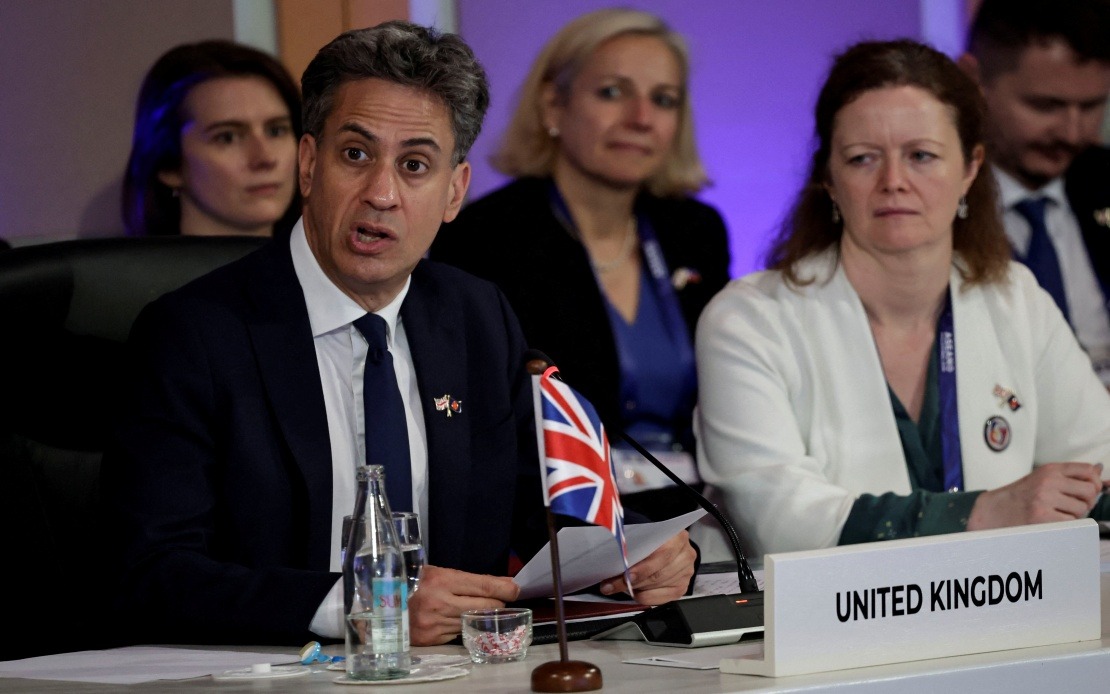
Ed Miliband, the United Kingdom's newly appointed Foreign Secretary, is undertaking his first continental mission this week, charting a course focused on revitalising Britain's relationship with Europe through high-level bilateral talks with France and Spain. The diplomatic visits underscore the Labour government's commitment to resetting ties with the European Union following years of post-Brexit tensions, signalling a shift towards pragmatic engagement and collaborative problem-solving on shared challenges facing the region.
The timing of Miliband's journey carries significant symbolic weight, arriving just as both nations grapple with unprecedented environmental crises. Southern Europe is currently battling ferocious wildfires that have forced the evacuation of approximately 330,000 people from France and Spain combined, creating humanitarian emergencies that have stretched emergency services and displaced thousands of families. By visiting during this critical period, Miliband intends to communicate British solidarity with European partners whilst simultaneously leveraging the disaster as a catalyst for discussing the broader climate emergency that increasingly dominates international relations and demands coordinated multinational responses.
In Paris, Miliband will meet with French Foreign Minister Jean-Noel Barrot to address several interconnected foreign policy priorities. European security architecture ranks prominently on the agenda, reflecting growing concerns about geopolitical stability on the continent. The conversation will inevitably centre on sustained British support for Ukraine as it continues its protracted conflict with Russia, an issue that has become a defining test of Western commitment and cohesion. Beyond these security matters, both ministers are expected to explore mechanisms for deeper cooperation on migration, a perennial flashpoint in European politics where coordinated approaches between London and Paris remain essential for addressing irregular Channel crossings and managing asylum flows.
For Southeast Asian observers, these discussions carry indirect but meaningful implications. The architectural foundations of European security frameworks influence global trade dynamics, defence partnerships, and the rules-based international order that underpins stability across the Indo-Pacific. Malaysia and other regional nations maintain considerable interests in European stability, both as trading partners and as stakeholders in a stable global system. British efforts to strengthen European cohesion indirectly affect regional security through NATO partnerships and Western engagement strategies.
Miliband subsequently travels to Madrid for engagements with Spanish Foreign Minister José Manuel Albares, where the bilateral agenda encompasses distinct but complementary themes. Particular attention will focus on the UK-EU Gibraltar treaty, a cornerstone agreement that represents practical British-EU cooperation on a sensitive territorial matter. Negotiated after Brexit, this treaty demonstrates both sides' capacity to move beyond acrimonious negotiations towards constructive agreements that serve mutual interests. Discussions will also encompass security collaboration, reflecting Spain's pivotal role in European defence considerations and its growing significance within NATO strategic planning.
Climate action permeates both sets of meetings, transcending traditional diplomatic siloing by embedding environmental considerations across security, migration, and trade discussions. This integration reflects contemporary understanding that climate change multiplies existing geopolitical pressures, exacerbates resource competition, and intensifies migratory flows. By positioning climate policy alongside traditional security concerns, the UK signals recognition that contemporary threats require sophisticated, interconnected responses rather than compartmentalised decision-making.
Miliband's strategic emphasis on European relations represents a deliberate recalibration from the previous government's approach, which often stressed Commonwealth connections and broader global partnerships sometimes at Europe's expense. This recalibration does not imply abandonment of other relationships but rather rebalancing priorities to acknowledge geographic proximity, economic interdependence, and shared security interests that make European partnership foundational for British foreign policy effectiveness. The visits also serve domestic purposes, demonstrating to Parliament and the electorate that the Labour administration is actively reconstructing Britain's international standing and advancing tangible advantages for British citizens and companies through enhanced European engagement.
For Malaysian observers monitoring shifts in British foreign policy, these developments suggest that London remains committed to maintaining a substantive European role despite Brexit. This positioning has ramifications for trade negotiations, technology partnerships, and the broader architecture of British global strategy. When Britain engages robustly in European affairs, it strengthens the entire Western diplomatic ecosystem, creating more stable conditions for regional interactions with partners like Malaysia. Furthermore, British efforts to coordinate European responses to climate change, migration, and security challenges establish precedents and frameworks that eventually influence global approaches to these transnational problems.
The diplomatic mission also reflects broader calculations about British influence in an increasingly multipolar world. Rather than competing for influence across distant theatres, strategic logic suggests concentrating diplomatic energy where Britain possesses natural advantages—geographic proximity to Europe, shared institutional history, intertwined economies, and aligned security interests. This focused approach potentially enhances British effectiveness across other regions by allowing more concentrated attention on non-European priorities where American or regional partners do not offer sufficient coverage.
As Miliband concludes his inaugural European visit, the substantive outcomes—whether reflected in joint statements, working groups, or policy commitments—will provide the first concrete evidence of Labour's ability to translate campaign rhetoric about European relations into practical diplomatic achievements. Southeast Asian nations observing these developments gain insight into Britain's international orientation and its capacity to execute sustained engagement strategies beyond comfortable institutional frameworks, factors that inevitably influence how regional partners calculate their own relationships with London.

