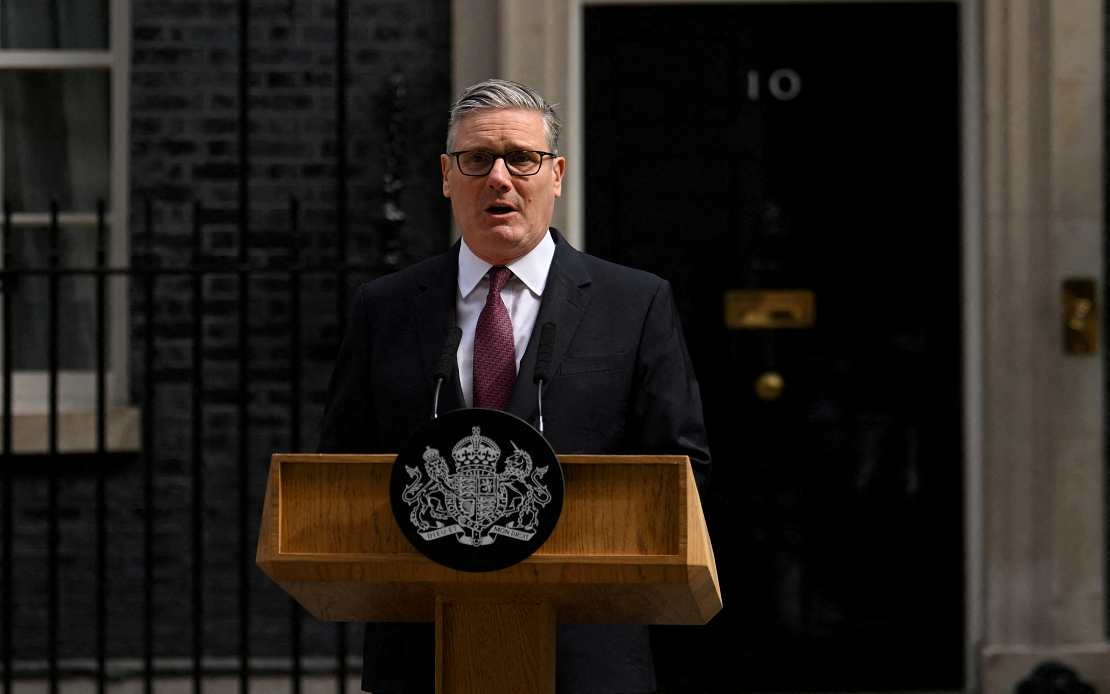
Prime Minister Keir Starmer has capitulated to escalating internal pressure within the Labour Party, announcing on Monday that he will step down from his position. The transition will be managed carefully to ensure a new party leader assumes office before parliament reconvenes in September, according to multiple sources tracking the political upheaval in Westminster.
Starmer's decision marks a dramatic reversal of fortunes for a leader who swept to power less than two years ago with a commanding electoral mandate that voters hoped would restore stability to British governance. His pledge to end the turbulence that had characterised previous administrations now appears deeply ironic, given the chaos currently engulfing his own tenure. Support within his own parliamentary ranks has collapsed, and public confidence in his leadership has eroded to historically low levels that are unprecedented among recent British prime ministers.
The crisis intensified dramatically on Friday when Andy Burnham, the mayor of Greater Manchester, secured a decisive parliamentary victory by reclaiming his Westminster seat in a special election. Burnham's triumph proved particularly significant as he defeated a candidate from Nigel Farage's Reform UK party, which has dominated national opinion polling for more than a year. This outcome energised Labour members who view Burnham as a potential saviour capable of reversing the party's declining electoral prospects and restoring public confidence.
Burnham's reputation as an accomplished communicator and seasoned political operative has positioned him as the frontrunner in the forthcoming leadership contest, though his victory hardly guarantees smooth sailing ahead. Labour strategists see in him qualities that might appeal to an angry electorate increasingly convinced that the political system has failed to deliver meaningful improvements in their living standards. However, Burnham has yet to articulate coherent positions on critical matters including foreign policy, economic management, and defence expenditure—gaps that opponents are likely to exploit during the leadership campaign.
The incoming prime minister, regardless of identity, will inherit a profoundly constrained policy environment that sharply limits room for bold action. Like Starmer before him, any Labour successor will discover that bond market investors exert considerable discipline over government spending decisions. Britain currently carries the heaviest borrowing costs within the Group of Seven leading economies, reflecting accumulated debt burdens, persistent fiscal pressures, and years of sluggish economic performance that have prevented meaningful deficit reduction.
The structural economic challenges confronting Britain extend well beyond immediate fiscal concerns. Defence capabilities require substantial reinvestment after years of relative under-funding, while public services from healthcare to education demand capital infusions to address deteriorating conditions. Yet simultaneously, the government faces mounting pressure to demonstrate fiscal responsibility to reassure international investors who remain nervous about lending to Britain on favourable terms. This pincer movement between expenditure demands and market constraints creates what economists describe as a precarious fiscal situation offering few genuine policy levers.
Market observers remain uncertain whether Burnham, despite rhetorical statements last September about British independence from bond market pressures, will ultimately prioritise reassuring financial markets. Citibank economists cautioned in their Friday assessment that a Burnham administration would confront similarly restrictive circumstances, with limited tools available to enact the transformative change that voters overwhelmingly desire. This fundamental mismatch between public expectations and fiscal reality may prove as destabilising to any successor as it has been to Starmer.
Starmer's departure will make Britain's incoming prime minister the seventh to assume office since the Brexit referendum of 2016. That extraordinary turnover—the most rapid succession of leaders in nearly two centuries of British parliamentary history—reflects the profound disconnection between governing institutions and an increasingly frustrated electorate. Successive failures to arrest decline in living standards, reverse deterioration in public services, or effectively manage illegal immigration have systematically eroded public confidence in both major political parties.
For Malaysian and Southeast Asian observers, this British political turbulence carries symbolic weight regarding the challenges facing mature democracies globally. The instability in Westminster demonstrates that even established institutional frameworks struggle when governments cannot demonstrably improve material conditions or restore faith in competent administration. Similar pressures have manifested across the region, where voters have increasingly penalised parties perceived as failing to deliver tangible improvements in economic opportunity and public service quality.
The political advisory group Eurasia has suggested that an orderly transition beginning immediately could provide Starmer opportunity to represent Britain at a critical UK-European Union reset summit scheduled for July, while simultaneously allowing Burnham adequate preparation time before formally assuming the prime ministerial office. This arrangement might prevent additional disruption during an already volatile period when international partners seek clarity regarding British policy direction.
The labour leadership contest will unfold against mounting uncertainty about Britain's economic trajectory and international standing. Burnham's campaign must address the expectations generated by his parliamentary victory while remaining realistic about the constraints that a Labour government would actually confront. The next several weeks will reveal whether his communication skills and political experience can translate into a compelling vision that resonates with voters exhausted by successive disappointments from their political leadership.