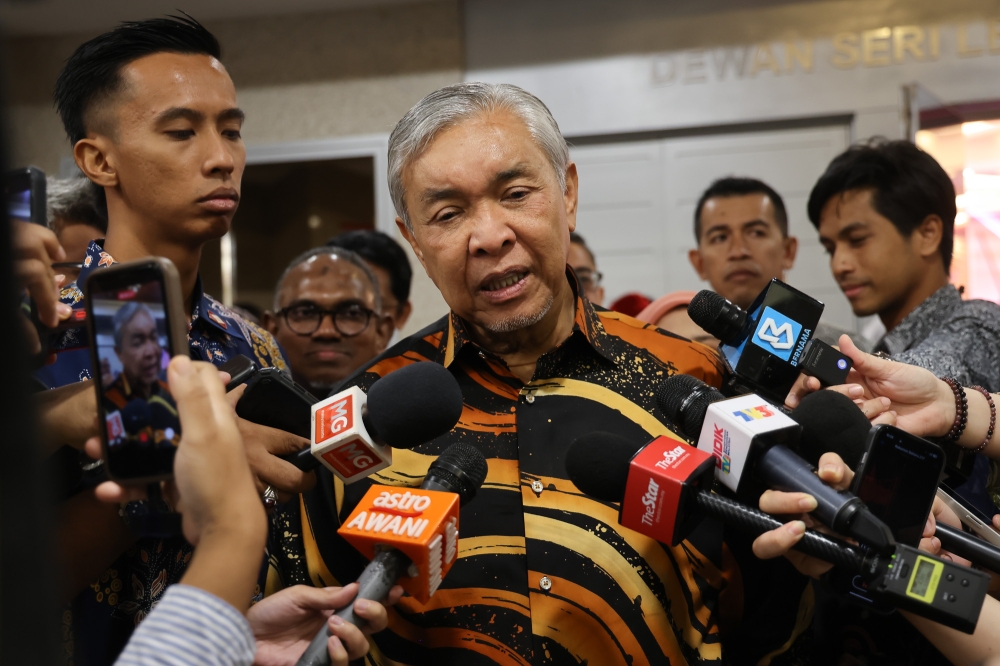
Deputy Prime Minister Zahid Hamidi has made clear that Barisan Nasional and Umno will not overlook any breach of public trust, particularly regarding the administration of Tabung Haji, the Islamic pilgrimage fund. Speaking in Putrajaya, Zahid underscored the coalition's commitment to ensuring that all individuals found culpable in the fund's mismanagement face the full weight of consequences under the law.
The statement reflects growing pressure within Malaysia's political establishment to address concerns surrounding Tabung Haji's financial stewardship. The fund, which manages billions of ringgit belonging to millions of Malaysian Muslims preparing for their hajj journeys, carries exceptional responsibility as it represents the savings and trust of ordinary Malaysians undertaking one of Islam's five pillars. Any failure to safeguard these assets strikes at the heart of public confidence in state institutions.
Zahid's remarks suggest that Barisan Nasional intends to distinguish itself through fiscal discipline and institutional accountability, positioning the ruling coalition as a trustworthy custodian of public resources. This messaging becomes particularly significant given Malaysia's recent political instability and recurring scandals that have eroded public faith in governance. By explicitly promising consequences for those involved in mismanagement, Umno and its coalition partners aim to demonstrate that wrongdoing will not be protected by political affiliation or seniority.
The emphasis on accountability also carries implications for Malaysia's broader anti-corruption agenda. Tabung Haji's governance challenges have drawn scrutiny from both domestic observers and international ratings agencies concerned about financial transparency. A rigorous enforcement of consequences would strengthen Malaysia's standing in global corruption perception indices and reassure international investors and stakeholders about the integrity of state-managed financial institutions.
For Malaysian Muslims, this announcement addresses a fundamental concern about the security of their hajj funds. The pilgrimage represents not merely a religious obligation but a major financial commitment for most families, often accumulated over many years. Public assurance that mismanagement will trigger accountability helps restore confidence in the institution and encourages continued participation in the fund's savings programmes.
The coalition's stance also reflects awareness among Umno's leadership that tolerating financial misconduct would be politically damaging. With electoral competition intensifying and voter expectations for good governance rising, parties can no longer afford to appear protective of their members implicated in wrongdoing. Zahid's statement effectively signals that party loyalty cannot shield individuals from investigation and prosecution, a message that could influence internal party discipline and deter future infractions.
However, the practical implementation of such accountability remains crucial. Previous announcements of zero tolerance for corruption have sometimes yielded mixed results in Malaysian governance, with investigations stalling or prosecutions facing procedural delays. The credibility of Barisan Nasional's commitment will ultimately depend on whether high-profile cases proceed swiftly through the courts and result in meaningful penalties, not merely symbolic gestures.
The Tabung Haji situation also intersects with broader questions about how Malaysia manages its Islamic financial institutions. As a Muslim-majority nation with significant sharia-compliant finance sectors, Malaysia has a vested interest in demonstrating that Islamic financial institutions meet rigorous governance standards. This extends Malaysia's reputation as a hub for Islamic banking and finance, sectors that contribute substantially to the economy and regional financial architecture.
For Southeast Asia more broadly, Zahid's statement reflects a regional trend toward stronger accountability measures in public fund management. As countries across the region grapple with growing middle classes demanding greater transparency, political leaders increasingly recognise that institutional credibility is a prerequisite for economic stability and public confidence. Malaysia's handling of the Tabung Haji matter will be observed closely by both regional peers and international observers assessing Southeast Asian governance capacity.
The statement also underscores internal dynamics within Barisan Nasional, where component parties must balance coalition unity with their own legitimacy. Umno's willingness to pursue members involved in institutional failures demonstrates that maintaining the coalition's credibility transcends protecting individual party members, a nuanced political calculation that shapes intra-coalition relationships.
Moving forward, the efficacy of this accountability framework will depend on transparent investigations, timely prosecutions, and proportionate sanctions. Zahid's declaration establishes a benchmark against which Barisan Nasional's governance record will be measured. As Malaysia continues navigating economic challenges and political complexities, the handling of institutional accountability cases will send powerful signals about whether the ruling coalition can deliver on its reform commitments or whether political patronage remains the overriding logic of state institutions.

