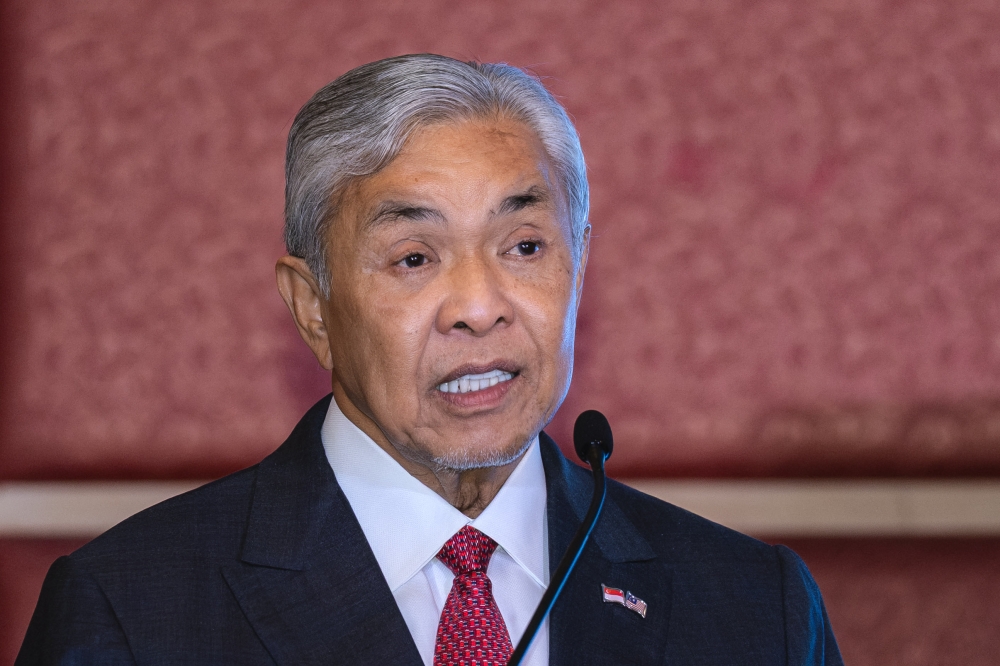
Umno president Datuk Seri Dr Ahmad Zahid Hamidi has categorically denied that his party has entered into any formal agreement with Islamist coalition partner PAS regarding electoral arrangements in Negeri Sembilan, while pointedly reminding political observers that Malaysia's volatile coalition dynamics can shift rapidly depending on how negotiations progress.
Zahid's statement comes amid growing speculation about the precise nature of Umno-PAS cooperation in the state, where both parties have significant grassroots presence and competing electoral interests. The clarification reflects Umno's careful navigation of its coalition partnerships as the party attempts to consolidate its position following the 2022 general election and rebuild its political machinery ahead of potential state polls. Umno has consistently maintained that while it works alongside PAS in the federal government through the Perikatan Nasional framework, state-level arrangements are negotiated separately and reflect local political realities.
The Umno president's cautionary language—specifically the warning that "goalposts can change anytime"—carries particular significance given the history of coalition shifts in Malaysian politics. This phrasing suggests that Umno is maintaining strategic flexibility rather than locking itself into rigid arrangements that could constrain its options should political circumstances shift. In Negeri Sembilan, where Umno traditionally holds considerable influence and controls several parliamentary constituencies, any formal agreement that appears to subordinate the party's interests could generate significant internal dissent among party members and grassroots supporters.
For PAS, which has increasingly sought to expand its footprint beyond its traditional strongholds in the northeastern states, Negeri Sembilan represents an opportunity to broaden its electoral appeal and demonstrate viability as a coalition partner capable of winning in diverse constituencies. However, PAS's simultaneous efforts to compete aggressively in other states have sometimes created friction with Umno, which remains sensitive to any perception that its historic dominance is being eroded. The party dynamics in Negeri Sembilan thus exemplify the broader tension within the Umno-PAS partnership—cooperation where convenient, but underlying competition for electoral territory and grassroots support.
Zahid's comments also reflect Umno's learning from past coalition experiences. The party has witnessed how overly rigid agreements can become political liabilities if circumstances change or if grassroots members perceive that leadership has made disadvantageous bargains. By maintaining ambiguity about Negeri Sembilan arrangements, Umno retains the ability to respond to developments—whether internal party pressures, changes in opponent strength, or shifts in coalition dynamics—without appearing to breach commitments.
The Negeri Sembilan political landscape remains fluid, with Pakatan Harapan maintaining some presence in the state and local personalities wielding considerable influence. Any electoral arrangement between Umno and PAS will need to account for these factors while also managing expectations among party members who may have their own calculations about seat distribution and electoral viability. Zahid's emphasis on flexibility thus serves as a message to both internal and external audiences that Umno will prioritize its electoral interests.
For Malaysian voters and political analysts, such statements underscore the transactional nature of coalition politics at the federal and state levels. Rather than representing principled ideological partnerships, many arrangements reflect pragmatic calculations about seat counts, geographic reach, and the ability to maintain government majorities. The Umno-PAS relationship, while formalized at the federal level through Perikatan Nasional, continues to be worked out on a state-by-state basis according to local political mathematics.
The implications for Negeri Sembilan extend beyond mere coalition mechanics. The state has emerged as a potential flashpoint where Umno's traditional dominance faces genuine challenge from rival coalitions. Pakatan Harapan's performance in the 2022 election demonstrated that Umno cannot take voter support for granted even in historically safe territory. This context makes Zahid's insistence on flexibility particularly important—it signals that Umno will not allow coalition commitments to constrain its capacity to respond to electoral threats from other opposition blocs.
For PAS, Zahid's comments may be interpreted as a warning to temper expectations about the scope of cooperation in Negeri Sembilan. The Islamic party's ambitions to contest widely must be balanced against the reality that Umno, despite its broader decline, remains the dominant federal partner with superior resources and organizational capacity in most states. State-level negotiations will ultimately reflect this asymmetry in bargaining power.
Moving forward, observers should watch for concrete indicators of how Umno and PAS resolve their Negeri Sembilan differences. Whether they issue joint seat-sharing arrangements, maintain deliberately vague coordination, or eventually allow candidate contests between themselves will reveal much about the true depth of their partnership. Zahid's latest remarks suggest that Umno is reserving the option to change course, indicating that Malaysian coalition politics remains fundamentally fluid and responsive to shifting electoral calculations.

