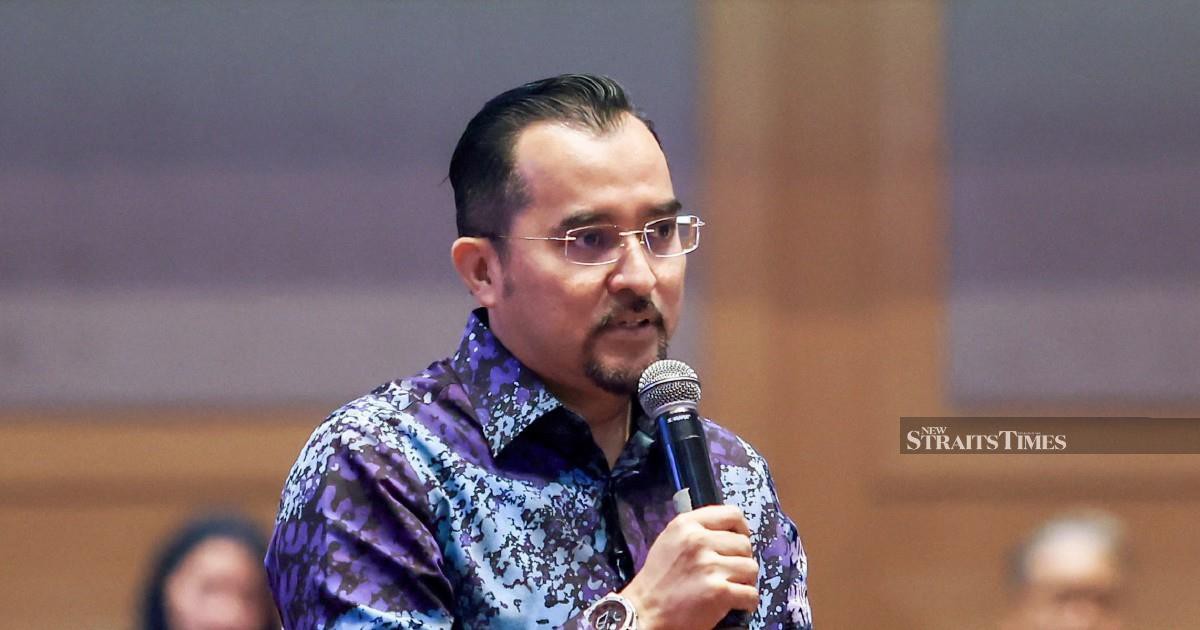
The controversy surrounding Lembaga Tabung Haji (TH) has intensified following accusations that the ruling party orchestrated a calculated distraction to shield individuals implicated in one of Malaysia's most significant institutional financial failures. Umno secretary-general Datuk Dr Asyraf Wajdi Dusuki has categorically dismissed such allegations, positioning his party's response as transparent and accountable.
The TH scandal represents a watershed moment in Malaysian corporate governance, involving losses that undermined the savings of millions of pilgrims and ordinary Malaysians who contributed to the Islamic pilgrimage fund. The magnitude of financial irregularities and questionable decision-making by senior management and board members sparked widespread public anger and parliamentary inquiries. Against this backdrop, critics have questioned whether political protective mechanisms were deployed to insulate culprits from serious consequences.
When major institutions collapse under the weight of malfeasance, the subsequent political response often tells a revealing story about institutional accountability and the rule of law in any democracy. Malaysia's handling of the TH debacle has been scrutinised by civil society organisations, media watchdogs, and ordinary citizens concerned that the country's elite might escape justice through procedural manipulation or deliberate misdirection. The allegation that Umno engineered a "charade" suggests a coordinated effort to shift public attention rather than facilitate genuine investigation and prosecution.
Datuk Dr Asyraf's rebuttal comes amid broader questions about the government's commitment to investigating the fund's collapse without political consideration. The TH affair implicates individuals across government and business networks, raising concerns about whether networks of mutual protection supersede democratic principles of accountability. When opposition figures and civil society groups invoke the "charade" narrative, they are essentially questioning whether the political establishment prioritises self-preservation over justice for aggrieved savers.
The context of Umno's political fortunes cannot be divorced from this debate. The party, which has governed Malaysia for most of the post-independence period, holds significant influence over institutions and investigative apparatus. Any perception that party interests influenced the handling of wrongdoing strikes at the heart of public confidence in institutional independence. Conversely, the party maintains that its standard-bearing on the TH matter reflects genuine commitment to correcting past failures and implementing preventive reforms.
For Malaysian pilgrims and their families, the TH scandal represented not merely financial loss but betrayal of trust in an institution designed specifically to serve their religious aspirations. Individuals who had dutifully contributed portions of their income for decades witnessed their savings eroded through mismanagement and questionable investments. The human dimension of this institutional failure cannot be overstated—many ordinary Malaysians faced delayed pilgrimages, reduced amounts, or financial hardship as a consequence of leadership decisions made without adequate oversight or fiduciary responsibility.
The investigation and prosecution pathway following corporate wrongdoing often becomes a proxy battle between competing narratives about institutional health and political integrity. If those responsible for TH's collapse escape meaningful punishment, the signal sent to future corporate leaders and government officials extends beyond the specific case. It suggests that sufficient political connections or timing can neutralise accountability mechanisms that theoretically exist to protect public funds and institutional credibility.
Regionally, Malaysia's approach to the TH scandal resonates within Southeast Asian countries grappling with similar governance challenges. Islamic finance institutions across the region observe how Malaysia manages breaches of trust within pilgrimage funds and Shariah-compliant investment vehicles. A failure to pursue accountability rigorously could influence confidence in Islamic financial systems throughout the region and beyond. Malaysia's standing as a leader in Islamic finance depends partly on demonstrated commitment to governance standards that transcend political considerations.
The denial issued by Umno's secretary-general reflects the party's position that criticism of its handling represents unfair politicisation of a serious matter. Party leadership has consistently maintained that appropriate legal and administrative processes should determine outcomes. However, public perception remains shaped by the apparent outcomes—whether prosecutions materialise, whether penalties prove proportional, and whether institutional reforms actually prevent future repetition. The gap between stated commitment and demonstrable results often determines whether public scepticism proves justified or merely reflective of partisan cynicism.
Moving forward, scrutiny of the TH matter will likely continue, with pressure mounting from international observers, local civil society, and concerned Malaysians monitoring whether institutional independence reasserts itself or whether political considerations ultimately determine accountability outcomes. The credibility of Malaysia's institutional framework and democratic health may ultimately be judged by whether this crisis produced meaningful reform or merely temporary disruption of entrenched patterns.

