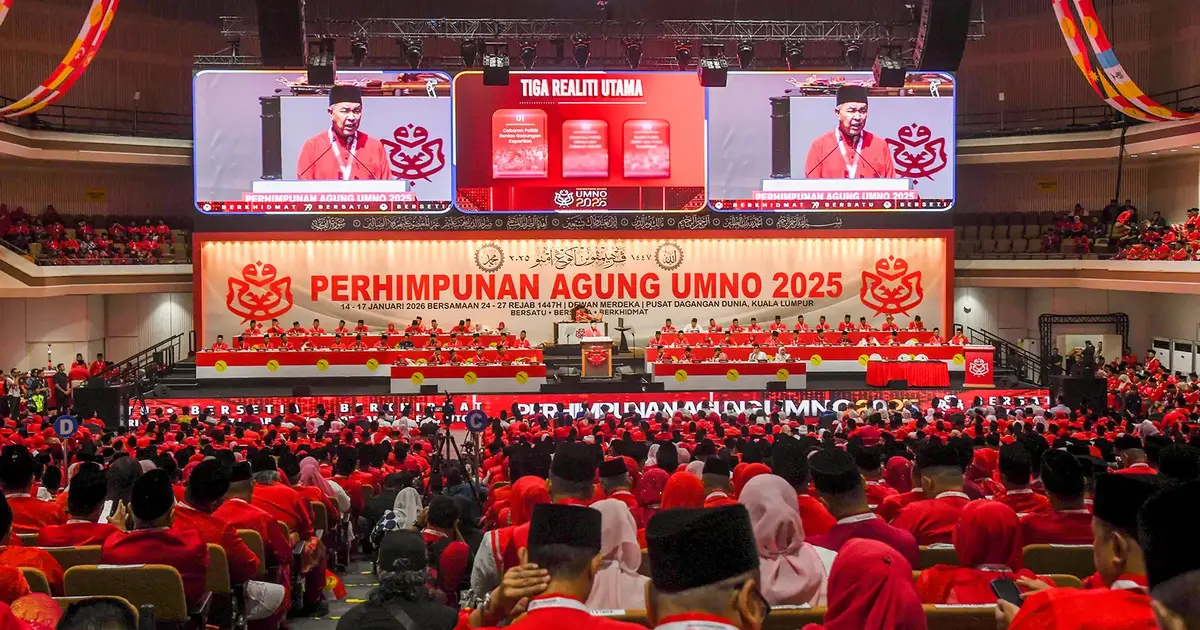
Friction is mounting within Umno's Negeri Sembilan apparatus after the party ceded eleven state legislative seats to Perikatan Nasional as part of their broader political alliance, sparking complaints from grassroots organisers who view the distribution as inequitable and damaging to their electoral prospects.
The grievance centres on the perceived generosity extended to Wawasan, a relatively new political vehicle that is contesting a state election for the very first time, yet has been allocated four constituencies. Party officials argue that this quantity is disproportionate for an outfit without an established track record or demonstrated organisational capacity in Negeri Sembilan, and they worry it signals declining confidence in Umno's own strength within the state.
This tension illustrates a persistent challenge within the Barisan Nasional and broader coalition structures in Malaysia: reconciling the competing ambitions and self-interest of partner parties with the strategic arithmetic required to construct electoral majorities. When seat-sharing mathematics favour smaller or newer organisations over established powerhouses like Umno, the latter's rank-and-file inevitably feels marginalised and short-changed, regardless of the national-level rationale offered by leadership.
Negeri Sembilan occupies particular significance for Umno, historically serving as a relatively reliable source of seats in federal and state legislatures. The decision to yield such a substantial block of constituencies to PN—whether motivated by federal coalition mechanics, Muhyiddin Yassin's standing within the partnership, or broader strategic calculations—strikes many divisional leaders as a capitulation that undermines party morale at a critical moment when member engagement and campaign energy prove essential to electoral success.
The Wawasan allocation appears especially contentious because the party lacks the institutional depth, membership networks, and ground machinery that parties like Umno have cultivated over decades. In eyes of frustrated Umno cadres, gifting four seats to an untested entity represents both a waste of valuable territory and an implicit acknowledgment that decision-makers at the apex do not trust Umno's grassroots to deliver in those areas—a reading that inevitably demoralises local organisers tasked with mobilising voters.
Former coalition arrangements in Malaysia have similarly generated internal discord. The 2018 dissolution of Barisan Nasional and Umno's subsequent exile from federal power created openings for newer parties and political entrepreneurs to accumulate resources and seat quotas. Umno's gradual rehabilitation and return to government has been complicated by the reality that rival parties had already carved out territorial and electoral fiefdoms, making the renegotiation of seat distributions contentious and painful for members who view such compromises as unnecessary retreat.
Negeri Sembilan's electoral dynamics are further complicated by factional competition within Umno itself, with divisional leaders often competing for prominence and resources. Seat allocations to outsiders can become proxy battlegrounds where internal Umno rivalries surface; if a divisional boss lacks sufficient clout to protect his territory from encroachment by PN allies, his standing within party hierarchy may suffer, creating incentives to voice public complaints or to mobilise sympathetic media coverage of discontent.
For ordinary Umno members in Negeri Sembilan, the material consequences are immediate and tangible. Fewer seats mean fewer party nominations, reduced opportunities for aspiring political candidates, diminished patronage resources, and lower overall representation at the state assembly level. When members observe resources flowing toward Wawasan—an organisation many have never heard of before the election was called—the sense of betrayal cuts deeper because it appears arbitrary rather than strategically justified.
The complaints emerging from Negeri Sembilan suggest that senior leadership, whether at Umno or PN level, has not adequately communicated the rationale behind the allocation to mid-tier party officials who must execute the election campaign and maintain morale. Absent a compelling narrative explaining why this distribution serves Umno's long-term interests or the coalition's electoral prospects, grumbling spreads and potentially translates into lukewarm campaign effort or defections to rival formations.
Looking ahead, the manner in which Umno leadership responds to these grievances—whether through patient dialogue with divisional leaders, media clarifications, or token concessions in other states—will influence how badly internal dissatisfaction undermines campaign effectiveness in Negeri Sembilan. Early signs of faction-level unrest are rarely contained; they tend to compound and metastasise into broader questions about fairness, voice, and the value of party loyalty.
Regionally, this episode reflects broader patterns within Southeast Asia's electoral coalitions, where the challenge of maintaining unity whilst accommodating diverse partner interests perpetually strains alliance structures. Umno's current friction mirrors similar tensions within Thai, Philippine, and Indonesian coalition governments, suggesting that the mechanics of seat-sharing remain a perennial flashpoint in multiparty systems where no single party commands a clear majority.

