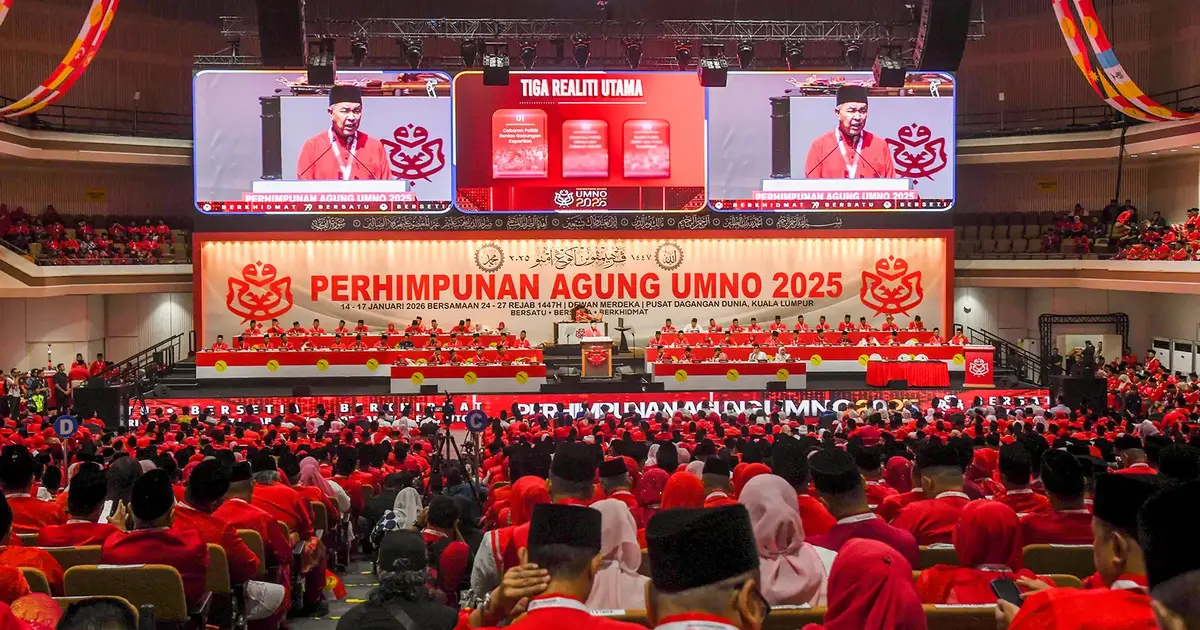
Tension has emerged within Umno's divisional ranks following the distribution of parliamentary seats in the latest coalition arrangement, with party leadership at ground level voicing considerable displeasure over the allocation extended to Perikatan Nasional. The frustration appears concentrated on what several division chiefs view as an inequitable division of contest positions, particularly regarding the party Wawasan's acquisition of four parliamentary seats despite entering its first electoral contest.
The seat allocation formula represents a critical juncture in Malaysian coalition politics, where the delicate balance between partner parties must be negotiated to maintain unity while satisfying individual party interests. Umno's role as the largest component within the coalition arrangement has historically entitled it to substantial seat allocations, making the current distribution a matter of considerable concern to party organisers who directly manage grassroots mobilisation and campaign efforts. These division leaders, operating closest to voter sentiment, are acutely aware of how seat allocations affect party morale and ground-level enthusiasm during election campaigns.
Wawasan's situation merits particular examination within this political context. As a relatively new entrant to Malaysian electoral politics, the party's receipt of four parliamentary seats—despite having no prior election experience—has generated specific criticism from Umno's divisional apparatus. This arrangement suggests that coalition mathematics and strategic political considerations took precedence over more traditional metrics such as party experience, organisational capacity, or demonstrated electoral viability. For Umno activists accustomed to earning their electoral allocations through years of party work and voter engagement, the arrangement appears to devalue institutional loyalty and organisational development.
The broader implications of this seat distribution extend beyond immediate intra-coalition friction. Malaysian political coalitions remain fundamentally fragile arrangements where dissatisfaction among grassroots party workers can translate into reduced campaign effectiveness, lower turnout mobilisation, and ultimately, weaker electoral performance. When division leaders—who function as the crucial intermediary between national party leadership and neighbourhood-level campaign operations—feel their contributions are undervalued, the knock-on effects on party cohesion and voter engagement can be substantial. The current discontent within Umno divisions suggests potential challenges in maintaining the organisational discipline necessary for effective coalition campaigning.
Geopolitically, this intra-coalition tension reflects the broader complexity of Malaysian electoral coalitions that have emerged in the post-2018 political realignment. The necessity of accommodating multiple parties with distinct interests, regional power bases, and leadership structures creates inherent contradictions. Perikatan Nasional's expansion as a coalition entity has involved incorporating parties beyond its original footprint, and the seat allocation mechanism becomes the primary tool through which such inclusion is materialised. However, each seat granted to newer or smaller coalition partners represents a concurrent reduction in allocations to established players, inevitably generating resentment.
The grievances expressed by Umno's division leaders also reflect a deeper philosophical tension regarding coalition governance. Should seat allocations reward past performance, organisational strength, and electoral history, or should they accommodate emerging political forces and strategic coalition-building objectives? The current arrangement appears to have favoured the latter approach, prioritising the inclusion and integration of newer parties like Wawasan within the coalition framework. This strategic choice, while potentially strengthening coalition breadth, has come at the cost of alienating mid-level party operatives within Umno who question the basis upon which such generous allocations were determined.
For Malaysian voters and observers of political development, these grassroots tensions carry significance beyond internal party management. Coalition stability directly affects governmental capacity to implement policy agendas, negotiate budget allocations, and maintain parliamentary majorities for legislative initiatives. When coalition partners feel systematically disadvantaged or when internal party structures harbour discontent, the resulting governance instability reverberates across the broader political system. Umno's concerns, therefore, should not be dismissed as mere factional grumbling but rather recognised as potential indicators of coalition sustainability challenges.
The fact that division leaders—rather than national party headquarters—have publicly articulated these grievances suggests that top-level negotiations proceeded without adequate consultation with the party infrastructure responsible for campaign execution. This disconnect between national coalition dealmaking and divisional-level acceptance represents a governance gap that successful political parties typically manage carefully. Whether Umno's national leadership can adequately address these concerns through additional concessions, strategic communication, or alternate compensation mechanisms will significantly influence the party's internal cohesion moving forward.
The coming weeks will reveal whether this seat allocation controversy remains a contained intra-party discussion or escalates into a broader coalition crisis. If division leaders continue expressing public dissatisfaction, other coalition partners may interpret the discontent as a negotiating signal, potentially triggering subsequent demands for seat redistributions. Conversely, if Umno's national leadership can persuade division chiefs that the current arrangement serves strategic coalition objectives that ultimately benefit all parties, the controversy may subside. The resolution of this tension will offer important insights into how contemporary Malaysian political coalitions manage the competing pressures of internal party satisfaction, coalition stability, and broader electoral strategy.

