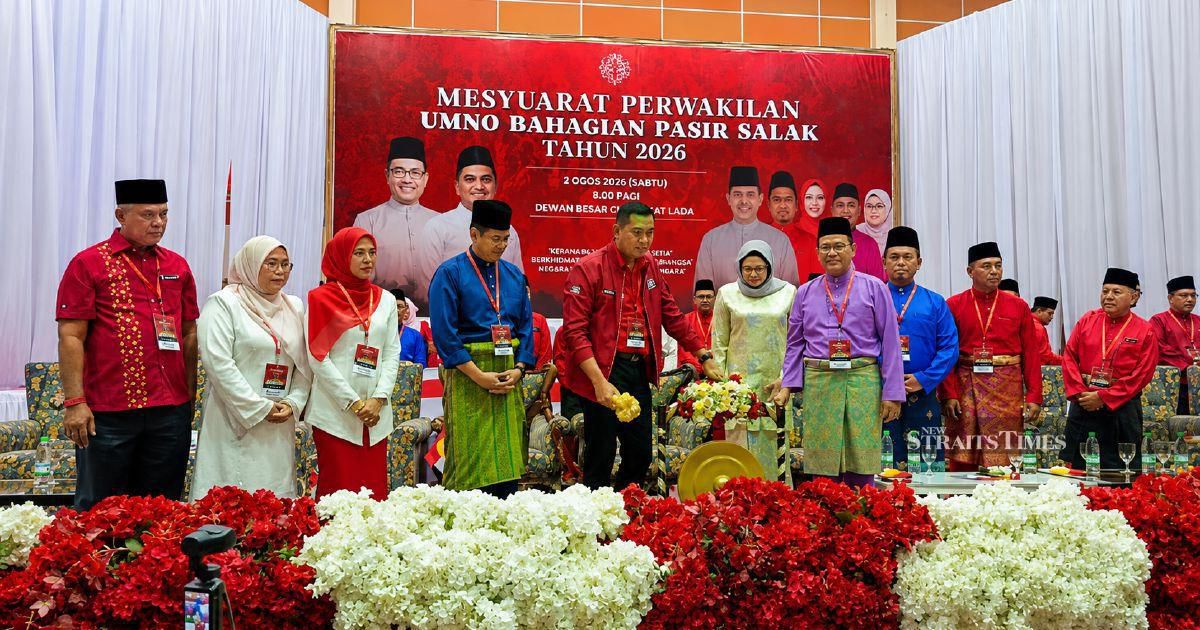
Umno Youth chief Datuk Dr Muhamad Akmal Saleh has thrown his weight behind giving division leaders a substantive role in determining how seats are carved up between Barisan Nasional and Perikatan Nasional as the two coalitions navigate their evolving political understanding. Speaking in Pasir Salak, Akmal made clear that the perspectives and priorities of grassroots leaders cannot simply be sidelined in backroom negotiations between top brass, signalling potential friction within Umno over how the seat-sharing arrangement will be implemented on the ground.
The intervention highlights a critical tension within Malaysia's largest Malay-Muslim party as it attempts to balance centralised decision-making with the legitimate interests of division-level operatives who control ground machinery in their constituencies. Division leaders, who typically have deeper knowledge of local political dynamics and maintain direct relationships with party members and voters, increasingly expect consultation before decisions that directly affect their electoral prospects are finalised. Akmal's remarks suggest the party leadership should recognise this reality rather than impose arrangements that lack buy-in from those tasked with delivering results during campaigning.
This issue cuts to the heart of how Malaysia's federal political system operates at the state and parliamentary level. The BN-PN understanding, which represents a significant shift in coalition alignment following years of antagonism, requires careful calibration at every administrative tier. When seat allocations are decided without consulting division leaders—who understand their territories intimately—candidates may be imposed on constituencies where they lack credibility or face entrenched opposition from local Power brokers. The result can be demoralising for party workers and counterproductive electorally.
Akmal's stance also reflects generational and ideological currents within Umno. Younger leaders like him are increasingly expected by rank-and-file members to defend their interests against perceptions of elite patronage or top-down imposition. By publicly endorsing division autonomy, Akmal positions himself as an advocate for grassroots voices—a politically astute move that garners support among organisers and members whilst appearing reasonable to party leadership. It is a form of internal management that acknowledges structural realities rather than pretending they do not exist.
The timing of Akmal's comments is noteworthy, arriving as Umno evaluates how many seats to cede to Perikatan Nasional partners in upcoming elections. Perikatan, which includes parties like Bersatu and PAS, seeks greater representation within the broader coalition framework. However, each seat surrendered by Umno represents opportunities forgone for its own members and potential alienation of sitting parliamentarians or assemblymen whose constituencies might be reallocated. These decisions generate intense lobbying and horse-trading that ripples through the party hierarchy.
Division leaders operate in a particular context. They manage local branch networks, oversee candidate selection processes, and mediate between central party directives and community expectations. When they are consulted on seat allocation, they can provide intelligence on which candidates are viable, which divisions are competitive versus safe, and where party unity might fray if unpopular choices are imposed. Conversely, excluding them from these conversations invites resentment and potential defections or reduced campaigning enthusiasm.
The broader Malaysian political landscape underscores why Akmal's intervention matters. Regional parties across Southeast Asia struggle with balancing central coordination with decentralised accountability. In Thailand, the Philippines, and Indonesia, internal party conflicts over seat allocation and candidate selection have triggered splits and defections that weakened broader coalitions. Umno's experience with such tensions—including the 1987 party split and more recent factional disputes—provides cautionary history. Respecting division-level input may help prevent similar fractures from emerging now.
The BN-PN understanding itself remains fluid and subject to negotiation. How successfully the two coalitions coordinate will depend partly on whether internal grievances over seat distribution are managed transparently rather than suppressed. If divisions feel overruled consistently, they may field independent candidates or withdraw effort from joint campaigns. Umno's capacity to hold together while accommodating Perikatan as a junior partner will test leadership's political dexterity.
For Malaysian voters and observers, Akmal's remarks signal that implementation of the BN-PN pact remains contested terrain. The agreement was struck at the top, but delivering on it requires persuading thousands of party operatives and division leaders to execute a new strategy. Whether the party can achieve consensus on seat allocation without provoking internal rebellion remains an open question. Akmal's willingness to advocate publicly for division autonomy suggests the party recognises that ignoring grassroots perspectives carries real risks to cohesion and electoral performance.
The coming months will reveal whether Umno leadership truly respects division leaders' input or whether Akmal's endorsement amounts to rhetorical acknowledgement without material change in decision-making. If divisions are genuinely consulted and their concerns incorporated into final seat allocations, it may strengthen Umno's ability to campaign effectively alongside Perikatan partners. If consultation proves merely cosmetic, resentment will fester and potentially damage both coalition partners' prospects in the next general election.

