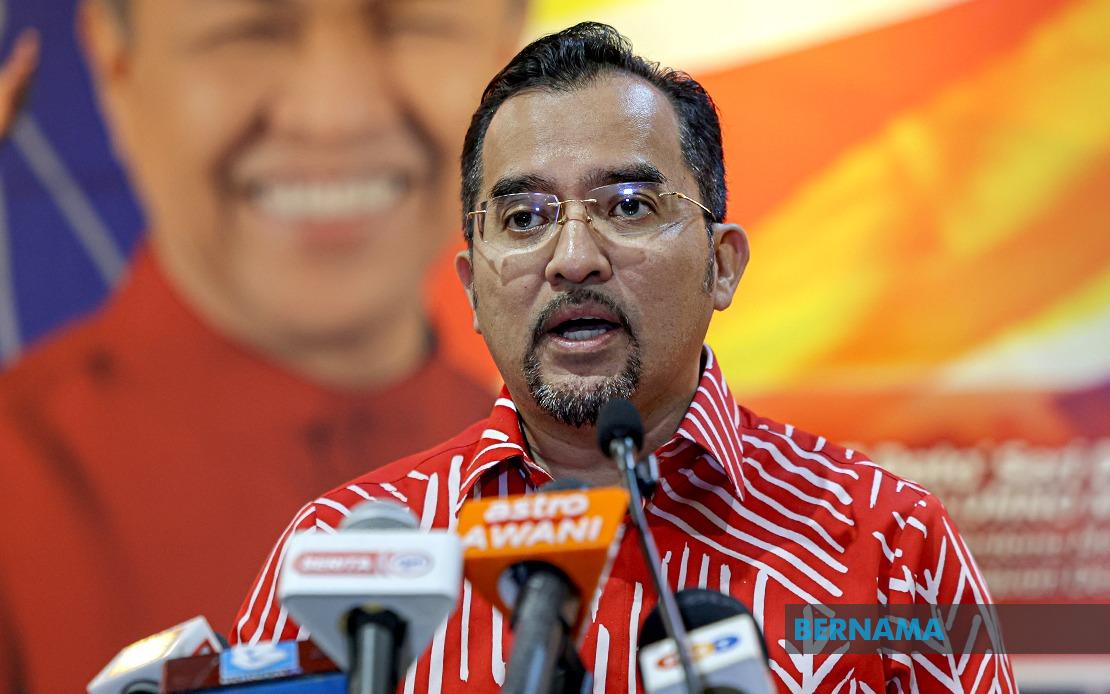
UMNO's Supreme Council has taken a significant step in decentralizing its electoral strategy by authorizing state-level leadership to initiate and conduct negotiations with potential coalition partners for the forthcoming national election. The decision, announced by party secretary-general Datuk Dr Asyraf Wajdi Dusuki following a late-evening session at Menara Dato' Onn in Kuala Lumpur, signals the party's recognition that political cooperation at the grassroots and state level may prove essential in the competitive electoral landscape ahead.
The mandate granted to state branches represents a tactical shift for UMNO, traditionally a centralized organization where major political decisions flow from party headquarters. By empowering regional leadership to engage in dialogue with prospective allies, UMNO is effectively casting a wider net while maintaining oversight through the Supreme Council framework. This approach acknowledges that electoral dynamics differ substantially across Malaysia's thirteen states, and what works as a coalition arrangement in one state may not suit another, particularly given the fragmented nature of Malaysia's political landscape and the varying ethnic and religious compositions across regions.
Crucially, the Supreme Council established parameters for these negotiations, insisting that any discussions be grounded in "sincerity and trust" rather than coercive tactics or ultimatums. This language appears aimed at distinguishing UMNO's approach from adversarial political maneuvering, reflecting a party conscious of its image following years of internal turmoil and leadership transitions. The emphasis on principled negotiation suggests UMNO leadership wants state branches to pursue partnerships that rest on genuine alignment of interests and values, not merely transactional vote-gathering arrangements that could prove unstable during or after an election.
The gathering, chaired by UMNO president Datuk Seri Dr Ahmad Zahid Hamidi and attended by deputy president Datuk Seri Mohamad Hasan alongside other Supreme Council members, also resulted in an olive branch extended to PAS. The party has formally invited the Islamic opposition group's leadership to participate in UMNO's 2026 General Assembly, scheduled for September 9-12. This gesture carries symbolic weight in Malaysian politics, where UMNO and PAS have historically competed for Malay-Muslim votes, though they have cooperated in various configurations over recent decades. An invitation from UMNO to PAS leadership represents a signal that despite competitive tensions, both parties recognize potential common ground on certain policy platforms or electoral arrangements.
Accompanying the General Assembly will be three specialized programs on September 8: the 2026 Malay Education Convention, the Malaysian Islamic Scholars Convention, and Laman Wanita Kreatif. These events suggest UMNO is using its party mechanisms to engage not only politicians but also intellectuals, religious scholars, and civic groups in conversations about national direction. The inclusion of PAS leaders in this broader party gathering could facilitate informal networking and relationship-building beyond formal political negotiations, potentially laying groundwork for deeper cooperation if both parties determine it serves their mutual interests.
Simultaneously, UMNO sought to reinforce its commitment to democratic principles and the rule of law, with Asyraf Wajdi emphasizing that the party maintains a clear stance against defending any member or leader engaged in wrongdoing. This statement reflects a delicate balance UMNO must strike: maintaining internal party discipline and public credibility while retaining the loyalty of a diverse membership. The explicit reference to no individual being presumed guilty until formally charged, tried, and convicted represents UMNO's effort to position itself as a party that respects constitutional and judicial processes, a stance that carries particular weight given the party's historical encounters with legal scrutiny affecting its senior figures.
For Malaysian observers, UMNO's empowerment of state branches signals the party's recognition that the next election will likely be fought in a multipolar political environment with competing blocs vying for dominance. Rather than imposing a single national coalition framework, UMNO is creating flexibility for regional actors to respond to local political realities while maintaining party cohesion through Supreme Council oversight. This decentralized approach could enhance UMNO's electoral resilience by allowing state organizations to forge partnerships suited to their specific competitive environment, whether that involves cooperation with PAS in Malay-Muslim dominated areas, engagement with smaller parties in mixed constituencies, or negotiation with component parties in peninsular or East Malaysian contexts.
The emphasis on negotiations based on "sincerity and trust" rather than coercion also reflects contemporary Malaysian political discourse around institutional reform and democratic quality. After years of polarization, intense factional competition, and perceived abuse of state power during the Mahathir and post-Mahathir transitions, many Malaysians have become more skeptical of politics conducted through threat and leverage. By rhetorically positioning itself as favoring principled negotiation, UMNO is implicitly appealing to moderate voters and party members who value institutional stability over aggressive political tactics.
Looking ahead, this decision could reshape the political map entering the next election cycle. If state branches successfully negotiate partnerships reflecting genuine policy alignment, the resulting coalitions may prove more durable than hastily assembled pre-election pacts. Conversely, if state-level autonomy leads to conflicting commitments across different regions, UMNO could face coordination challenges that undermine its national standing. The coming months will reveal whether this decentralization strategy represents genuine political maturation or a tactical maneuver that ultimately fragments UMNO's electoral message.
The timing of UMNO's decision also merits attention, coming as Malaysia enters a period of relative political stabilization following the transition of the federal government. With several state elections likely before the next general election, UMNO's push for empowered state branches may reflect confidence in its organizational capacity to leverage regional electoral contests as stepping stones toward national objectives. For regional observers in Southeast Asia, UMNO's attempt to balance centralized party discipline with localized political flexibility offers lessons in how established parties adapt to fragmented electoral environments while maintaining institutional coherence.

