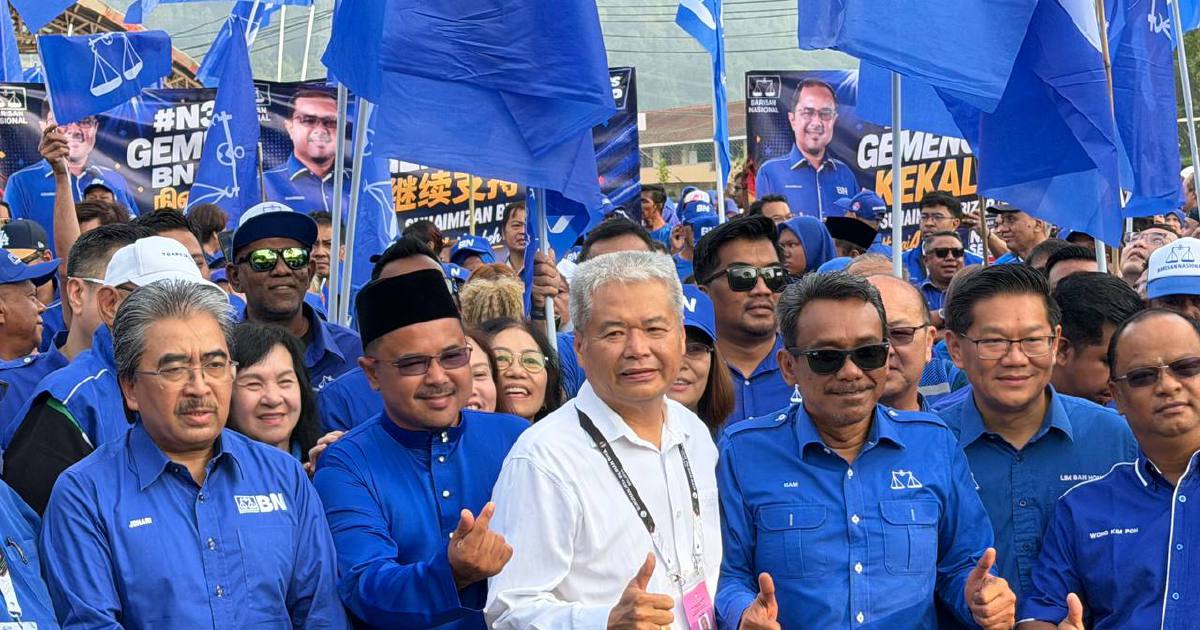
The presence of two prominent Umno figures at the Tampin nomination centre underscores the coalition's commitment to fielding a united front in the upcoming Negri Sembilan election. Datuk Seri Johari Abdul Ghani, who holds the position of vice-president in Umno, and Datuk Seri Tengku Adnan Tengku Mansor, the party's treasurer, both made an appearance at Dewan Perdana Tampin this morning to stand alongside the Barisan Nasional candidates preparing to formally lodge their nominations for the state polls.
The move carries significance beyond the ceremonial aspect of candidate support. In Malaysian politics, the visibility of senior party leadership at such events typically signals confidence in the selection process and the viability of the candidates themselves. For voters in Negri Sembilan, the presence of these two senior officials suggests that both the party machinery and financial stewardship of Umno are invested in the electoral outcome in the state. The timing of their appearance during the nomination phase—rather than waiting for campaign activities—demonstrates an early consolidation of party forces.
Negri Sembilan has traditionally been a mixed electoral landscape where Umno and Barisan Nasional maintain significant influence, though the state has also witnessed competitive contests in recent election cycles. The arrival of Johari and Tengku Adnan reflects the national party's understanding that resource allocation and leadership visibility can influence both internal party morale and voter perception. Their participation at the nomination centre serves a dual purpose: it energises party members and candidates while sending a message to the broader electorate about the coalition's organizational readiness.
Johari's role as vice-president places him among the highest decision-making echelon within Umno's party structure. His attendance at state-level nomination events, particularly in a state with the strategic importance of Negri Sembilan, underscores the national leadership's engagement with regional electoral contests. Similarly, Tengku Adnan's presence as party treasurer carries implications for resource mobilization and financial planning for the campaign phase. The involvement of the party's treasurer in nomination activities often indicates that funding mechanisms and campaign budgets have been finalized or are being finalized for the candidates.
The Barisan Nasional coalition encompasses multiple political parties beyond Umno, including the Malaysian Chinese Association and the Malaysian Indian Congress, along with various component parties in Sabah and Sarawak. However, Umno's dominance within the coalition means that its senior leadership involvement at such events invariably becomes the focal point of media attention and public perception. This concentration on Umno's role reflects both the party's numerical strength within the coalition and its historical position as the leading coalition partner.
For Malaysian readers, particularly those in Negri Sembilan, such political activities represent the mechanics of electoral preparation that occur several weeks before actual voting begins. Nomination centres typically operate for a limited period, during which candidates must formally register their candidacy and meet all statutory requirements. The presence of senior party officials at these centres—documented through media coverage—becomes part of the broader narrative around candidate credibility and party organization.
The electoral contest in Negri Sembilan occurs within a broader context of Malaysian politics where state-level elections carry importance both for regional governance and for their implications for national political dynamics. A successful Barisan Nasional performance in the state could strengthen the coalition's narrative heading into any future general election, while a disappointing result would provide ammunition to opposition parties. This high-stakes environment explains why senior national figures allocate time to attend local nomination ceremonies.
The documentation of such events through media coverage—including video recording as indicated in the original reporting—reflects how Malaysian political communications have evolved to leverage multiple platforms for constituency engagement. Voters increasingly expect transparency about candidate selection and party leadership involvement, and news outlets provide that window into the electoral process. For the candidates themselves, being photographed or filmed alongside senior party leadership can enhance their electoral prospects by association with established party authority.
Looking at the broader implications for Southeast Asian politics, Malaysia's formal electoral procedures and the emphasis on transparent nomination processes represent a model that contrasts with less institutionalized systems in the region. The fact that senior party officials make themselves visible at nomination centres, subject to media scrutiny, indicates an acceptance of democratic accountability that underpins Malaysia's political system, despite its well-documented challenges and criticisms.
The Negri Sembilan election will ultimately be decided by voters in the state, but the preliminary groundwork—including leadership visibility at nomination events—shapes the campaign narrative and organizational momentum that parties seek to build. As the formal nomination process concludes and the actual campaign period begins, the energy and unity demonstrated through such appearances will translate into field-level political activity. For Barisan Nasional, these early displays of senior leadership involvement represent an investment in projecting confidence and organizational coherence to both internal stakeholders and the voting public.

