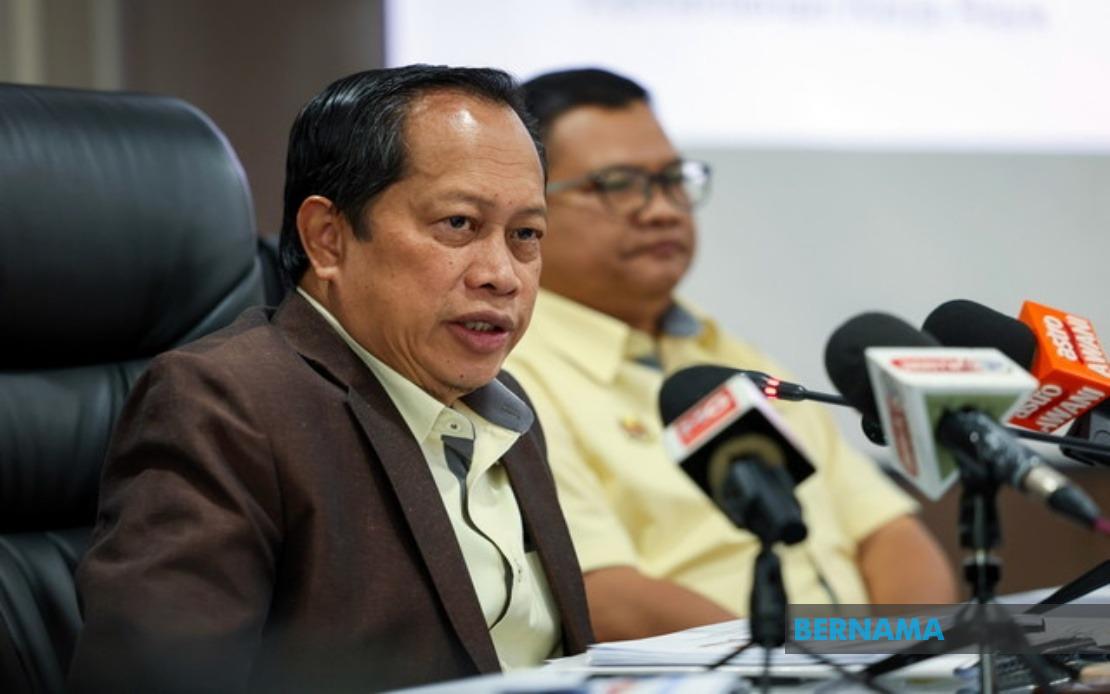
The political landscape in Melaka is set to crystallise when UMNO's highest decision-making body convenes next week to determine the coalition strategy for the state election. Presided over by party president Datuk Seri Dr Ahmad Zahid Hamidi, the August 28 Supreme Council meeting will tackle the fundamental question of whether Barisan Nasional should maintain an independent campaign or seek partnership with rival political blocs ahead of polling day.
According to Datuk Seri Dr Ahmad Maslan, a senior UMNO figure and Deputy Works Minister, no final determination has yet been made on the party's electoral approach for Melaka. This acknowledgment reveals the internal deliberation still underway within UMNO circles, despite weeks of speculation in public discourse. The timing of this meeting—with the Melaka state mandate set to expire on December 31—suggests the party hierarchy recognises the urgency of reaching a definitive position that will guide campaign preparations and candidate selection.
The elephant in the room is whether BN will extend its national Unity Government arrangement to the state level by partnering with Pakatan Harapan, or alternatively explore alignment with Perikatan Nasional. Each option carries distinct implications for UMNO's positioning and electoral prospects. Media commentary and statements from various UMNO figures, particularly those based in Melaka, have already explored these possibilities, creating a backdrop of uncertainty that the Supreme Council must resolve.
Current political arithmetic in Melaka reflects a complex tapestry. BN commands the strongest position following the 2018 election, having secured 21 of the 28 state assembly seats, substantially ahead of Pakatan Harapan's five seats and Perikatan Nasional's two. However, the executive council composition tells a more nuanced story—it includes assemblymen from Pakatan Harapan, mirroring the federal-level Unity Government framework. This hybrid arrangement at state level illustrates how national political configurations have begun influencing state administrations, creating precedent for potentially extending the model further.
Dr Ahmad Maslan's public remarks emphasise that any decision emerging from the Supreme Council meeting will be binding on party members. He stressed that strict adherence to the leadership's determined direction is non-negotiable, signalling that UMNO intends to project unity regardless of the course ultimately chosen. This appeal for discipline underscores leadership concerns about potential factional dissent, particularly among Melaka-based UMNO figures who may harbour preferences for specific coalition partners.
The strategic calculus differs substantially depending on which partnership UMNO pursues. A continuation of BN-PH cooperation would maintain federal-level unity at state level, potentially offering stability and predictability but risking voter fatigue with the incumbent arrangement. Conversely, a BN-PN alliance would represent a significant realignment, fundamentally reshaping the opposition dynamic and potentially attracting voters seeking a change from the current federal coalition. Going solo would allow BN to position itself as the true defender of Malay-Muslim interests without dilution from Chinese-majority DAP, a messaging angle that could resonate with core UMNO voters but would demand confidence in BN's electoral strength.
The decision-making framework outlined by Dr Ahmad Maslan highlights that each state presents distinct circumstances requiring tailored approaches. This principle acknowledges that what works federally or in other states may not suit Melaka's particular demographic composition, voting patterns, and local political dynamics. Such flexibility suggests the Supreme Council will weigh Melaka-specific factors rather than mechanically applying predetermined national templates.
For Malaysian observers and Southeast Asian political analysts, the Melaka decision holds broader significance. It will reveal whether the Unity Government represents a durable structural realignment or a pragmatic temporary arrangement subject to recalibration based on state-level electoral calculations. The outcome also signals whether UMNO has truly reconciled with its former nemesis DAP or whether state elections will witness tactical divorces despite federal cooperation.
The economic implications merit consideration too. Coalition partnerships affect resource allocation, development projects, and business opportunities, making the electoral choice consequential for Melaka's residents beyond purely political considerations. A stable, unified state administration tends to facilitate infrastructure projects and investment attraction, whereas coalitional instability can produce governance paralysis.
With the August 28 meeting just over a week away, UMNO leadership faces mounting pressure to deliver clarity. Delaying the decision risks allowing competitor narratives to solidify, while hasty determinations may alienate internal stakeholders who feel insufficiently consulted. The Supreme Council's final pronouncement will likely come within days of the meeting, providing candidates and campaign machinery with the direction needed for serious electoral preparation. Until then, Melaka politics remains suspended in strategic ambiguity, with multiple coalition futures theoretically possible.

