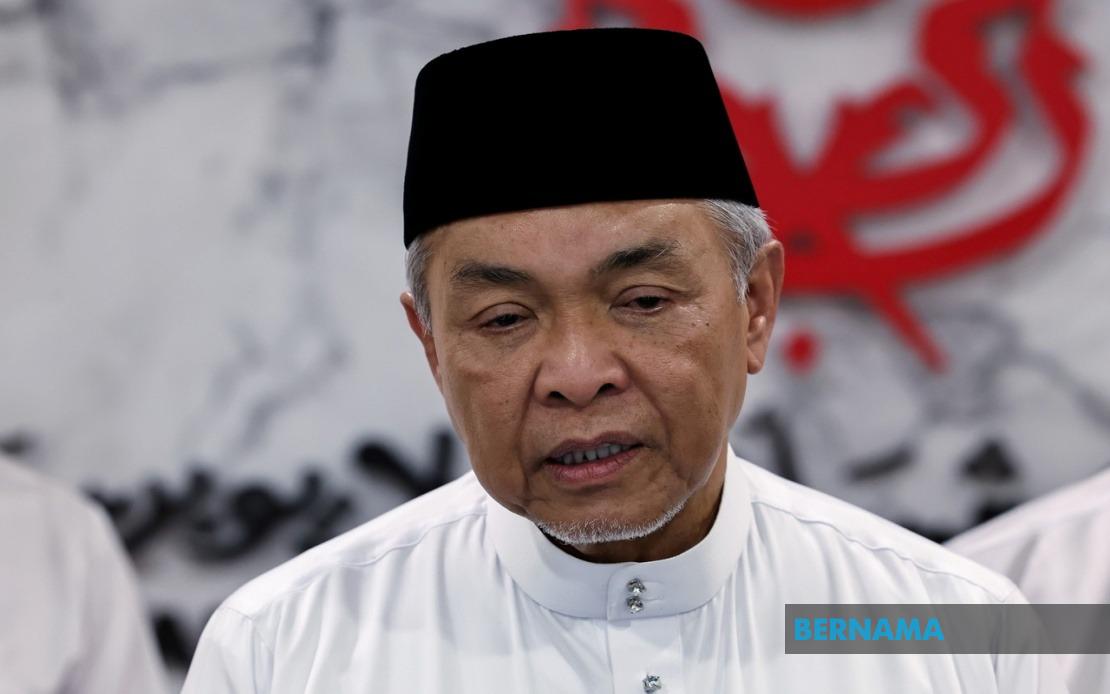
UMNO has signalled its readiness to enter formal negotiations regarding coalition possibilities for the impending Melaka state election, though party leadership has clarified that substantive talks will only commence after the dissolution of the state assembly. Datuk Seri Dr Ahmad Zahid Hamidi, UMNO president and Deputy Prime Minister, made the announcement on August 30, emphasising that while preliminary discussions may be occurring informally at present, any binding negotiations would be delayed until the procedural dissolution takes place.
The responsibility for steering these discussions has been delegated to Melaka Chief Minister Datuk Seri Ab Rauf Yusoh, who will spearhead negotiations on behalf of the party. This appointment reflects UMNO's confidence in Yusoh's ability to navigate potential partnerships while protecting the party's electoral interests in the state. By placing a sitting Chief Minister at the helm of negotiations, UMNO signals both its desire to maintain administrative continuity and its recognition that understanding local political dynamics will be crucial in the forthcoming contest.
Ahmad Zahid's comments arose in response to queries concerning UMNO's stance on prospective cooperation with Perikatan Nasional, the federal opposition coalition that has gained significant traction in recent political contests. The question itself underscores the fluid nature of Malaysian coalition politics, where temporary alliances and partnership arrangements frequently reshape the electoral landscape between major contests. For voters in Melaka and observers monitoring national political realignments, the nature of any eventual UMNO-PN arrangement could signal broader shifts in the ruling coalition's stability.
Prior to making his public statement, Ahmad Zahid held substantive discussions with UMNO's entire Melaka Political Bureau, during which party members presented their strategic preparations for the state election. This internal consultation process demonstrates UMNO's methodical approach to electoral planning, with the party gathering intelligence through its dedicated war room operations to inform decision-making. The emphasis on data-driven preparation reflects contemporary political practice, where campaign management increasingly relies on sophisticated voter analysis and targeted messaging strategies.
Following these state-level consultations, Ahmad Zahid subsequently brought the entire matter before UMNO's Supreme Council, the party's highest decision-making body. This escalation through formal party structures indicates the significance UMNO places on the Melaka contest within its broader strategic calculus. The Supreme Council's detailed examination of intelligence compiled by UMNO Melaka's operations room suggests the party is conducting a thorough assessment of electoral viability and coalition options before committing to any particular course of action.
The distinction Ahmad Zahid drew between informal and formal discussions carries particular weight in the context of Malaysian politics, where backroom negotiations frequently precede official announcements. This framework suggests that various parties may already be exploring possibilities through unofficial channels, with party leaders maintaining the flexibility to adjust positions before formal commitments are made. For political analysts tracking coalition dynamics, this staged approach provides strategic space for multiple options to remain viable until the assembly dissolution creates the formal occasion for binding negotiations.
Melaka holds particular significance within Malaysia's political constellation, as a state where electoral dynamics have shifted noticeably in recent years. The outcome of the forthcoming state election could provide insights into voter sentiment regarding various coalition configurations and the relative appeal of different political platforms. Given that Melaka frequently serves as a bellwether for broader national political trends, the nature of the eventual electoral arrangement in the state carries implications extending well beyond its immediate boundaries.
The timing of UMNO's announcement, preceding the actual dissolution of the assembly, allows the party to establish parameters for forthcoming negotiations while simultaneously preserving negotiating flexibility. By publicly committing to formal discussions only after dissolution, UMNO positions itself as responsive to procedural propriety while maintaining space for strategic manoeuvring. This approach reflects the calculated political communication that characterises leadership at the highest levels of Malaysian politics.
UMNO's willingness to engage in discussions with potential partners, whether within the existing Barisan Nasional framework or extending to other political formations, underscores the competitive pressures facing the ruling coalition. The mention of PN cooperation possibilities, in particular, highlights the complex political environment in which UMNO currently operates, where maintaining electoral dominance requires flexibility in coalition construction. For Southeast Asian observers, UMNO's positioning demonstrates how major regional parties navigate between competing pressures for ideological consistency and pragmatic electoral survival.
The appointment of Yusoh as negotiation lead carries its own strategic implications, as it places a figure with intimate knowledge of state-level political realities at the forefront of discussions with potential partners. This localist emphasis contrasts with decision-making entirely removed from grassroots political conditions, suggesting UMNO values grounding its electoral strategy in detailed understanding of Melaka's distinctive political topography. The Chief Minister's dual role as both administrator and negotiator positions him to assess coalition proposals through the lens of practical governance concerns, not merely electoral calculus.
As the announcement of formal talks approaches, UMNO's internal preparation intensifies, with the party marshalling data and strategic analysis to inform its negotiating posture. The party's war room operations, which gather and synthesise campaign intelligence, will likely play a crucial role in determining which coalition arrangements appear most advantageous from UMNO's perspective. This emphasis on information-driven strategy reflects how modern political campaigns, even in Malaysia's context, increasingly depend on sophisticated analytical capabilities.
The trajectory from informal discussions to formal negotiations, triggered by assembly dissolution, establishes a clear timeline for political developments in Melaka. Party members, observers, and potential coalition partners now have clarity regarding when substantive negotiations will commence, allowing various political actors to prepare their respective positions and strategic responses. For Malaysian voters in Melaka, the eventual outcome of these negotiations will determine the electoral landscape they encounter when called to vote in the impending state election.

